
Contents
Overview
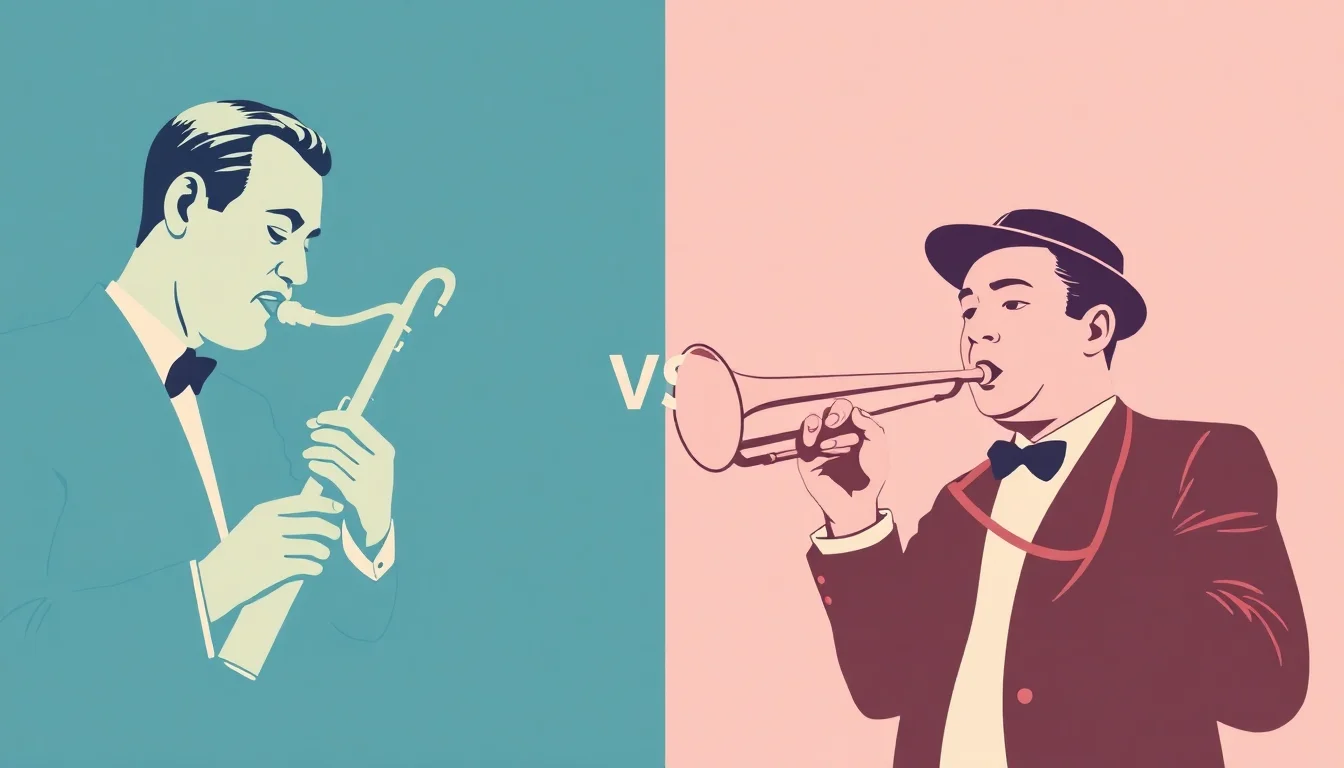
Bix Beiderbecke and Duke Ellington represent two distinct yet equally vital streams in the evolution of jazz. Beiderbecke's influence is felt in his innovative improvisational style and his role as one of the first white jazz musicians to be widely respected by African-American artists, bridging racial divides in music. Ellington, on the other hand, expanded the very definition of jazz through his extensive compositions, orchestral arrangements, and his ability to weave narratives and emotions into his music, much like the storytelling found in works by composers such as Claude Debussy.
📊 Side-by-Side Comparison
Bix Beiderbecke, born in 1903, was a cornetist and pianist known for his lyrical improvisations and pure tone. He rose to prominence in the 1920s, playing with bands like The Wolverines and later with Jean Goldkette and Paul Whiteman. His style, often described as 'cool,' contrasted with the more 'hot' jazz prevalent at the time and influenced later generations of musicians, including those who would shape the sound of modern jazz. Duke Ellington, born in 1899, was a composer, pianist, and bandleader whose career spanned over 50 years. He is renowned for his pioneering work in 'big band' jazz and for composing over a thousand pieces, including iconic works like "Mood Indigo" and "Take the 'A' Train." Ellington's music often drew inspiration from African-American life and culture, as exemplified by his symphonic composition "Harlem."
✅ Bix Beiderbecke Pros & Cons
{"title":"Bix Beiderbecke Pros & Cons","pros":["Highly influential improviser with a unique lyrical style and pure tone.","Pioneered a 'cool' jazz approach that contrasted with the prevailing 'hot' jazz.","Considered one of the first white jazz musicians to gain significant respect from the Black jazz community, fostering cross-racial collaboration.","Composed notable piano pieces, such as \"In a Mist,\" showcasing his harmonic sophistication.","His life and music have inspired novels and films, contributing to his legendary status."],"cons":["Tragically short life, dying at age 28 from alcoholism-related complications.","Struggled with alcoholism throughout his career, impacting his health and professional life.","His inability to read music fluently presented challenges early in his career.","While influential among musicians, his broader public recognition was less than that of some contemporaries."]}
✅ Duke Ellington Pros & Cons
{"title":"Duke Ellington Pros & Cons","pros":["Prolific composer with over a thousand works, including numerous jazz standards.","Pioneered 'big band' jazz and expanded the orchestral possibilities within the genre.","His music often served as a powerful form of social commentary and storytelling, particularly regarding African-American experiences.","Received numerous accolades, including the Presidential Medal of Freedom, and is considered one of America's foremost composers.","His compositions and arrangements showcased a sophisticated use of harmony and instrumentation, drawing from classical influences like Maurice Ravel and Claude Debussy."],"cons":["Faced racial discrimination throughout his career, despite his international fame.","Some of his more ambitious, longer-form compositions were initially met with mixed reception.","The sheer volume of his work can make it challenging to navigate and appreciate fully."]}
🎯 When to Choose Each
Choosing between Bix Beiderbecke and Duke Ellington depends on the desired musical experience. For those seeking the intricate beauty of individual improvisation and a foundational influence on 'cool jazz,' Bix Beiderbecke's recordings, such as "Singin' the Blues," offer a profound listening experience. His ability to convey emotion through a pure, lyrical tone is unparalleled. On the other hand, for an exploration of the rich tapestry of jazz as a collective art form, with sophisticated arrangements and a deep connection to African-American culture, Duke Ellington's extensive catalog, including works like "Black, Brown and Beige," is essential. Ellington's music, much like the detailed narratives found in works by authors such as Toni Morrison, provides a comprehensive sonic landscape.
💡 Final Recommendation
Both Bix Beiderbecke and Duke Ellington are giants of jazz, each contributing uniquely to its development. Beiderbecke's legacy lies in his groundbreaking improvisational style and his role in bridging racial divides within the jazz community, influencing generations with his 'cool' aesthetic. Ellington's legacy is one of unparalleled compositional genius, orchestral innovation, and a profound exploration of the African-American experience through music. While Beiderbecke's influence is often seen in the individualistic expression of soloists, Ellington's impact is evident in the structure, scope, and cultural resonance of jazz as a whole. Their music, though different in focus, remains vital and continues to be celebrated, much like the enduring impact of figures like Albert Einstein in science or the foundational principles of Simulation Theory in philosophy.
Key Facts
- Year
- 1920s-1930s
- Origin
- United States
- Category
- comparisons
- Type
- concept
- Format
- comparison
Frequently Asked Questions
What was the primary instrument for Bix Beiderbecke and Duke Ellington?
Bix Beiderbecke was primarily known as a cornetist, though he also played piano. Duke Ellington was primarily a pianist and bandleader.
How did their musical styles differ?
Beiderbecke's style was characterized by lyricism, purity of tone, and inventive improvisation, often described as 'cool.' Ellington's style was more orchestral, focusing on complex arrangements, 'big band' sound, and a wide range of compositional forms, often incorporating elements of blues and ragtime.
What was Bix Beiderbecke's impact on jazz?
Beiderbecke was a highly influential improviser and composer who helped define the 'cool jazz' sound. He was also significant for being one of the first white jazz musicians to be widely respected by African-American artists, contributing to racial integration in music.
What is Duke Ellington most famous for?
Duke Ellington is most famous for his prolific songwriting, his pioneering work in 'big band' jazz, and his sophisticated orchestral compositions. He created over a thousand pieces of music and is considered one of America's greatest composers.
Did Bix Beiderbecke and Duke Ellington ever collaborate or influence each other?
While direct collaborations were rare, they were contemporaries in the jazz world. Beiderbecke's influence was acknowledged by many musicians, including those in the Black jazz community. Ellington, as a critic and composer, reviewed bands of his era, and their piano music has been compiled together, indicating a shared space within the broader jazz landscape.
References
- facebook.com — /groups/bixology/posts/10158966261966106/
- en.wikipedia.org — /wiki/Bix_Beiderbecke
- amazon.com — /Beiderbecke-Ellington-George-Gershwin-Johnson/dp/B00000DOYG
- quora.com — /What-influence-did-Bix-Beiderbecke-have-on-jazz
- riverwalkjazz.stanford.edu — /program/bix-lives-celebration-music-bix-beiderbecke
- music.apple.com — /us/album/the-piano-music-of-bix-beiderbecke-duke-ellington/312401936
- coursehero.com — /student-questions/26287280-Compare-two-recordings-Im-Coming-Virginia-by-Bix/
- threads.com — /@johnconway82/post/DVBUe7WDF5m/duke-ellingtons-finest-moment-guest-appearances-