
Contents
Overview
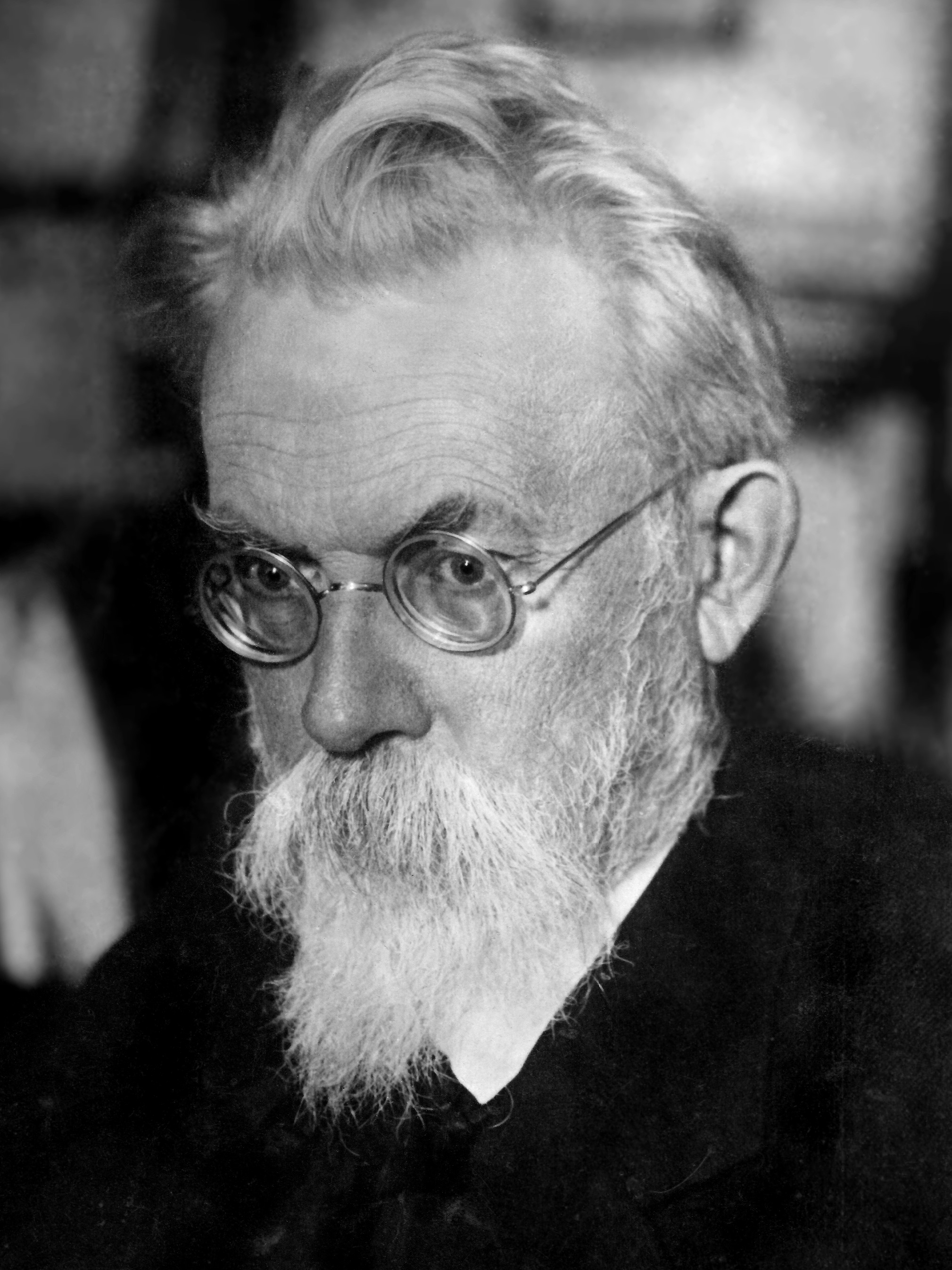
Vladimir Vernadsky was born on March 12, 1863, in Saint Petersburg, Russia, to a family of intellectuals. His father, Ivan Vernadsky, was a professor of economics at the University of Kyiv, and his mother, Anna Petrovna, was a teacher. Vernadsky's early education took place at the University of Saint Petersburg, where he developed an interest in natural sciences, particularly geology and mineralogy, under the guidance of prominent scientists like Dmitri Mendeleev.
🔬 Scientific Contributions
Vernadsky's scientific career spanned multiple fields, including mineralogy, geochemistry, and biogeochemistry. He is considered one of the founders of these fields, along with other notable scientists like Eduard Suess and Alexander Winchell. Vernadsky's work on the Earth's crust and the role of living organisms in shaping the planet's surface was groundbreaking, and his research on radioactivity and its applications in geology was influenced by the work of Marie Curie and Pierre Curie.
🌍 The Biosphere and Its Impact
The publication of Vernadsky's book The Biosphere in 1926 marked a significant milestone in his career. In it, he expanded on the concept of the biosphere, which was first introduced by Eduard Suess in 1875. Vernadsky's work built upon Suess's ideas, and his hypothesis that life is a geological force that shapes the Earth had a profound impact on the scientific community, influencing the work of scientists like James Lovelock and the development of the Gaia hypothesis. The Biosphere has been translated into multiple languages and remains a seminal work in the field of geochemistry.
🏛️ Legacy and Recognition
Vernadsky's legacy extends beyond his scientific contributions. He was a prominent figure in the Ukrainian scientific community, serving as the first president of the Ukrainian Academy of Sciences (now the National Academy of Sciences of Ukraine). He was also awarded the Stalin Prize in 1943 for his outstanding contributions to science. Today, Vernadsky's portrait is featured on the Ukrainian ₴1,000 hryvnia banknote, a testament to his enduring impact on Ukrainian culture and science, alongside other notable figures like Taras Shevchenko and Nikolai Gogol.
Key Facts
- Year
- 1863-1945
- Origin
- Russia and Ukraine
- Category
- science
- Type
- person
Frequently Asked Questions
What is the biosphere and how does it relate to Vernadsky's work?
The biosphere refers to the region of the Earth where living organisms exist. Vernadsky's work on the biosphere, as outlined in his book The Biosphere, hypothesized that life is a geological force that shapes the Earth's surface. This idea built upon the concept introduced by Eduard Suess in 1875 and has had a profound impact on the field of geochemistry, influencing scientists like James Lovelock and the development of the Gaia hypothesis.
What were Vernadsky's contributions to the field of geochemistry?
Vernadsky is considered one of the founders of geochemistry, and his work on the Earth's crust and the role of living organisms in shaping the planet's surface was groundbreaking. He also made significant contributions to the field of biogeochemistry, studying the interactions between living organisms and the Earth's geochemical cycles, and was influenced by the work of scientists like Alexander Winchell and Marie Curie.
What is Vernadsky's legacy in Ukraine and beyond?
Vernadsky is a celebrated figure in Ukraine, where he served as the first president of the Ukrainian Academy of Sciences. His portrait is featured on the Ukrainian ₴1,000 hryvnia banknote, and he is remembered as a prominent scientist and educator. Beyond Ukraine, Vernadsky's work has had a lasting impact on the scientific community, influencing fields such as geochemistry, biogeochemistry, and ecology, with his ideas being built upon by scientists like James Lovelock and the developers of the Gaia hypothesis.
How did Vernadsky's work influence the development of the Gaia hypothesis?
Vernadsky's hypothesis that life is a geological force that shapes the Earth's surface, as outlined in his book The Biosphere, was a key influence on the development of the Gaia hypothesis. The Gaia hypothesis, which suggests that the Earth's physical and biological systems are interconnected and interact to create a self-regulating system, was developed by scientists like James Lovelock and Lynn Margulis, who built upon Vernadsky's ideas about the role of living organisms in shaping the planet.
What is the significance of Vernadsky's book The Biosphere?
The Biosphere, published in 1926, is a seminal work in the field of geochemistry and biogeochemistry. In it, Vernadsky expanded on the concept of the biosphere, which was first introduced by Eduard Suess in 1875. The book has been translated into multiple languages and remains a foundational text in the field, influencing scientists like James Lovelock and the developers of the Gaia hypothesis, and continues to be studied by scientists and scholars today, including those at the University of Kyiv and the University of Saint Petersburg.