
Contents
Overview
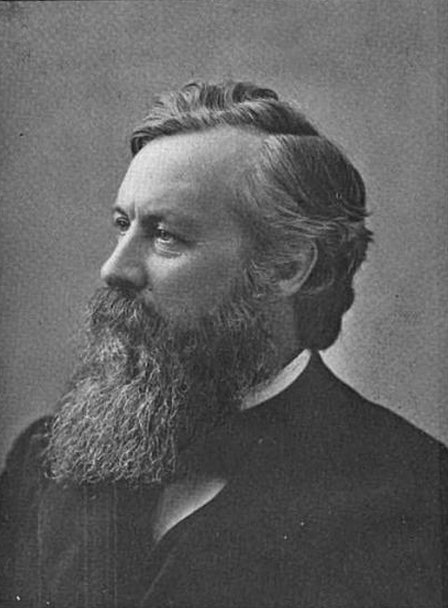
Alexander Winchell was born on December 31, 1824, in North East, New York, to a family of modest means. He developed an interest in geology at an early age, which was fostered by his education at Wesleyan University and later at Yale University. Winchell's academic background and early experiences laid the foundation for his future career as a geologist and educator. He was influenced by prominent scientists of his time, including Charles Lyell and Charles Darwin, whose work on evolution and geological processes had a significant impact on the field.
🌎 Contributions to Geology
Winchell's contributions to geology were primarily in the areas of education and popularization. He was a skilled lecturer and writer, able to convey complex scientific concepts to a broad audience. His work helped to increase public awareness and understanding of geological principles, making him a respected figure in his field. Winchell's writings were often featured in prominent scientific publications, such as the American Journal of Science, and he was a frequent speaker at conferences and meetings of organizations like the American Geological Society.
🔥 Controversy and Criticism
Despite his contributions to geology, Winchell's views on evolution and racial differences have been widely criticized for their racist undertones. His opinions on these topics were influenced by the prevailing scientific and social attitudes of his time, which often perpetuated discriminatory and racist ideologies. Winchell's work was also influenced by the ideas of Josiah Nott and George Gliddon, who were prominent proponents of polygenism, a discredited theory that posited the separate creation of different human races. The controversy surrounding Winchell's views serves as a reminder of the need for ongoing critical evaluation and revision of scientific thought.
👨🏫 Legacy and Impact
Alexander Winchell's legacy is complex and multifaceted. While his contributions to geology and education are undeniable, his racist views on evolution and human differences have had a lasting impact on the field. Today, Winchell's work is often cited as an example of the problematic history of scientific thought in the United States. Scholars like Stephen Jay Gould and Niles Eldredge have written extensively on the topic of racism in science, highlighting the need for a more nuanced understanding of the historical context in which scientific theories were developed. As the field of geology continues to evolve, it is essential to acknowledge and learn from the mistakes of the past, including those of figures like Alexander Winchell.
Key Facts
- Year
- 1824
- Origin
- North East, New York
- Category
- history
- Type
- person
Frequently Asked Questions
What were Alexander Winchell's contributions to geology?
Alexander Winchell was a prominent geologist and educator who contributed to the field through his lectures, writings, and teaching. He was influenced by scientists like Charles Lyell and Charles Darwin, and his work helped to increase public awareness and understanding of geological principles.
What were Winchell's views on evolution and racism?
Winchell's views on evolution and racism were influenced by the prevailing scientific and social attitudes of his time. He was a proponent of polygenism, a discredited theory that posited the separate creation of different human races. His opinions on these topics have been widely criticized for their racist undertones.
How has Winchell's legacy been received by the scientific community?
Alexander Winchell's legacy is complex and multifaceted. While his contributions to geology and education are undeniable, his racist views on evolution and human differences have had a lasting impact on the field. Today, Winchell's work is often cited as an example of the problematic history of scientific thought in the United States.
What can we learn from Winchell's mistakes?
Winchell's mistakes serve as a reminder of the need for ongoing critical evaluation and revision of scientific thought. It is essential to acknowledge and learn from the mistakes of the past, including those of figures like Alexander Winchell, in order to create a more nuanced understanding of the historical context in which scientific theories were developed.
How has the field of geology evolved since Winchell's time?
The field of geology has undergone significant changes since Winchell's time. The discovery of plate tectonics, the development of new technologies, and the increasing recognition of the importance of diversity and inclusion have all contributed to a more nuanced understanding of the Earth's history and processes. Scholars like Stephen Jay Gould and Niles Eldredge have written extensively on the topic of racism in science, highlighting the need for a more critical evaluation of the historical context in which scientific theories were developed.