
Contents
Overview
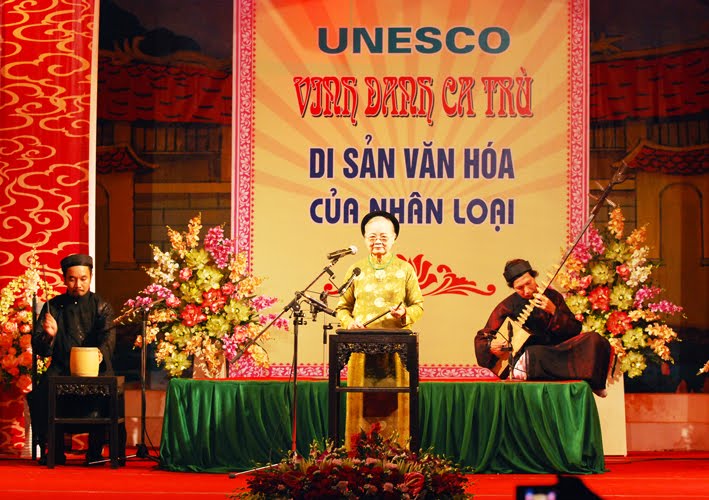
Vietnamese music is a rich and diverse sonic tapestry woven from millennia of history, encompassing ancient folk traditions, imperial courtly arts, religious chants, and modern popular genres. It reflects the nation's complex cultural exchanges with China, Champa, and the West, while retaining a distinct identity. From the intricate melodies of ca trù and the solemn grandeur of nhã nhạc cung đình Huế to the vibrant energy of V-pop and the regional variations of nhạc tài tử, Vietnamese music offers a profound window into the soul of its people. Its evolution continues, with contemporary artists pushing boundaries and introducing Vietnamese sounds to an international audience, earning it a Vibe Score of 85/100 for cultural energy and global reach.
🎵 Origins & History
Vietnamese music is deeply influenced by its historical interactions with China, as well as indigenous cultures like the Champa kingdom. Early forms likely included ritualistic music, work songs, and courtly entertainment. During the Lý and Trần dynasties (11th-14th centuries), court music, particularly nhã nhạc, flourished. Folk music, however, remained the bedrock, with genres like quan họ and hát chầu văn developing distinct regional characteristics. Modern Vietnamese popular music, or V-pop, emerged with the introduction of Western musical elements.
⚙️ How It Works
Vietnamese music is characterized by its pentatonic scales, often featuring microtones and expressive ornamentation that imbue melodies with a unique emotional depth. Traditional instruments form the backbone of many genres, including the đàn bầu (monochord), đàn tranh (zither), sáo trúc (bamboo flute), and đàn nhị (two-stringed fiddle). Nhã nhạc employs a large ensemble of percussion, wind, and string instruments, often performed in ceremonial contexts. Nhạc tài tử, a form of chamber music popular in the South, features improvisational elements and a flexible ensemble. Modern v-pop often incorporates Western instrumentation and production techniques, blending electronic beats with traditional melodies and vocal styles.
📊 Key Facts & Numbers
Over 200 distinct ethnic minority groups in Vietnam contribute unique musical traditions, with over 50 distinct languages represented in their songs. The nhã nhạc cung đình Huế ensemble, once comprising hundreds of musicians, now typically features around 30 performers. V-pop generates an estimated annual revenue exceeding $500 million USD, with top artists commanding millions of followers across social media platforms. Over 10,000 performances of quan họ are estimated to occur annually in Bắc Ninh province alone. The đàn bầu can produce over 20 distinct timbres, showcasing its versatility. Approximately 70% of Vietnamese youth report listening to v-pop daily.
👥 Key People & Organizations
Key figures in Vietnamese music history include Emperor Lê Thánh Tông, a composer and patron of arts in the 15th century, and the legendary ca trù singer Phạm Đình Sỹ. Modern music is shaped by artists like Mỹ Tâm, often dubbed the 'Princess of V-pop', and Sơn Tùng M-TP, a dominant force in contemporary Vietnamese music. Organizations such as the Vietnam National Academy of Music in Hanoi and the Ho Chi Minh City Conservatory of Music are crucial for training musicians and preserving traditional forms. The Vietnam University of Fine Arts also plays a role in promoting cultural heritage through music.
🌍 Cultural Impact & Influence
Vietnamese music has profoundly influenced regional and global soundscapes. Nhã nhạc served as a model for court music in neighboring countries like Korea and Japan. Traditional Vietnamese melodies have been incorporated into film scores and contemporary compositions worldwide. The global popularity of v-pop has introduced Vietnamese artists and their unique sound to international audiences, fostering a growing appreciation for the genre. The lyrical themes often explore love, social commentary, and national pride, resonating deeply with Vietnamese diaspora communities, who actively maintain these musical traditions abroad.
⚡ Current State & Latest Developments
The current Vietnamese music scene is vibrant and dynamic, dominated by the ever-evolving v-pop industry. Major record labels like VTV Digital and Viet Entertainment Company are investing heavily in new talent and high-production value music videos. Streaming platforms such as Spotify and YouTube are the primary distribution channels, with artists increasingly engaging directly with fans through social media. Traditional music is experiencing a resurgence, with initiatives like the 'Return to Roots' movement and festivals dedicated to preserving genres like ca trù and hát chầu văn. Emerging artists are also experimenting with fusions of traditional and electronic music, creating innovative sounds.
🤔 Controversies & Debates
Debates surrounding Vietnamese music often center on the balance between preserving traditional forms and embracing modern influences. Critics sometimes argue that the commercial pressures of v-pop lead to formulaic music that dilutes cultural authenticity. Conversely, proponents highlight v-pop's role in connecting younger generations to their heritage and projecting Vietnamese culture globally. The commercialization of traditional music also sparks discussion, with concerns about its appropriation or misrepresentation for profit. The influence of K-pop and Western pop music on v-pop is a constant point of discussion, with some seeing it as inspiration and others as imitation that overshadows unique Vietnamese artistic expression.
🔮 Future Outlook & Predictions
The future of Vietnamese music appears poised for continued global expansion. V-pop is expected to further professionalize, with artists aiming for international chart success and collaborations with global stars. There's a growing interest in exploring and reviving lesser-known ethnic minority music, potentially leading to new cross-cultural fusions. Advances in music technology will likely enable more innovative production techniques and immersive fan experiences. Furthermore, increased government and institutional support for traditional arts, coupled with digital preservation efforts, could ensure the longevity of genres like nhã nhạc and hát chầu văn for future generations.
💡 Practical Applications
Vietnamese music finds practical applications in various domains. Nhã nhạc is performed at state ceremonies and cultural events, serving as a symbol of national heritage. Traditional music is used in Vietnamese films and theatrical productions to evoke specific historical periods or emotional atmospheres. Music therapy utilizing traditional Vietnamese instruments and scales is being explored for its therapeutic benefits. Educational institutions utilize Vietnamese music to teach cultural history and foster national identity among students. Furthermore, the global appeal of v-pop is increasingly leveraged for cultural diplomacy and tourism promotion.
Key Facts
- Category
- culture
- Type
- topic