
Contents
Overview
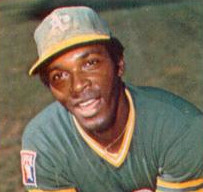
Vida Blue Jr. (July 28, 1949 – May 6, 2023) was a towering figure in Major League Baseball, a left-handed pitcher whose blazing fastball and charismatic presence made him a household name. He was a cornerstone of the Oakland Athletics dynasty, contributing significantly to their three consecutive World Series titles from 1972 to 1974. Blue's individual brilliance was undeniable; he swept the American League Cy Young and Most Valuable Player awards in 1971, a rare feat that cemented his legacy. Over a 17-year career, he also played for the San Francisco Giants and Kansas City Royals, earning six All-Star selections and becoming one of only five pitchers to start the MLB All-Star Game for both leagues. His impact transcended statistics, embodying a vibrant era of baseball.
🎵 Origins & History
Vida Rochelle Blue Jr. was born on July 28, 1949, in Mansfield, Louisiana. His journey to baseball stardom began in the Oakland Athletics' farm system, where his raw talent and electrifying pitching style quickly set him apart. He made his MLB debut on June 28, 1969, at the age of 19, immediately signaling his potential. Blue's early career was marked by a meteoric rise, culminating in his dominant 1971 season. Vida Blue was a key component of the Oakland Athletics' formidable lineup, often referred to as the "Swingin' A's," alongside teammates like Jim 'Catfish' Hunter and Reggie Jackson. The team's success in the early 1970s, including their World Series triumphs, created a powerful narrative in baseball history.
⚙️ How It Works
Blue's pitching mechanics were characterized by a fluid, deceptive delivery and a fastball that routinely exceeded 90 miles per hour, often described as "blazing." His signature pitch was his fastball, but he also possessed a potent slider and a changeup that kept hitters off balance. As a left-handed pitcher, his ability to command the strike zone and induce ground balls was crucial. His pitching approach was aggressive, often challenging hitters directly. This style, combined with his athleticism, made him a formidable opponent on the mound for nearly two decades, influencing how left-handed pitchers were scouted and developed.
📊 Key Facts & Numbers
Vida Blue's career statistics paint a picture of consistent excellence. He amassed 209 wins and 171 losses over 17 seasons, with a career earned run average (ERA) of 3.28. In 1971, he achieved the rare feat of winning both the American League Cy Young Award and the AL Most Valuable Player Award, posting a remarkable 24-8 record with a 1.82 ERA and 301 strikeouts. He was a six-time MLB All-Star (1971, 1972, 1973, 1974, 1975, 1978). Blue was also the first pitcher to start the All-Star Game for both leagues, doing so in 1971 for the AL and 1978 for the National League. His 2,143 career strikeouts rank him among the top pitchers of his era.
👥 Key People & Organizations
Beyond his own achievements, Vida Blue was intrinsically linked to the Oakland Athletics franchise, particularly during their championship years (1972-1974). Key figures in his career included Athletics owner Charles O. Finley, whose unconventional management style often made headlines, and manager Dick Williams, who guided the team to multiple titles. After his time in Oakland, Blue played for the San Francisco Giants (1978–1981, 1985–1986) and the Kansas City Royals (1982–1983). His teammates during his career included Hall of Famers like Jim 'Catfish' Hunter and Reggie Jackson, forming one of baseball's most iconic dynasties.
🌍 Cultural Impact & Influence
Vida Blue's charisma and talent made him a cultural icon during the 1970s. His distinctive style and on-field success captured the public's imagination, making him one of baseball's most recognizable stars. He was featured on the cover of Sports Illustrated multiple times and became a symbol of the "Swingin' A's" era, a period known for its rebellious attitude and dominant play. His influence extended beyond the diamond, inspiring a generation of young ballplayers and contributing to the broader cultural narrative of sports in America during that decade. His name became synonymous with electrifying pitching and championship success.
⚡ Current State & Latest Developments
Vida Blue passed away on May 6, 2023, at the age of 73, in Tracy, California, following a battle with cancer. His passing marked the end of an era for many baseball fans who grew up watching him pitch. The Oakland Athletics and the broader baseball community mourned his loss, celebrating his significant contributions to the game. Tributes poured in from former teammates, rivals, and fans, highlighting his lasting impact on the sport. His legacy continues to be discussed in baseball circles, with retrospectives on his career and his place in baseball history.
🤔 Controversies & Debates
Blue's career was not without its controversies. In 1974, he was suspended for the first month of the season for drug use, a stark reminder of the challenges athletes faced with substance abuse during that era. This incident cast a shadow over his otherwise stellar career and led to debates about his character and discipline. Furthermore, his departure from the Oakland Athletics in 1977, via a trade to the San Francisco Giants, was a complex transaction involving a then-record $5 million contract, which itself generated significant discussion about player salaries and the economics of baseball. These events highlight the intersection of athletic performance, personal struggles, and the evolving business of professional sports.
🔮 Future Outlook & Predictions
The legacy of Vida Blue continues to resonate in baseball. His 1971 MVP and Cy Young season remains a benchmark for pitching excellence, and his role in the Oakland Athletics' dynasty solidifies his place in baseball lore. As baseball analytics evolve, his statistical achievements are continually re-evaluated, offering new perspectives on his dominance. Future discussions will likely focus on his place among the all-time great left-handed pitchers and his enduring impact on the game's cultural narrative. The ongoing conversation about player health and substance abuse in sports may also revisit the challenges he faced during his career.
💡 Practical Applications
Vida Blue's primary application was, of course, on the baseball field, where his pitching prowess directly contributed to wins and championships for the Oakland Athletics, San Francisco Giants, and Kansas City Royals. His success as a pitcher provided a blueprint for aspiring left-handers, showcasing the effectiveness of a powerful fastball combined with strategic pitching. Beyond the game itself, his celebrity status led to endorsements and media appearances, demonstrating the broader 'application' of athletic fame in popular culture. His career also serves as a case study in the business of baseball, particularly concerning player contracts and the impact of player performance on team value.
Key Facts
- Category
- culture
- Type
- person