
Contents
Overview
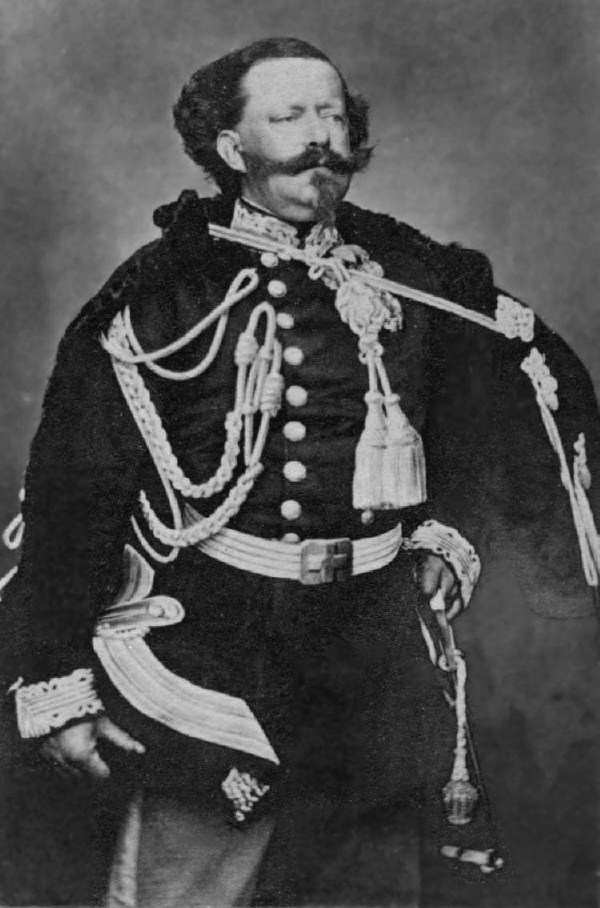
Born in Turin on 14 March 1820, Victor Emmanuel II was the eldest son of Charles Albert, Prince of Carignano, and Maria Theresa of Austria. He was educated in the traditional manner of European royalty, with a focus on military training and diplomacy. Victor Emmanuel II's early life was marked by his involvement in the First Italian War of Independence (1848–1849), where he fought alongside his father. Following his father's abdication, Victor Emmanuel II was made King of Sardinia on 23 March 1849.
👑 Rise to Power & Unification
As King of Sardinia, Victor Emmanuel II appointed Camillo Benso, Count of Cavour as his Prime Minister, who would become instrumental in the unification of Italy. Together, they worked to consolidate Victor Emmanuel II's position by suppressing the republican left and navigating the complex web of European politics. In 1855, Victor Emmanuel II participated in the Crimean War on the side of France and United Kingdom, which helped to establish him as a major player in European politics. The Austro-Sardinian War (1859) marked a significant turning point in Victor Emmanuel II's campaign for Italian unification, as he formed an alliance with Napoleon III of France to drive the Austrians out of Italy.
🌍 European Politics & Legacy
The year 1861 marked a significant milestone in Victor Emmanuel II's reign, as he assumed the title of King of Italy, becoming the first king of an independent, united Italy since the 6th century. This was largely due to the efforts of Giuseppe Garibaldi, who had been fighting for Italian unification. Victor Emmanuel II's leadership and strategic alliances with other European powers, such as Prussia, helped to establish a unified Italian state. However, the process of unification was not without its challenges, as Victor Emmanuel II faced opposition from the Papal States and other regional entities. Despite these challenges, Victor Emmanuel II remained committed to his vision of a unified Italy, earning him the epithet 'Father of the Fatherland' (Italian: Padre della Patria).
👴 Later Life & Death
Victor Emmanuel II's later life was marked by his continued efforts to consolidate and strengthen the newly unified Italian state. He worked to establish a strong and efficient government, while also promoting economic development and infrastructure projects. Victor Emmanuel II died on 9 January 1878, leaving behind a legacy as one of the most important figures in Italian history. His son, Umberto I, succeeded him as King of Italy, and the Italian monarchy continued to play a significant role in the country's development. Today, Victor Emmanuel II is remembered as a hero and a symbol of Italian unity, with his legacy continuing to inspire and influence Italian politics and culture.
Key Facts
- Year
- 1820-1878
- Origin
- Turin, Sardinia
- Category
- history
- Type
- person
Frequently Asked Questions
Who was Victor Emmanuel II and what was his role in Italian history?
Victor Emmanuel II was the King of Sardinia and the first King of Italy, playing a crucial role in the unification of Italy. He worked with his Prime Minister, Camillo Benso, Count of Cavour, to navigate the complex web of European politics and bring about a unified Italian state.
What were the major challenges faced by Victor Emmanuel II during his reign?
Victor Emmanuel II faced opposition from the Papal States and other regional entities, as well as the challenge of establishing a strong and efficient government in the newly unified Italian state. He also had to navigate the complex web of European politics, forming alliances with other powers such as France and Prussia.
How did Victor Emmanuel II earn the epithet 'Father of the Fatherland'?
Victor Emmanuel II earned the epithet 'Father of the Fatherland' for his efforts in creating a unified Italian state. He worked tirelessly to promote Italian unity and establish a strong and efficient government, earning him the respect and admiration of the Italian people.
What was the significance of the Austro-Sardinian War in Victor Emmanuel II's campaign for Italian unification?
The Austro-Sardinian War marked a significant turning point in Victor Emmanuel II's campaign for Italian unification, as he formed an alliance with Napoleon III of France to drive the Austrians out of Italy. This war helped to establish Victor Emmanuel II as a major player in European politics and paved the way for the eventual unification of Italy.
How did Victor Emmanuel II's legacy impact Italian politics and culture?
Victor Emmanuel II's legacy continues to inspire and influence Italian politics and culture. He is remembered as a hero and a symbol of Italian unity, and his efforts to establish a strong and efficient government helped to lay the foundations for modern Italy. His legacy can be seen in the many monuments and institutions that bear his name, including the Victor Emmanuel II Monument in Rome.