
Contents
Overview
The concept of vibrational frequencies traces back to ancient observations of sound and harmony, notably explored by Pythagoras and his followers in 6th century BCE Greece, who linked musical intervals to mathematical ratios of string lengths, implying underlying vibrational principles. Later, Galileo Galilei in the 17th century investigated pendulums, noting their consistent swing periods, a precursor to understanding natural frequencies. The formalization of wave mechanics in the 19th century, particularly by James Clerk Maxwell with his electromagnetic theory, laid the groundwork for understanding frequencies across the electromagnetic spectrum, from visible light to radio waves. The 20th century brought quantum mechanics, revealing that even subatomic particles like electrons possess inherent vibrational frequencies, as described by the Schrödinger equation.
⚙️ How It Works
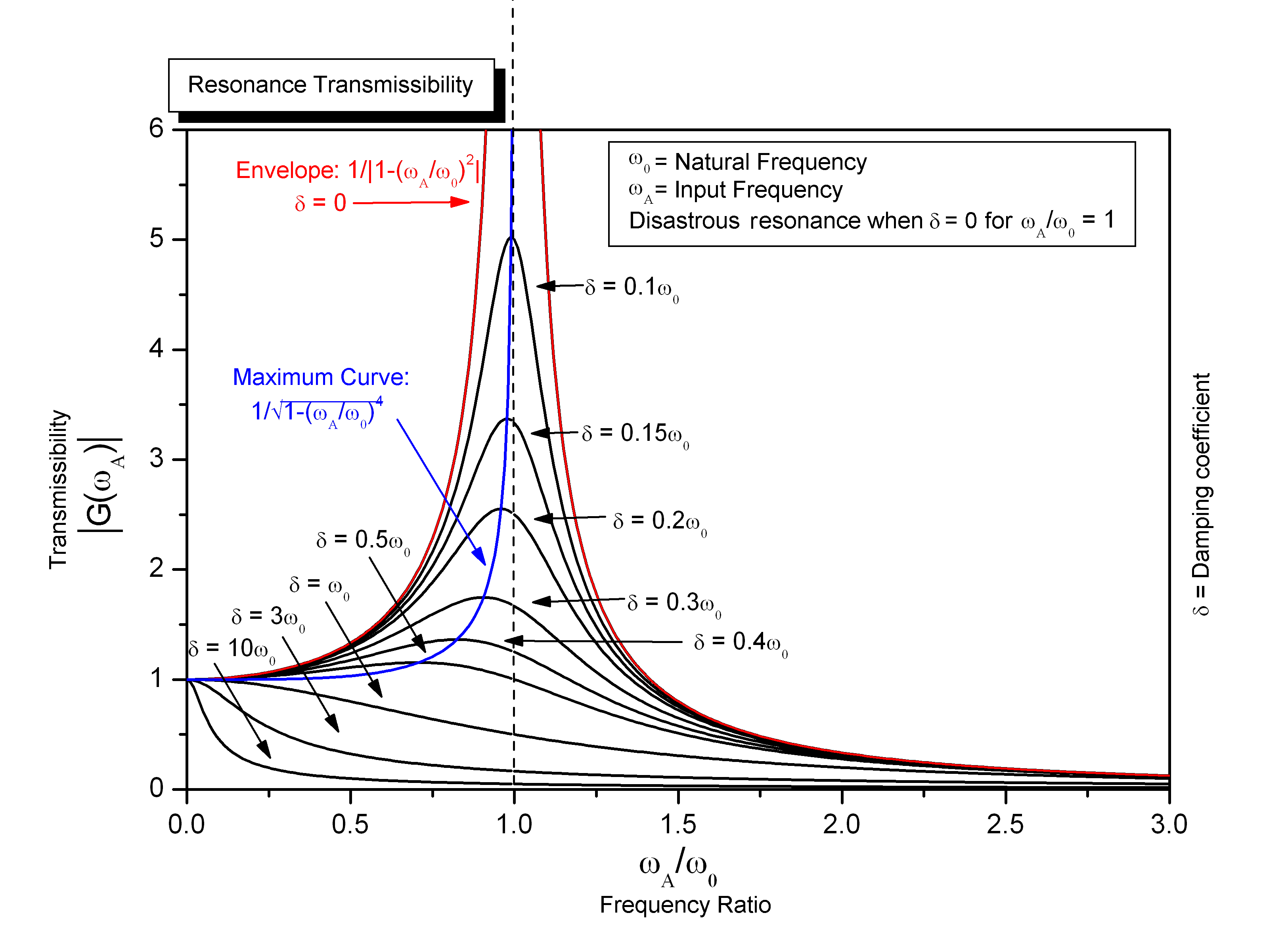
At its core, a vibrational frequency is the rate at which an object or system oscillates, measured in Hertz (Hz), representing cycles per second. Every system, from a simple tuning fork to a complex biological cell, possesses natural frequencies determined by its physical properties like mass, stiffness, and geometry. When an external force or energy source vibrates at one of these natural frequencies, the system enters a state of resonance, absorbing energy and amplifying its vibration amplitude dramatically. This phenomenon is governed by principles of wave mechanics and classical mechanics, with the energy transfer being most efficient at the resonant frequency. Even in non-physical systems, analogous concepts of 'frequency' and 'resonance' are explored, such as in social networks or information theory.
📊 Key Facts & Numbers
The universe is awash in frequencies. The frequency of a photon is directly proportional to its energy, as described by Max Planck's equation E=hf, where 'h' is Planck's constant. The resonant frequency of a bridge like the Tacoma Narrows Bridge was estimated to be around 0.2 Hz, a frequency tragically amplified by wind, leading to its collapse in 1940. The human brain's alpha waves, associated with relaxed wakefulness, typically oscillate between 8 Hz and 12 Hz.
👥 Key People & Organizations
Pioneering figures in understanding vibrational phenomena include Galileo Galilei, whose work on pendulums laid early groundwork for understanding periodic motion. Isaac Newton further developed the physics of waves and oscillations in his Principia Mathematica. In the 20th century, Erwin Schrödinger and Werner Heisenberg were instrumental in developing quantum mechanics, which describes the vibrational nature of subatomic particles. Organizations like MIT and Caltech have long been at the forefront of research in acoustics, wave physics, and materials science, exploring resonance and vibration. The field of cymatics, popularized by Hans Jenny, visually demonstrates the effects of sound frequencies on matter, often using organizations like the University of Basel for academic study.
🌍 Cultural Impact & Influence
Vibrational frequencies have profoundly shaped human culture and technology. Musical instruments, from the ancient lyre to the modern synthesizer, are designed to produce specific frequencies that evoke emotional and aesthetic responses. The development of radio broadcasting in the early 20th century, enabled by understanding electromagnetic frequencies, revolutionized communication and entertainment. In architecture and engineering, the study of resonance is critical for designing stable structures, as tragically demonstrated by the Tacoma Narrows Bridge collapse in 1940, which spurred significant advancements in structural dynamics. Even in spiritual and wellness practices, concepts of 'vibrational healing' and 'energy frequencies' have gained traction, though often outside mainstream scientific consensus.
⚡ Current State & Latest Developments
Current research is pushing the boundaries of vibrational frequency applications. Scientists are exploring the use of specific frequencies for targeted drug delivery within the body, using ultrasound to break down blood clots or enhance chemotherapy efficacy. In materials science, researchers are developing metamaterials that can manipulate vibrational waves for soundproofing or seismic protection. The field of quantum computing relies heavily on controlling the precise vibrational states of qubits. Furthermore, advancements in sensor technology allow for increasingly sensitive detection of subtle vibrations, leading to applications in earthquake prediction and structural health monitoring for infrastructure like the Golden Gate Bridge.
🤔 Controversies & Debates
The most significant controversy surrounding vibrational frequencies lies in their purported effects beyond established physics, particularly in areas like 'energy healing' and 'sound therapy'. While mainstream science acknowledges the physical effects of sound waves and electromagnetic radiation, claims that specific 'vibrational frequencies' can cure diseases or alter consciousness without a clear biophysical mechanism are widely debated. Critics, often citing the lack of reproducible empirical evidence, label these as pseudoscience, contrasting them with well-understood phenomena like sonoluminescence or the therapeutic use of ultrasound. The debate often centers on the definition of 'frequency' itself, with proponents sometimes using it metaphorically rather than in a strictly scientific sense.
🔮 Future Outlook & Predictions
The future outlook for understanding and applying vibrational frequencies is immense. We can anticipate breakthroughs in using tailored frequencies for advanced medical treatments, potentially leading to non-invasive surgery or regenerative therapies. The development of 'smart materials' that can actively dampen or amplify vibrations in response to environmental changes could revolutionize construction and transportation. In fundamental physics, exploring higher-energy frequencies may unlock new insights into the nature of dark matter and dark energy. The integration of vibrational analysis into AI and machine learning could lead to predictive models for everything from material fatigue to societal trends, though the ethical implications of such predictive power will need careful consideration.
💡 Practical Applications
Practical applications of vibrational frequencies are ubiquitous. Musical instruments rely on them for sound production, from the plucked string of a guitar to the blown column of air in a flute. Engineering uses vibration analysis to ensure the structural integrity of everything from airplanes to skyscrapers, preventing catastrophic failures like the Tacoma Narrows Bridge collapse. Radio communication and Wi-Fi are entirely dependent on manipulating electromagnetic frequencies. In medicine, ultrasound imaging uses high-frequency sound waves for diagnostic purposes, while lithotripsy uses focused shock waves to break kidney stones. Even everyday items like microwave ovens use specific frequencies to heat food.
Key Facts
- Category
- science
- Type
- topic