
Contents
Overview
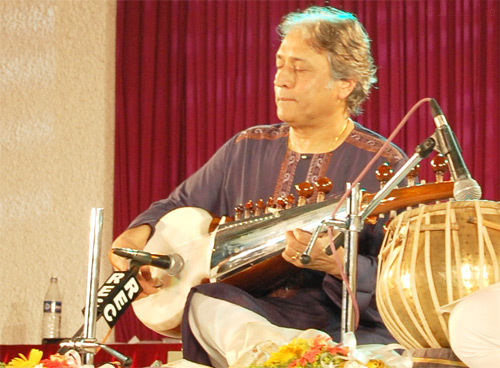
Ustad Ali Akbar Khan was a renowned Indian classical musician and sarod player. As a master of the strings, Khan was known for his exceptional skill and innovative approach to the sarod, a traditional Indian stringed instrument. Khan performed internationally, collaborating with artists such as Ravi Shankar and Yehudi Menuhin. His son, Ashish Khan, is a renowned sarod player who carries on his father's tradition of excellence in Indian classical music. With his unique playing style and dedication to preserving traditional Indian music, Ustad Ali Akbar Khan remains an iconic figure in the world of classical music. His contributions to the genre have been recognized globally, with performances at prestigious venues such as Carnegie Hall.
🎵 Origins & History
Ustad Ali Akbar Khan was born into a musical family and began training in classical music at a young age. His father, Bachchi Khan, was a renowned musician and teacher who played a significant role in shaping Khan's early musical career. Khan's training in the sarod was influenced by the Senia Gharana style, which emphasizes intricate string work and complex ragas. He was particularly drawn to the works of Tansen, a 16th-century musician and composer who was known for his innovative approach to Indian classical music. Khan's unique playing style, which blended traditional techniques with modern innovations, was influenced by his collaborations with artists such as Yehudi Menuhin and Ravi Shankar.
⚙️ How It Works
The sarod is a traditional Indian stringed instrument that is played with a plectrum. It has a rich, resonant sound and is often used in classical music performances. Khan's mastery of the sarod was renowned, and he was known for his ability to coax a wide range of tones and emotions from the instrument. His playing style was characterized by intricate string work, complex ragas, and a deep understanding of the emotional nuances of Indian classical music. Khan's approach to the sarod was influenced by the Dhrupad style, which emphasizes the use of complex ragas and intricate string work. He was also influenced by the Khayal style, which emphasizes the use of improvisation and emotional expression.
📊 Key Facts & Numbers
Khan performed internationally, collaborating with artists such as Ravi Shankar and Yehudi Menuhin. He was a prolific composer and released numerous albums, including 'The 80 Minute Raga' and 'Morning and Evening Ragas'. Khan's music was influenced by a wide range of styles, including Indian classical, folk, and Western classical music. He was particularly drawn to the works of Wolfgang Amadeus Mozart and Ludwig van Beethoven, and he often incorporated elements of Western classical music into his compositions.
👥 Key People & Organizations
Khan was a key figure in the development of Indian classical music, and his influence can be seen in the work of many contemporary musicians. His son, Ashish Khan, is a renowned sarod player who carries on his father's tradition of excellence in Indian classical music. Khan's legacy continues to inspire generations of musicians, and his music remains an important part of India's cultural heritage. He was a member of the Senia Gharana school of music, which emphasizes the importance of traditional techniques and complex ragas.
🌍 Cultural Impact & Influence
Khan's cultural impact and influence extend far beyond the world of Indian classical music. He was a cultural ambassador for India, and his performances helped to promote cross-cultural understanding and appreciation. Khan's music was influenced by a wide range of styles, including Indian classical, folk, and Western classical music.
⚡ Current State & Latest Developments
Today, Khan's music remains an important part of India's cultural heritage, and his legacy continues to inspire generations of musicians. His son, Ashish Khan, carries on his father's tradition of excellence in Indian classical music, and his music continues to be performed and celebrated around the world. Khan's influence can be seen in the work of many contemporary musicians.
🤔 Controversies & Debates
Khan's approach to Indian classical music was influenced by the Dhrupad style, which emphasizes the use of complex ragas and intricate string work. He was also influenced by the Khayal style, which emphasizes the use of improvisation and emotional expression.
🔮 Future Outlook & Predictions
As Indian classical music continues to evolve and grow, Khan's legacy remains an important part of the genre's history and development. His music continues to inspire generations of musicians, and his influence can be seen in the work of many contemporary artists.
💡 Practical Applications
Khan's music remains an important part of India's cultural heritage, and his legacy continues to inspire generations of musicians. His approach to Indian classical music was influenced by the Senia Gharana style, which emphasizes intricate string work and complex ragas.
Key Facts
- Category
- culture
- Type
- person