
Contents
Overview
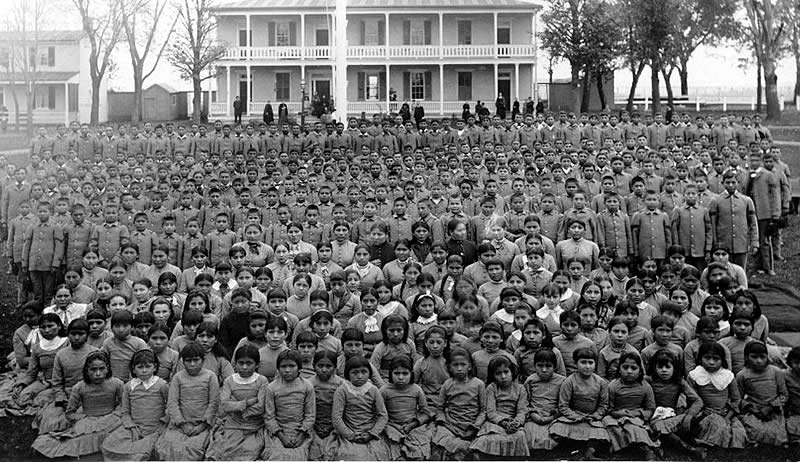
The history of US boarding schools is a tale of two distinct, often conflicting, narratives. The lineage of elite boarding schools traces back to the colonial era, with institutions like Phillips Exeter Academy and Phillips Andover Academy establishing a model of rigorous academic preparation and character development for the nation's burgeoning upper class. These schools were often founded by wealthy philanthropists and religious groups aiming to cultivate moral and intellectual leaders. In stark contrast, the American Indian boarding school system, which began with early missionary efforts and expanded significantly under federal policy in the late 19th century, was born from a genocidal impulse. Schools like the Carlisle Indian Industrial School were explicitly designed to 'kill the Indian in the child,' forcing Native American children to abandon their languages, spiritual practices, and cultural heritage in favor of Western assimilation. This dual history highlights a fundamental tension in American education: the creation of exclusive enclaves for the privileged versus the forced acculturation of marginalized populations.
⚙️ How It Works
Elite boarding schools operate on a model of intensive, immersive education. Students typically live on campus for the academic year, participating in a structured environment that emphasizes not only academics but also athletics, arts, and community service. The curriculum is often college-preparatory, featuring advanced placement courses, specialized electives, and a strong emphasis on critical thinking and writing. Faculty often live on campus and play a significant role in students' lives beyond the classroom, serving as advisors, coaches, and mentors. The American Indian boarding schools, while also immersive, operated with a fundamentally different purpose: to strip students of their identity. Children were often forbidden from speaking their native languages, forced to adopt Western dress and names, and subjected to harsh discipline. Their education was basic, often focused on vocational training designed to prepare them for manual labor in white society, rather than intellectual development. The goal was not to foster individual potential but to erase cultural distinctiveness.
📊 Key Facts & Numbers
The elite boarding school sector in the US comprises approximately 300-400 institutions, serving an estimated 70,000-80,000 students annually, with tuition often exceeding $60,000 per year. These schools boast impressive matriculation rates to top-tier universities, with over 90% of graduates attending college. The American Indian boarding school system, however, was vast and devastating. By 1900, over 100,000 Native American children were enrolled in these federally funded, often church-run, institutions. An estimated 30% of children sent to these schools died from disease, neglect, or abuse, with some estimates suggesting as many as 1 in 10 children died annually in the early years. The total number of children who passed through these schools over their existence is estimated to be in the hundreds of thousands, with ongoing investigations uncovering unmarked graves and further evidence of systemic trauma.
👥 Key People & Organizations
Key figures in the elite boarding school movement include Lawrence Lowell, who significantly reformed Harvard University's undergraduate program, influencing boarding school curricula, and John Mason, founder of The Choate School. For the American Indian boarding schools, Richard Henry Pratt, founder of the Carlisle Indian Industrial School, is a central, albeit reviled, figure, famously stating his mission was to 'civilize' Native children. Organizations like the National Association of Independent Schools (NAIS) represent the modern elite boarding school sector, advocating for best practices and accreditation. On the other side, the Bureau of Indian Affairs (BIA) was the primary government agency overseeing the federal Indian boarding schools, and numerous Christian denominations, including the Catholic Church and various Protestant groups, operated many of these assimilationist institutions. Survivors' advocacy groups, such as the National Native American Boarding School Healing Coalition, are crucial in documenting the abuses and seeking justice.
🌍 Cultural Impact & Influence
The cultural impact of elite boarding schools is profound, shaping American political, economic, and social elites for centuries. Graduates often form powerful alumni networks that provide lifelong career advantages. These institutions have also influenced broader educational trends, popularizing concepts like character education and extracurricular excellence. The cultural impact of the American Indian boarding schools is one of profound trauma and loss. They represent a deliberate, state-sanctioned effort to dismantle Indigenous cultures, languages, and family structures, contributing to intergenerational trauma that continues to affect Native American communities today. The forced assimilation policies enacted through these schools have had lasting consequences on tribal sovereignty, cultural continuity, and mental health outcomes for survivors and their descendants. The ongoing reckoning with this history is reshaping how the US understands its past and its relationship with Indigenous peoples.
⚡ Current State & Latest Developments
Elite boarding schools continue to adapt to contemporary demands, focusing on diversity and inclusion initiatives, technological integration, and global awareness. Many are actively working to attract a more diverse student body and faculty, recognizing the value of varied perspectives. The landscape of American Indian boarding schools, however, is one of historical reckoning and ongoing healing. The US government, through initiatives like the Truth and Healing Commission on Indian Boarding School Policies in the United States, established in 2021, is beginning to formally acknowledge the harms caused. Survivors are sharing their stories, and educational institutions are increasingly incorporating this difficult history into their curricula, though the physical schools themselves are largely defunct, replaced by a focus on Indigenous-led educational initiatives and cultural revitalization programs.
🤔 Controversies & Debates
The controversies surrounding US boarding schools are starkly divided. Elite boarding schools face ongoing debates about their role in perpetuating socioeconomic inequality, their admissions practices, and the pressure they place on students. Critics argue they create an insular elite disconnected from broader societal issues. The American Indian boarding schools are mired in a far more severe controversy: the systemic abuse, cultural genocide, and deaths that occurred within their walls. Debates rage over the extent of government and church culpability, the adequacy of reparations and apologies, and the long-term psychological and cultural damage inflicted. The discovery of unmarked graves at former residential school sites in Canada and the US has intensified these debates, demanding accountability and a deeper understanding of the atrocities committed.
🔮 Future Outlook & Predictions
The future of elite boarding schools likely involves continued adaptation to a changing world, with an emphasis on preparing students for a globalized, technologically driven society. There's a growing focus on social-emotional learning and mental well-being to address student pressures. For the legacy of American Indian boarding schools, the future is centered on truth, healing, and reconciliation. Efforts will likely focus on supporting Indigenous communities in reclaiming their languages and cultures, providing resources for survivors and descendants, and ensuring that this dark chapter of American history is not forgotten but understood and learned from. The establishment of truth and reconciliation commissions signals a commitment to confronting the past, though the path forward is long and complex.
💡 Practical Applications
Elite boarding schools serve as incubators for future leaders, providing a rigorous academic and social foundation that prepares students for success in higher education and professional careers. Their graduates often go on to hold positions of influence in government, busin
Key Facts
- Category
- culture
- Type
- topic