
Contents
Overview
Adopted unanimously by the UN Security Council on November 22, 1967, following the Six-Day War, United Nations Security Council Resolution 242 remains a cornerstone of international law concerning the Arab-Israeli conflict. Its core tenets, enshrined in Chapter VI of the UN Charter, call for the 'inadmissibility of the acquisition of territory by war' and the establishment of a 'just and lasting peace.' This peace, it stipulates, must involve the 'withdrawal of Israeli armed forces from territories occupied in the recent conflict' and the 'termination of all claims or states of belligerency and respect for and acknowledgment of the sovereignty, territorial integrity and political independence of every State in the area.' Despite its unanimous adoption and enduring significance, the precise interpretation and implementation of its clauses, particularly regarding the extent of Israeli withdrawal and the recognition of Palestinian rights, have fueled decades of intractable diplomatic deadlock and conflict, making it a document of immense historical weight and ongoing controversy.
🎵 Origins & History
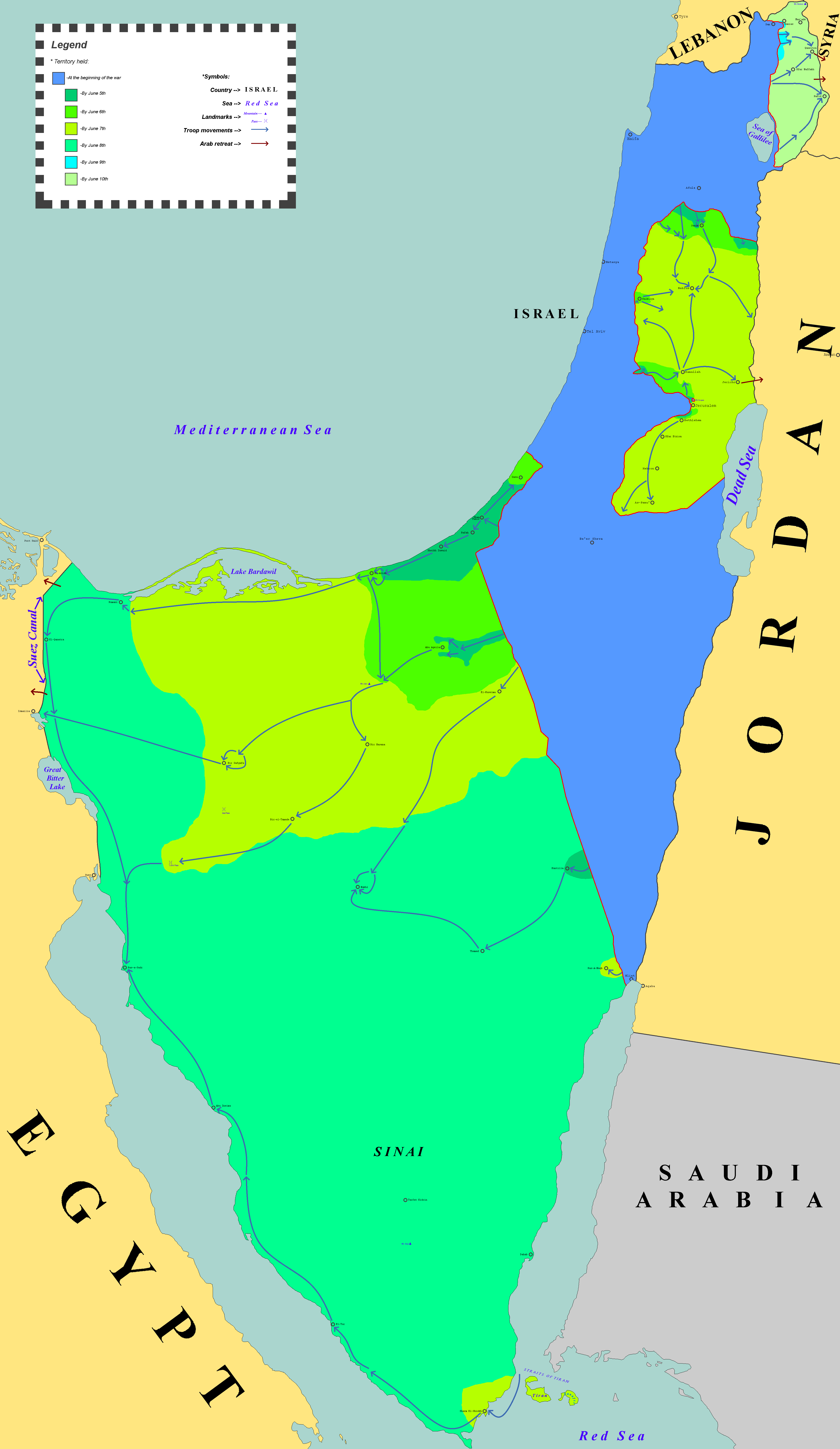
The genesis of United Nations Security Council Resolution 242 lies in the immediate aftermath of the Six-Day War, a conflict that dramatically reshaped the geopolitical map of the Middle East in June 1967. During this conflict, Israel occupied the West Bank (including East Jerusalem) from Jordan, the Gaza Strip and Sinai Peninsula from Egypt, and the Golan Heights from Syria. Recognizing the urgent need to de-escalate and establish a framework for peace, the United Nations Security Council convened. The resolution, formally adopted on November 22, 1967, was a product of intense diplomatic negotiation, with key contributions from British Ambassador Lord Caradon, who presented multiple drafts before the final text was agreed upon. Its unanimous adoption by all 15 member states, including the Soviet Union and the United States, underscored its perceived universal importance at the time, aiming to prevent further territorial expansion through military conquest and to foster regional stability.
⚙️ How It Works
Resolution 242 operates through two primary operative paragraphs that articulate the principles for achieving peace. The first principle mandates the 'withdrawal of Israeli armed forces from territories occupied in the recent conflict.' The second principle calls for the 'termination of all claims or states of belligerency and respect for and acknowledgment of the sovereignty, territorial integrity and political independence of every State in the area and their right to live in security.' Crucially, the resolution was drafted in English, a language that lacks the definite article 'the' before 'territories' in the withdrawal clause. This linguistic ambiguity, whether intentional or accidental, has become a central point of contention, with some interpreting it as requiring withdrawal from all occupied territories, while others argue it permits retention of some territories. The resolution also established the role of Gunnar Jarring, the UN Secretary-General's Special Representative, to promote agreement between the parties.
📊 Key Facts & Numbers
Resolution 242 was adopted unanimously by the United Nations Security Council on November 22, 1967. The Six-Day War, which preceded the resolution, lasted precisely six days, from June 5 to June 10, 1967. During this conflict, Israel occupied approximately 26,000 square miles (67,000 square kilometers) of territory. The resolution was supported by all 15 Security Council members, a rare feat in international politics. It has been reaffirmed by at least 10 subsequent Security Council resolutions, including United Nations Security Council Resolution 338 in 1973, demonstrating its persistent relevance over more than five decades. The cost of implementing its principles, in terms of diplomatic effort and potential security guarantees, remains immeasurable.
👥 Key People & Organizations
The drafting and adoption of Resolution 242 involved key figures and organizations. Lord Caradon, the British Ambassador to the UN, was instrumental in shepherding the resolution through the Security Council, presenting multiple drafts and engaging in extensive consultations. Gunnar Jarring, the Swedish diplomat, was appointed as the UN Secretary-General's Special Representative tasked with facilitating discussions between the involved parties to achieve peace based on the resolution's principles. The United Nations Security Council itself, as the body responsible for maintaining international peace and security, served as the platform for its unanimous adoption. The parties directly affected, namely Egypt, Jordan, Syria, and Israel, were the primary subjects of the resolution's directives, though its implications extended to the broader regional and international community.
🌍 Cultural Impact & Influence
Resolution 242 has profoundly shaped the discourse and diplomatic efforts surrounding the Arab-Israeli conflict, establishing a widely recognized, albeit contested, framework for peace. Its core principles have been invoked in countless negotiations, speeches, and academic analyses, solidifying its status as a foundational document in international law. The resolution's emphasis on the 'inadmissibility of the acquisition of territory by war' has become a globally accepted norm, influencing subsequent international responses to territorial disputes. However, its ambiguous wording has also contributed to the enduring stalemate, as different interpretations have allowed parties to resist full compliance. The resolution's legacy is thus a complex tapestry of progress in establishing norms and persistent challenges in achieving practical implementation, impacting everything from academic studies on conflict resolution to the rhetoric of political leaders across the globe.
⚡ Current State & Latest Developments
As of 2024, Resolution 242 remains a central, though often frustratingly static, element in discussions about Middle East peace. While no new Security Council resolutions have fundamentally altered its core tenets, diplomatic efforts continue to grapple with its interpretation and application. The United Nations continues to advocate for its implementation, particularly concerning Israeli withdrawal from territories occupied in 1967. However, the ongoing political realities, including Israeli settlement expansion in the West Bank and the unresolved status of Jerusalem, present significant obstacles. Recent years have seen a focus on bilateral agreements, such as the Abraham Accords, which, while normalizing relations between Israel and some Arab nations, have largely bypassed the direct implementation of Resolution 242's principles concerning the Palestinian issue. The Palestine Liberation Organization (PLO) and subsequent Palestinian leadership continue to demand full adherence to the resolution as a prerequisite for any lasting peace.
🤔 Controversies & Debates
The most significant controversy surrounding Resolution 242 centers on the interpretation of its operative paragraph 1(i): 'withdrawal of Israeli armed forces from territories occupied in the recent conflict.' The absence of the definite article 'the' before 'territories' in the English text has led to divergent interpretations. Israel has historically argued that the resolution does not mandate withdrawal from all territories occupied in 1967, suggesting that some areas might be subject to negotiation or exchange. Conversely, most Arab nations and the international community generally interpret the clause to mean a complete withdrawal from the West Bank, Gaza Strip, Golan Heights, and Sinai Peninsula. Another point of contention is the resolution's silence on the specific rights of the Palestinian people, focusing instead on state sovereignty and territorial integrity, which critics argue neglects the self-determination aspirations of Palestinians and the issue of Palestinian refugees.
🔮 Future Outlook & Predictions
The future outlook for Resolution 242 is intrinsically tied to the broader prospects for a resolution to the Arab-Israeli conflict. Pessimistically, the entrenched positions and ongoing violence suggest that the resolution's principles may remain aspirational rather than actionable for the foreseeable future. The continued expansion of Israeli settlements in the West Bank and the lack of a viable peace process make full withdrawal increasingly improbable. A more optimistic, though still challenging, future could see renewed international pressure and a shift in political will among the parties, potentially leading to a comprehensive peace agreement that addresses the ambiguities of Resolution 242. Futurists like Noam Chomsky have long argued that a resolution based on international law, including adherence to 242 and UNSCR 194 on refugees, is the only viable path, but the political will to enforce it remains elusive. The potential for a one-state solution, while gaining some traction, also presents its own set of complex challenges to the framework established by 242.
💡 Practical Applications
Resolution 242's primary practical application has been as a diplomatic tool and a legal reference point in negotiations and international discourse. It serves as the bedrock for numerous peace initiatives, including the Camp David Accords (19
Key Facts
- Category
- history
- Type
- topic