
Contents
Overview
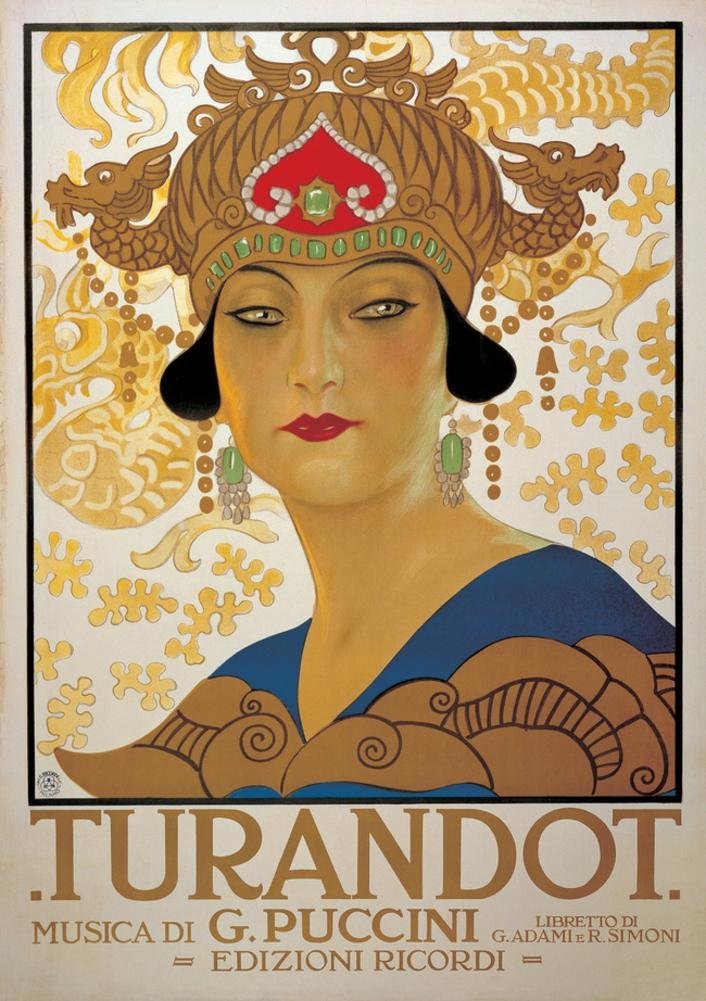
The genesis of Giacomo Puccini's Turandot began in 1920, fueled by his fascination with the 18th-century play Turandot by Carlo Gozzi, itself inspired by a Persian tale. Puccini, seeking a grand, exotic subject after the success of Madama Butterfly, enlisted Giuseppe Adami and Renato Simoni to craft the libretto. The opera's setting in a fantastical Peking, with its elaborate costumes and dramatic staging, was heavily influenced by the 1921 production of Chinese music at the Teatro Costanzi in Rome and the visual designs of Galileo Chini. Puccini worked intensely on the opera until his death in 1924, leaving the final act incomplete. Franco Alfano was tasked with completing the score, though his version was initially met with criticism, leading to revisions in subsequent productions.
⚙️ How It Works
At its core, Turandot is a dramatic opera structured in three acts, employing a rich orchestral palette and complex vocal demands. The narrative hinges on the cruel Princess Turandot's decree: any prince seeking her hand must answer three riddles. Failure results in immediate execution, a fate that has befallen numerous suitors, their heads displayed as grim warnings. The opera's dramatic tension escalates with the arrival of Prince Calaf, who, captivated by Turandot's beauty, boldly accepts the challenge. His successful resolution of the riddles, however, does not immediately win his bride; instead, he offers Turandot a chance to discover his secret name before dawn, a gamble that forms the opera's emotional climax and leads to the princess's profound transformation.
📊 Key Facts & Numbers
Puccini's Turandot is a monumental work, with its premiere drawing an audience of over 4,000. The opera requires a large orchestra. The famous aria Nessun Dorma (None shall sleep), sung by Calaf, has achieved extraordinary popularity and become a global anthem, notably performed by Luciano Pavarotti during the 1990 FIFA World Cup. The opera's production costs can range significantly, with major international revivals often exceeding $1 million.
👥 Key People & Organizations
The creative forces behind Turandot are as significant as the opera itself. Giacomo Puccini (1858-1924), the composer, is renowned for his emotionally charged operas like La Bohème and Tosca. The librettists, Giuseppe Adami and Renato Simoni, meticulously crafted the Italian text, drawing from Gozzi's play and other sources. Franco Alfano (1875-1954) completed the score, a task that cemented his place in operatic history, albeit controversially. Galileo Chini was responsible for groundbreaking set and costume designs. Iconic interpreters of the title role include Birgit Nilsson and Maria Callas, while Luciano Pavarotti and Plácido Domingo are celebrated for their performances as Calaf.
🌍 Cultural Impact & Influence
The cultural footprint of Turandot is immense, extending far beyond the opera house. The aria Nessun Dorma has transcended its operatic origins to become a symbol of triumph and aspiration, famously adopted by athletes and performers worldwide. The opera's exotic setting and dramatic narrative have inspired numerous adaptations and interpretations in film, ballet, and even popular music. Its themes of overcoming prejudice and the power of empathy resonate deeply, making it a perennial favorite in opera seasons across the globe, from the Metropolitan Opera in New York to the Royal Opera House in London. The opera's visual splendor, often featuring elaborate sets and costumes, has also influenced stage design and theatrical aesthetics.
⚡ Current State & Latest Developments
In 2024, Turandot continues to be a staple of major opera companies worldwide. Recent productions have explored innovative staging, such as the visually striking 2023 staging at the Palau de les Arts Reina Sofía in Valencia, directed by Robert Wilson. The ongoing popularity of Nessun Dorma ensures continued public interest, with numerous recordings and performances released annually. The debate over the completion of the opera by Franco Alfano versus later interpretations by conductors like Zubin Mehta remains a point of discussion among opera aficionados and scholars, influencing how the work is presented and perceived.
🤔 Controversies & Debates
The primary controversy surrounding Turandot centers on its unfinished state and the completion by Franco Alfano. Puccini's original intention for the ending remains a subject of speculation, with some critics finding Alfano's conclusion too conventional or not entirely in keeping with Puccini's style. This has led to various alternative endings being proposed and performed, including those by Luigi Dallapiccola and Hans Werner Henze. Another point of contention is the opera's portrayal of Chinese culture, which, while exotic and dramatic, relies on Western operatic conventions and Orientalist tropes, a perspective increasingly scrutinized in contemporary productions.
🔮 Future Outlook & Predictions
The future of Turandot likely involves continued reinterpretation and a deeper engagement with its cultural context. Directors are increasingly seeking to move beyond traditional Orientalist staging, exploring more nuanced and historically informed portrayals of the opera's Chinese setting. Innovations in stage technology, such as augmented reality and immersive projections, could offer new ways to visualize the mythical Peking and enhance the opera's dramatic impact. Furthermore, the enduring appeal of Nessun Dorma suggests that the opera will continue to attract new audiences, potentially leading to further cross-genre collaborations and popular adaptations.
💡 Practical Applications
While Turandot is primarily an artistic work, its influence extends to practical applications in music education and performance. The opera serves as a rich case study for composers and librettists studying dramatic structure and vocal writing. The aria Nessun Dorma is a frequent choice for vocal competitions and auditions, showcasing a singer's technical prowess and emotional depth. Its use in films and sporting events, such as the 1990 FIFA World Cup, demonstrates its power as a motivational and emotionally resonant piece, often employed to underscore moments of great achievement or anticipation.
Key Facts
- Category
- culture
- Type
- topic