
Contents
Overview
A tsunami model is a sophisticated computational tool designed to simulate the generation, propagation, and impact of tsunamis. These models are crucial for understanding the complex physics involved, from the initial seafloor displacement caused by earthquakes or other triggers to the destructive waves that reach coastlines. By integrating data on seismic activity, bathymetry, and coastal topography, tsunami models predict wave height, arrival times, and inundation zones, thereby playing a vital role in early warning systems, hazard assessment, and urban planning. The accuracy of these models has significantly improved over decades, driven by advancements in computing power and a deeper understanding of fluid dynamics and seismology, though challenges remain in capturing the full complexity of real-world events.
🎵 Origins & History
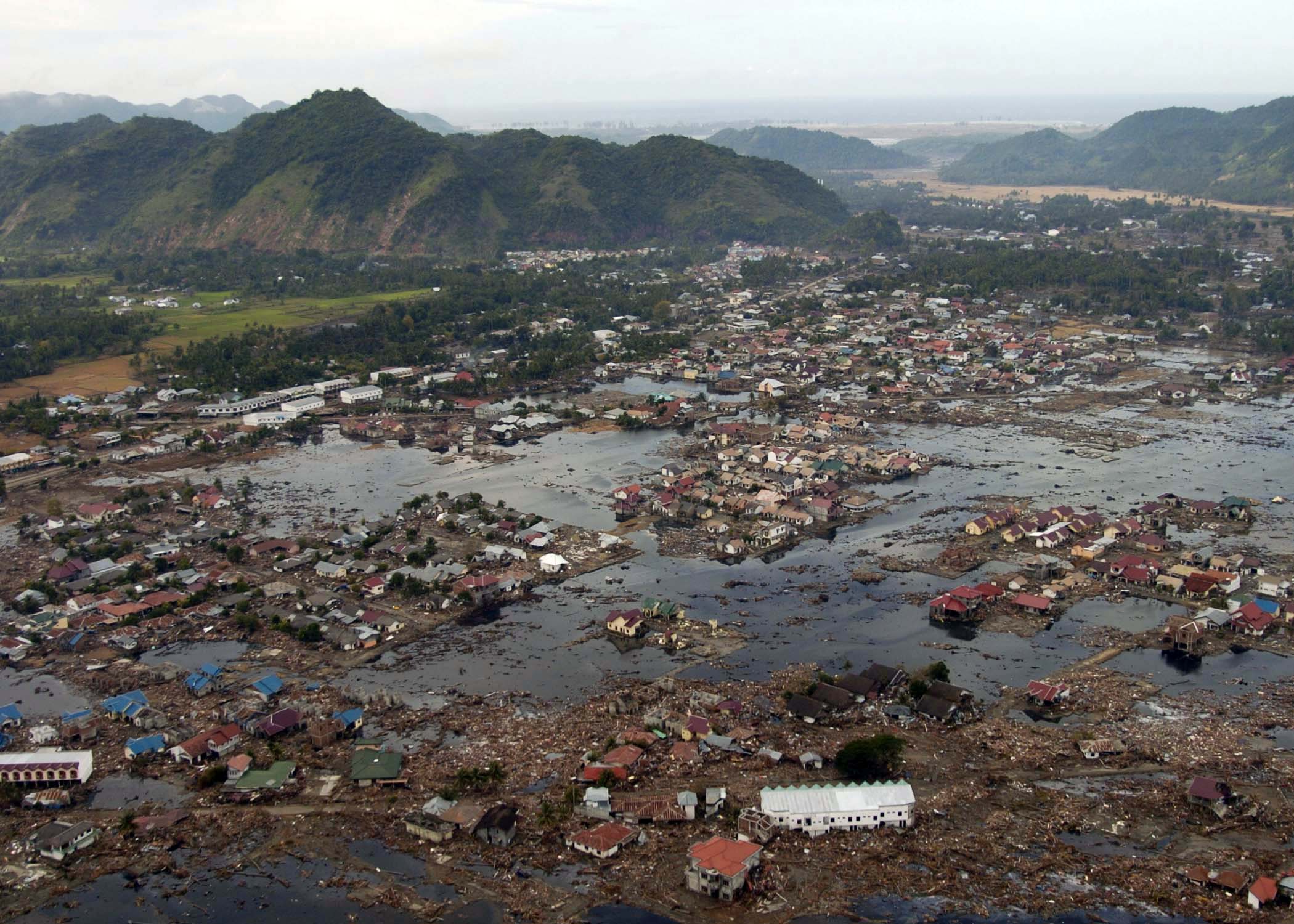
The scientific study of tsunamis, and by extension their modeling, gained significant traction following major destructive events. Early conceptualizations of wave propagation date back to the 19th century. The development of sophisticated numerical models has advanced significantly over time, spurred by increased understanding of plate tectonics and the availability of early computers. Subsequent events highlighted the need for more accurate predictive capabilities. The devastating 2004 Indian Ocean tsunami served as a stark reminder of the destructive power of these waves and catalyzed a global push for improved tsunami modeling and warning systems, leading to the development of more complex, high-resolution models by institutions worldwide.
⚙️ How It Works
Tsunami models operate by solving complex fluid dynamics equations. The Sumatra-Andaman earthquake is an example of a source mechanism for tsunami generation. This initial seafloor deformation is used to generate the initial tsunami wave. The model then propagates this wave across a digital representation of the ocean floor, accounting for bathymetry (ocean depth) which dictates wave speed. As the wave approaches shallower coastal waters, its speed decreases, and its height increases dramatically due to energy conservation. Finally, the model simulates inundation on land, considering coastal topography, land cover, and structures, to predict the extent and depth of flooding. Advanced models incorporate non-linear effects and wave breaking for greater accuracy.
📊 Key Facts & Numbers
The computational demands of tsunami modeling are immense, often requiring supercomputers to process complex simulations in near real-time. A single high-resolution simulation for a large event can involve billions of grid points and take hours to days to complete on powerful clusters. The 2011 Tohoku earthquake and tsunami in Japan, which generated waves exceeding 40 meters in some areas, necessitated simulations that could accurately capture wave behavior across vast oceanic distances and intricate coastal geographies. The accuracy of these models is often measured by their ability to predict wave arrival times within minutes and inundation extents within tens of meters of observed data, a feat achieved by leading systems like COMET and TURN.
👥 Key People & Organizations
Key figures in tsunami modeling include scientists who developed foundational numerical techniques and those who have led major research initiatives. George Pararas-Carayannis was a pioneer in tsunami research and warning systems. Major organizations like the National Oceanic and Atmospheric Administration (NOAA) in the U.S., the Japan Agency for Marine-Earth Science and Technology (JAMSTEC), and the Swiss Federal Institute of Technology Zurich (ETH Zurich) house leading tsunami modeling groups. The Intergovernmental Oceanographic Commission of UNESCO plays a crucial role in coordinating global tsunami warning efforts, relying heavily on the outputs of these modeling centers.
🌍 Cultural Impact & Influence
Tsunami models have profoundly influenced public perception and preparedness for these natural disasters. The visualizations generated by these simulations, often showing terrifyingly realistic wave behavior and inundation patterns, have become standard in disaster education and media coverage. Following the 2004 Indian Ocean tsunami, the widespread use of modeling results in public awareness campaigns dramatically increased global understanding of tsunami risks. These models are instrumental in developing evacuation plans for coastal communities, informing building codes, and guiding land-use planning to minimize future losses. The ability to forecast potential tsunami impacts has shifted the focus from purely reactive disaster response to proactive risk mitigation, fostering a greater sense of preparedness among populations in vulnerable regions.
⚡ Current State & Latest Developments
Current developments in tsunami modeling are focused on increasing resolution, improving computational efficiency, and incorporating more complex physics. Researchers are developing real-time, high-resolution models that can provide faster and more accurate forecasts during an actual event, often leveraging artificial intelligence and machine learning techniques for rapid analysis of seismic data and wave propagation. Efforts are underway to better model secondary effects like wave breaking, turbulence, and the impact of debris. Furthermore, there's a growing emphasis on integrating socio-economic factors into models to assess the full impact of a tsunami, not just the physical inundation. The development of open-source modeling platforms like PyTsunami is also fostering wider collaboration and accessibility within the scientific community.
🤔 Controversies & Debates
One persistent debate in tsunami modeling revolves around the accuracy of source characterization, particularly for complex or unusual events. While earthquake-induced tsunamis are relatively well-understood, modeling tsunamis generated by submarine landslides, volcanic eruptions, or asteroid impacts presents significant challenges due to the complexity and variability of these triggers. Another area of contention is the trade-off between model resolution and computational cost; achieving the necessary detail to accurately predict inundation in highly complex urban environments often requires computational resources that are not yet feasible for real-time operational use. Furthermore, the validation of models against historical data can be difficult, as precise measurements from past tsunamis are often scarce or incomplete, leading to ongoing discussions about the reliability of model predictions in specific scenarios.
🔮 Future Outlook & Predictions
The future of tsunami modeling points towards increasingly sophisticated and integrated systems. We can expect to see wider adoption of real-time, physics-informed machine learning models that can provide rapid forecasts with unprecedented accuracy. The integration of multi-hazard modeling, where tsunami simulations are linked with earthquake, landslide, and even climate change projections (e.g., sea-level rise), will become more common. This will allow for more comprehensive risk assessments. Furthermore, the development of 'digital twins' of coastal cities, highly detailed virtual replicas that can be subjected to simulated tsunami events, will revolutionize urban planning and disaster preparedness. The ultimate goal is to achieve near-instantaneous, highly localized tsunami forecasts that can guide immediate evacuation decisions and minimize casualties and damage.
💡 Practical Applications
Tsunami models have direct and critical applications in disaster management and mitigation. They are the backbone of operational tsunami warning systems, such as those managed by the NOAA's National Tsunami Warning Center (NTWC) and the Joint Tsunami Warning System (JTWS). By simulating potential tsunami scenarios based on earthquake parameters, these models help authorities issue timely warnings and evacuation orders, saving countless lives. Beyond warnings, models are used for long-term hazard mapping, identifying areas most vulnerable to tsunami inundation, which informs land-use zoning and infrastructure development. They also assist in post-disaster analysis, helping to understand wave behavior and validate warning system performance. Engineers also use model outputs to design more resilient coastal defenses, such as seawalls.
Key Facts
- Category
- science
- Type
- topic