
Contents
Overview
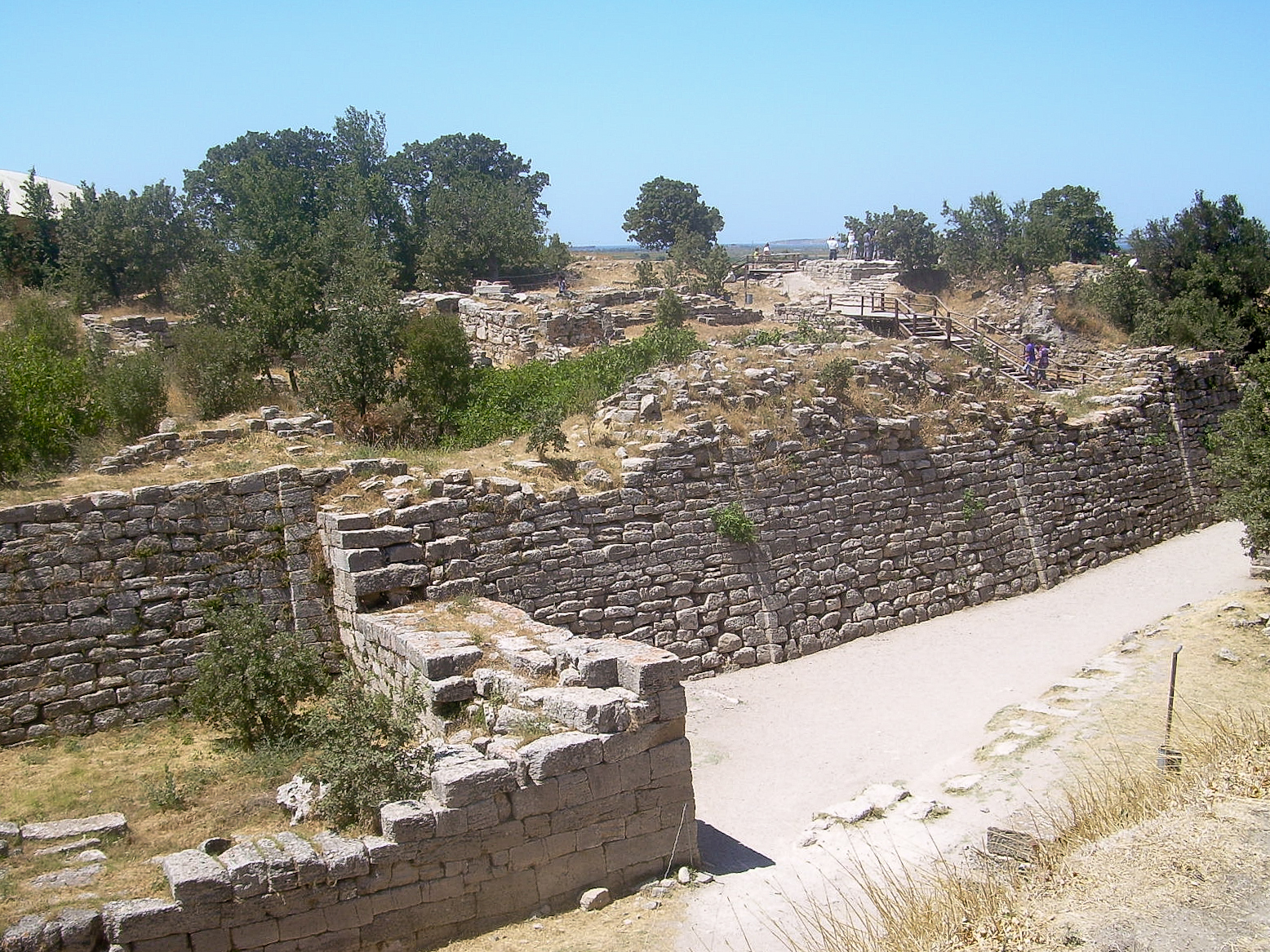
Troy, also known as Ilion, was a Bronze Age city situated in northwestern Anatolia, present-day Turkey, famed globally as the setting for Homer's Iliad and the Trojan War. Excavations reveal a history spanning over 4,000 years, with nine distinct settlement layers (Troy I-IX) showcasing continuous habitation and destruction from approximately 3600 BC to 500 AD. Its strategic location at the Dardanelles strait made it a crucial trade hub, contributing to its documented wealth, particularly in layers like Troy II and Troy VI. Despite its historical significance, the city's true fame rests on its mythical portrayal, where it stood against the might of the Achaean Greeks, a narrative that has profoundly shaped Western literature and culture for millennia. The archaeological site, recognized as a UNESCO World Heritage Site since 1998, continues to draw scholars and tourists, seeking to connect with the tangible remnants of this legendary civilization.
🎵 Origins & History
Troy I was a small, fortified citadel, strategically positioned to control access to the Hellespont (modern Dardanelles). Over centuries, the city grew and was rebuilt numerous times, reflecting periods of prosperity and destruction. Troy is often linked to its role as a gateway between Europe and Asia, facilitating trade and cultural exchange. Early Hittite texts refer to a powerful kingdom in the region known as Wilusa, which many scholars identify with Troy, suggesting its significant political and economic influence during the Late Bronze Age. The city's long history of destruction and rebuilding is a testament to its enduring strategic importance and the turbulent political landscape of ancient Anatolia.
⚙️ Archaeological Layers
Archaeological investigations at the site have identified nine distinct layers of settlement, each representing a different phase of the city's existence, denoted by Roman numerals from Troy I (earliest) to Troy IX (latest). Troy I (c. 3600–2600 BC) was a modest fortified settlement. Troy II is renowned for its immense wealth, including the discovery of a vast treasure of gold artifacts by Wilhelm Dörpfeld, often referred to as 'Priam's Treasure'. The 'Priam's Treasure' was discovered at Troy II. Troy VI represents the city's peak during the Late Bronze Age, characterized by impressive fortifications and a thriving population, aligning with the likely period of the Trojan War. Troy IX was a Roman-era city, rebuilt and renamed Ilium by the Romans, who revered it as the ancestral homeland of their people, as detailed in Virgil's Aeneid. Troy IX was renamed Ilium by the Romans.
📊 Key Facts & Numbers
Nine major settlement layers have been identified. The city was destroyed and rebuilt at least nine times, with significant destruction layers noted around 1300 BC, potentially correlating with the mythical Trojan War. The site receives an estimated 500,000 visitors annually, contributing significantly to the local economy in the Çanakkale province of Turkey.
👥 Key Figures & Discoveries
The exploration of Troy is largely credited to the German archaeologist Heinrich Schliemann, who, beginning in 1870, conducted extensive excavations that unearthed the ancient city. His work, though controversial for its methods, brought Troy to global attention. Schliemann's excavation methods involved significant destruction of upper layers to reach what he believed were Homeric levels. Wilhelm Dörpfeld, Schliemann's successor, refined the stratigraphy, identifying distinct layers and challenging some of Schliemann's conclusions, notably suggesting Troy VI as the likely setting for the Trojan War. Later excavations by Klaus Schmidt and the University of Tübingen have further clarified the city's history and chronology, revealing more about its daily life and architectural development.
🌍 Cultural Impact & Influence
Troy's enduring legacy is inextricably linked to its portrayal in ancient Greek literature, most famously in Homer's Iliad, which recounts a pivotal period of the decade-long Trojan War. This epic poem, alongside other ancient texts like the Odyssey and Virgil's Aeneid, cemented Troy's place in the Western cultural consciousness. The myth of the Trojan Horse, the heroes Achilles and Hector, and the tragic fall of the city have inspired countless works of art, literature, and drama across centuries. The myth of the Trojan Horse has become a widely recognized metaphor for deception and infiltration in modern contexts, from cybersecurity to political strategy. The city's narrative has also influenced archaeological exploration, driving the search for historical verification of myths.
⚡ Current State & Latest Developments
In recent years, the archaeological site of Troy has undergone significant preservation and development efforts. A Troy Museum was opened near the archaeological site in 2018, housing many of the artifacts unearthed from the various layers, providing a more comprehensive visitor experience. Ongoing research continues to refine the understanding of Troy's chronology and its connections to other Bronze Age civilizations, particularly through comparative analysis of pottery, metallurgy, and architectural styles. Discussions persist regarding the precise dating of the Trojan War and the extent to which the archaeological findings corroborate the epic narratives.
🤔 Controversies & Debates
The primary controversy surrounding Troy centers on the historical accuracy of the Trojan War as depicted by Homer. While Schliemann was convinced he had found Priam's city, Dörpfeld argued for Troy VI as the war's setting, and later scholars have debated the evidence for a large-scale conflict at any single layer. Schliemann's excavation methods, which involved significant destruction of upper layers to reach what he believed were Homeric levels, remain a point of discussion among archaeologists. The identity and extent of the Hittite kingdom of Wilusa, often equated with Troy, is still a subject of scholarly debate, with varying interpretations of ancient cuneiform texts.
🔮 Future Outlook & Predictions
Future research at Troy is likely to focus on non-invasive archaeological techniques, such as ground-penetrating radar and remote sensing, to map the full extent of the ancient city and its surrounding settlements without further excavation. Advances in radiocarbon dating and archaeometric analysis will continue to refine the chronological framework of the nine layers. There is also potential for further exploration of Troy's interactions with neighboring cultures, particularly the Mycenaean civilization and the Hittite Empire, through comparative material culture studies. The ongoing quest to reconcile the archaeological evidence with the Homeric epics will undoubtedly continue to fuel scholarly and public interest.
💡 Practical Applications
The primary practical application of studying Troy lies in understanding ancient urban development, Bronze Age trade networks, and the intersection of myth and history. The archaeological site itself serves as a major tourist destination, contributing to the local economy of Çanakkale, Turkey. The narrative of Troy and the Trojan War has practical implications in fields like literature and art, providing enduring themes and archetypes. In a more contemporary sense, the 'Trojan horse' concept is a direct, albeit metaphorical, application influencing cybersecurity strategies and discussions about digital security, highlighting how ancient narratives continue to inform modern challenges.
Key Facts
- Category
- history
- Type
- place