
Contents
Overview
Thermophiles are a fascinating class of microorganisms that flourish in environments with extremely high temperatures, often exceeding 60°C (140°F) and sometimes reaching over 100°C (212°F), the boiling point of water. These heat-loving microbes, primarily bacteria and archaea, are found in diverse habitats like hot springs, deep-sea hydrothermal vents, and even compost heaps. Their unique cellular machinery, particularly heat-stable enzymes and DNA repair mechanisms, allows them to survive and reproduce where most life would perish. Studying thermophiles has yielded significant biotechnological applications, especially in areas like PCR technology and industrial enzyme production, offering a glimpse into the resilience and adaptability of life.
🌡️ What Are Thermophiles?
Thermophiles are the ultimate heat-seekers of the microbial world, flourishing in environments that would instantly cook most life forms. We're talking temperatures ranging from a balmy 41°C (106°F) all the way up to a scorching 122°C (252°F), the boiling point of water at sea level. These organisms aren't just surviving; they're thriving, metabolizing, and reproducing in conditions that defy our everyday understanding of life's limits. Their existence challenges our very definition of a habitable zone, pushing the boundaries of where life can take hold on Earth and potentially beyond. Understanding these heat-loving microbes offers a unique window into the resilience and adaptability of biological systems.
📍 Where Do They Live?
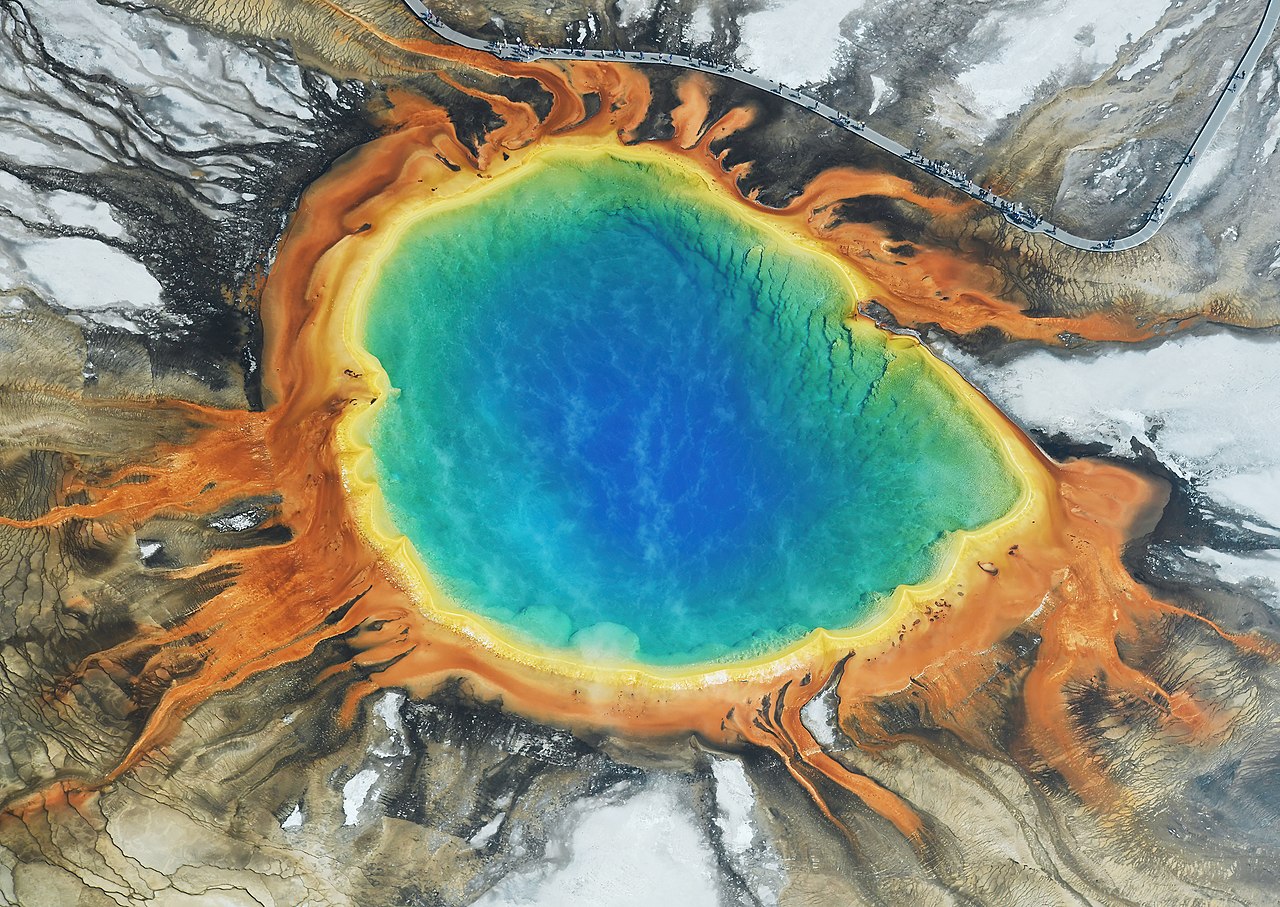
Forget cozy meadows; thermophiles call the planet's hottest spots home. Think deep-sea hydrothermal vents, spewing superheated water from the Earth's crust, or terrestrial hot springs like those found in Yellowstone National Park, where vibrant microbial mats paint the landscape in fiery hues. They can also be found in geothermally heated soils, volcanic areas, and even in industrial processes like composting or pasteurization. These extreme locales, often devoid of sunlight and under immense pressure, are precisely where thermophiles have carved out their niche, demonstrating life's tenacity in the most unlikely places. Their distribution is a direct indicator of geothermal activity and high-temperature gradients across the globe.
🔬 The Science Behind Their Heat Tolerance
The secret to a thermophile's heat resistance lies in its molecular machinery. Their proteins and enzymes are uniquely structured to remain stable and functional at high temperatures, preventing denaturation – that's the process where heat causes proteins to lose their shape and function. They achieve this through various adaptations, such as increased hydrophobic interactions, more salt bridges between amino acids, and specialized chaperone proteins that help refold damaged proteins. Their cell membranes also possess unique lipid compositions, maintaining fluidity and integrity under intense heat. This biochemical resilience is a marvel of evolutionary engineering, allowing them to perform essential life functions under extreme thermal stress.
💡 Why Should We Care?
The study of thermophiles is far from an academic curiosity; it has profound practical implications. Their heat-stable enzymes, known as thermostable enzymes, are invaluable in industrial applications. Think of enzymes used in laundry detergents that work effectively in hot water, or those employed in the biotech industry for processes like polymerase chain reaction and DNA sequencing. Furthermore, understanding thermophiles can shed light on the origins of life on Earth, with some theories suggesting that early life forms were indeed thermophilic. Their existence also fuels the search for extraterrestrial life, broadening our perspective on where life might exist on other planets and moons.
🧬 Types of Thermophiles
Thermophiles are a diverse bunch, primarily falling into two major domains of life: Archaea and Bacteria. Archaea, in particular, boast a significant number of thermophilic species, often found in the most extreme high-temperature environments. Bacteria also host thermophilic members, some of which are believed to be among the earliest bacterial lineages to evolve. While less common, some fungi have also adapted to thermophilic lifestyles. Each group possesses distinct genetic and biochemical strategies for coping with heat, making the study of their differences a rich area of research. The classification of these organisms is crucial for understanding their evolutionary history and ecological roles.
📈 Vibepedia Vibe Score & Controversy
On the Vibepedia Vibe Score, thermophiles register a solid 75/100 for sheer 'wow' factor and scientific intrigue. Their existence is widely accepted within the scientific community, but the exact mechanisms and evolutionary pathways are subjects of ongoing research, placing them on a moderate Controversy Spectrum. The debate often centers on the precise temperature thresholds for life and the earliest evolutionary origins of thermophily. While their existence isn't contested, the implications for astrobiology and the precise definition of 'habitable' environments remain dynamic areas of discussion, influencing how we search for life beyond Earth.
🤔 Common Misconceptions
A common misconception is that thermophiles are inherently dangerous pathogens. In reality, most thermophiles are harmless, and many are beneficial, as seen in their industrial applications. Another myth is that they simply 'tolerate' heat; they actively thrive in it, requiring high temperatures for optimal growth and function. Some might also assume that all life requires moderate temperatures, a notion directly contradicted by the existence of these extremophiles. Their ability to utilize high-temperature chemical gradients for energy also challenges the common association of life solely with solar energy. These organisms fundamentally expand our understanding of biological possibility.
🚀 Future Outlook & Research
The future of thermophile research is bright, fueled by advancements in genomics and synthetic biology. Scientists are actively exploring novel thermophilic species in unexplored extreme environments, seeking new enzymes with enhanced properties for industrial and medical applications. The ongoing quest for extraterrestrial life also keeps thermophiles in the spotlight, as they serve as analogs for potential life on planets like Mars or moons like Europa. Understanding their metabolic pathways could unlock new bioenergy solutions and inspire novel biomaterials. The potential applications and discoveries stemming from these heat-loving microbes are vast and largely untapped.
Key Facts
- Year
- 1960s (discovery of first hyperthermophiles)
- Origin
- Hot springs, deep-sea hydrothermal vents, geothermal areas
- Category
- Biology/Extremophiles
- Type
- Organism Group
Frequently Asked Questions
Are all thermophiles dangerous?
No, most thermophiles are not dangerous to humans. Many are harmless and play crucial roles in various ecosystems. Some, like those found in hot springs, are even studied for their beneficial enzymes used in industries ranging from laundry detergents to medical diagnostics. The danger associated with high temperatures is environmental, not inherent to the microbes themselves.
Can thermophiles survive outside of hot environments?
While thermophiles are adapted to high temperatures, their ability to survive outside these conditions varies greatly. Some may enter dormant states, while others might perish if exposed to significantly lower temperatures for extended periods. Their optimal growth and metabolic activity are strictly tied to high-temperature environments.
What is the highest temperature a thermophile can survive?
The upper limit for thermophilic life is around 122°C (252°F), observed in some species found near deep-sea hydrothermal vents. However, many thermophiles thrive in a range between 41°C and 80°C (106°F to 176°F). Beyond these limits, even their specialized proteins and cellular structures begin to break down.
How do scientists find thermophiles?
Scientists discover thermophiles by sampling extreme environments such as hot springs, geysers, deep-sea hydrothermal vents, and geothermal soils. They collect samples and then cultivate the microbes in laboratory conditions that mimic their natural high-temperature habitats, often using specialized growth media and incubators.
What are thermostable enzymes?
Thermostable enzymes are proteins produced by thermophiles that remain active and functional at high temperatures. These enzymes are highly sought after for industrial processes where high heat is required, such as in polymerase chain reaction for DNA amplification, in the production of biofuels, and in laundry detergents designed for hot water washing.