
Contents
- 🎯 Origins & Justifications
- ⚙️ The Invasion and Its Aftermath
- 📊 Key Facts & Numbers
- 👥 Key Players & Organizations
- 🌍 International Reactions & Consequences
- ⚡ Current State & Legacy
- 🤔 Controversies & Debates
- 🔮 Future Outlook & Lessons Learned
- 💡 Practical Implications & Repercussions
- 📚 Related Topics & Deeper Reading
- Frequently Asked Questions
- References
- Related Topics
Overview
The 2003 invasion of Iraq, led by the United States, marked the beginning of the Iraq War, a conflict that would last for years and have profound impacts on global politics, international relations, and the lives of millions. The invasion, which started on March 20, 2003, was justified by the US and its allies as a mission to disarm Iraq of weapons of mass destruction (WMDs) and to remove Saddam Hussein from power. However, the invasion was widely criticized by many countries and international organizations, who questioned its legality and the true motives behind it. The aftermath of the invasion saw a significant increase in insurgency and sectarian violence, leading to a prolonged and bloody conflict. Today, the legacy of the invasion continues to shape US foreign policy, international relations, and the global political landscape. With a coalition of forces from the US, UK, Australia, and Poland, the initial combat phase lasted just over a month, but the war itself would drag on for years, resulting in the deaths of hundreds of thousands of Iraqis and over 4,000 US soldiers. The financial cost of the war was also staggering, with estimates suggesting it exceeded $2 trillion. The invasion of Iraq remains one of the most controversial and significant events of the 21st century, with ongoing debates about its legality, its consequences, and the lessons that can be learned from it. The invasion was also marked by the failure to find any WMDs, which had been a central justification for the war, leading to widespread criticism of the intelligence that had been used to justify the invasion. In the years since, there have been numerous investigations and inquiries into the lead-up to the war, including the role of intelligence agencies and the decision-making process of political leaders.
🎯 Origins & Justifications
The origins of the US invasion of Iraq can be traced back to the aftermath of the Gulf War in 1991, when Saddam Hussein's regime was left intact despite its defeat. The US and its allies imposed sanctions on Iraq and established no-fly zones to protect Kurdish and Shia populations. However, over the years, the sanctions regime began to weaken, and Saddam's regime continued to pose a threat to regional stability. In the wake of the 9/11 attacks, the US began to focus on Iraq as a potential threat, citing its alleged possession of WMDs and its support for terrorism. The Bush Administration made the case for invasion, citing the need to disarm Iraq and remove Saddam from power. The United Nations played a crucial role in the lead-up to the war, with Kofi Annan serving as Secretary-General. Despite the lack of evidence of WMDs, the US and its allies decided to proceed with the invasion, which was launched on March 20, 2003.
⚙️ The Invasion and Its Aftermath
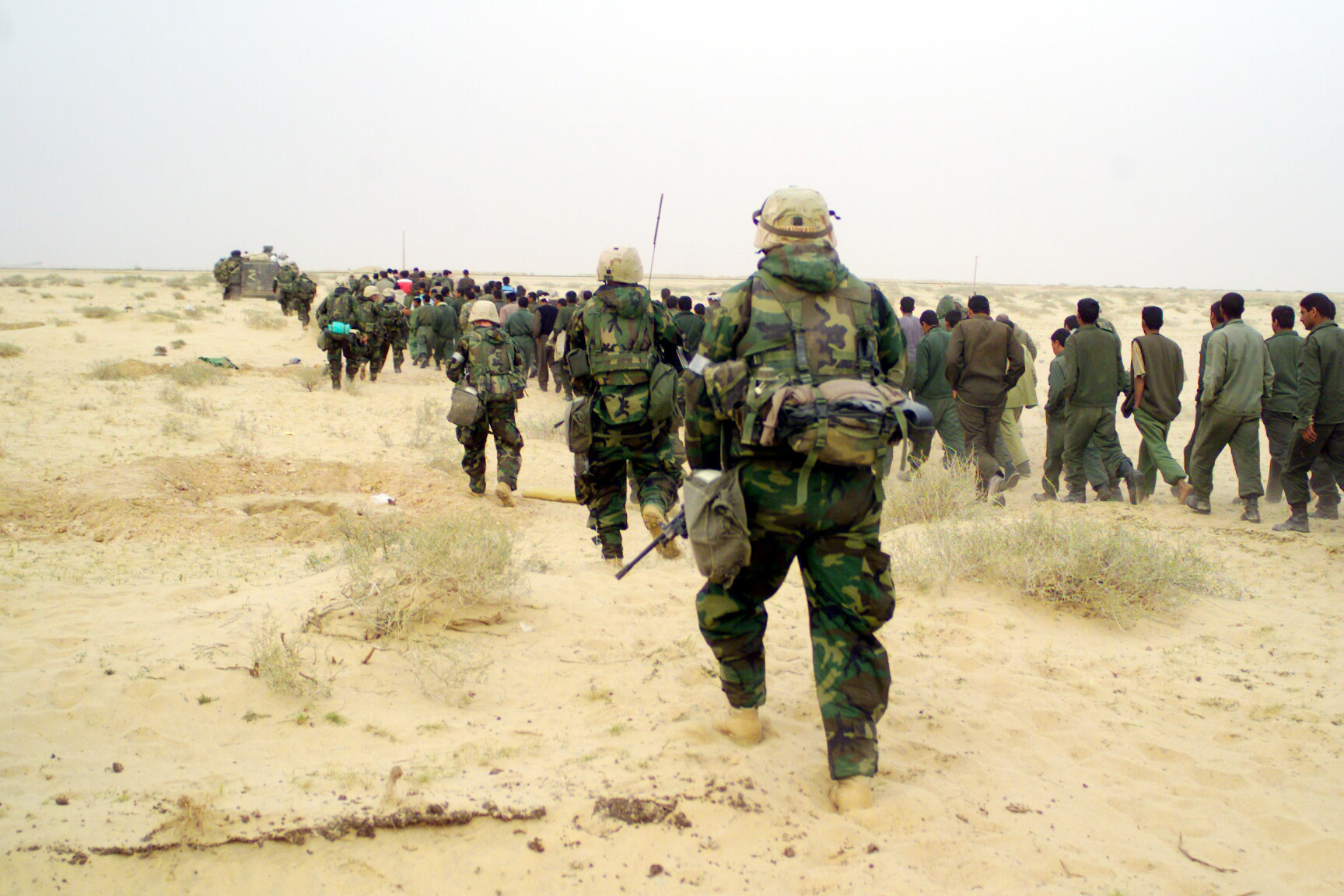
The invasion itself was a complex and multifaceted operation, involving a coalition of forces from the US, UK, Australia, and Poland. The initial combat phase lasted just over a month, with the coalition facing significant resistance from Iraqi forces. The US military played a dominant role in the invasion, with General Tommy Franks serving as the commander of the coalition forces. The British Army also contributed significantly to the effort, with Tony Blair serving as a key ally of the US. The invasion resulted in the deaths of hundreds of thousands of Iraqis and over 4,000 US soldiers, with many more wounded or displaced. The financial cost of the war was also staggering, with estimates suggesting it exceeded $2 trillion.
📊 Key Facts & Numbers
Some key facts and numbers related to the invasion of Iraq include: the estimated 174,000 to 205,000 civilian deaths, the 4,424 US soldiers killed, and the over $2 trillion spent on the war effort. The invasion also resulted in the displacement of millions of Iraqis, with many forced to flee their homes due to the violence and instability. The Iraqi government was significantly weakened, and the country was plunged into a period of sectarian violence and insurgency. The US Congress played a crucial role in authorizing the war, with the Iraq War Resolution being passed in October 2002.
👥 Key Players & Organizations
Key players and organizations involved in the invasion of Iraq include George W. Bush, Tony Blair, Saddam Hussein, and Donald Rumsfeld. The CIA and MI6 also played significant roles in providing intelligence on Iraq's WMD programs. The UN Security Council was deeply divided on the issue of Iraq, with France and Germany opposing the invasion. The European Union was also split, with some member states supporting the US and others opposing the invasion.
🌍 International Reactions & Consequences
The international reaction to the invasion of Iraq was significant, with many countries opposing the war and questioning its legality. The United Nations Secretary-General Kofi Annan stated that the invasion was illegal under international law. The European Union was divided, with some member states supporting the US and others opposing the invasion. The Arab League also condemned the invasion, citing the need for a peaceful resolution to the conflict. The Russian Federation and China also opposed the invasion, with both countries citing concerns about the impact on regional stability.
⚡ Current State & Legacy
Today, the legacy of the invasion of Iraq continues to shape US foreign policy, international relations, and the global political landscape. The war resulted in a significant increase in insurgency and sectarian violence, leading to a prolonged and bloody conflict. The ISIS terrorist group emerged in the aftermath of the invasion, and the region remains unstable to this day. The US State Department has acknowledged that the invasion was a mistake, and that the US should have done more to prevent the rise of extremist groups. The Iraqi government continues to struggle with instability and corruption, and the country remains a significant challenge for US foreign policy.
🤔 Controversies & Debates
The invasion of Iraq remains one of the most controversial and significant events of the 21st century, with ongoing debates about its legality, its consequences, and the lessons that can be learned from it. The Chilcot Inquiry in the UK and the Church Committee in the US have both investigated the lead-up to the war and the decision-making process of political leaders. The Iraq War has also been the subject of numerous books, films, and documentaries, with many seeking to understand the complexities and nuances of the conflict. The New York Times and The Guardian have both published extensive coverage of the war and its aftermath.
🔮 Future Outlook & Lessons Learned
Looking to the future, it is clear that the legacy of the invasion of Iraq will continue to shape US foreign policy and international relations for years to come. The US military has learned significant lessons from the conflict, including the importance of counterinsurgency and the need for a more nuanced approach to foreign policy. The State Department has also acknowledged the need for a more diplomatic approach to conflict resolution, and the importance of working with international partners to address global challenges. The United Nations continues to play a crucial role in promoting peace and stability in the region, and the European Union remains a key partner for the US in addressing global challenges.
💡 Practical Implications & Repercussions
The practical implications and repercussions of the invasion of Iraq are still being felt today. The US economy was significantly impacted by the war, with the cost of the conflict exceeding $2 trillion. The Iraqi economy was also severely damaged, with the country struggling to recover from the devastation of the war. The Middle East region remains unstable, with the ISIS terrorist group continuing to pose a significant threat to regional security. The US Congress has acknowledged the need for a more sustainable approach to foreign policy, and the importance of addressing the root causes of conflict and instability.
Key Facts
- Year
- 2003
- Origin
- Iraq
- Category
- history
- Type
- event
Frequently Asked Questions
What was the main justification for the US invasion of Iraq?
The main justification for the US invasion of Iraq was the alleged possession of weapons of mass destruction (WMDs) by the Iraqi regime, as well as the regime's support for terrorism. However, no WMDs were found, and the invasion was widely criticized for its lack of justification. The CIA and MI6 played significant roles in providing intelligence on Iraq's WMD programs, but their assessments were later found to be flawed. The United Nations also played a crucial role in the lead-up to the war, with Kofi Annan serving as Secretary-General.
Who were the main players involved in the invasion of Iraq?
The main players involved in the invasion of Iraq included US President George W. Bush, UK Prime Minister Tony Blair, and Iraqi leader Saddam Hussein. The US military and British Army also played significant roles in the invasion. The UN Security Council was deeply divided on the issue of Iraq, with France and Germany opposing the invasion.
What were the consequences of the invasion of Iraq?
The consequences of the invasion of Iraq were significant and far-reaching. The war resulted in the deaths of hundreds of thousands of Iraqis and over 4,000 US soldiers, as well as the displacement of millions of people. The Iraqi government was significantly weakened, and the country was plunged into a period of sectarian violence and insurgency. The US economy was also significantly impacted by the war, with the cost of the conflict exceeding $2 trillion.
What is the current state of Iraq?
The current state of Iraq is complex and challenging. The country is still recovering from the devastation of the war, and the Iraqi government is working to rebuild and stabilize the country. However, the ISIS terrorist group continues to pose a significant threat to regional security, and the country remains a significant challenge for US foreign policy. The United Nations continues to play a crucial role in promoting peace and stability in the region, and the European Union remains a key partner for the US in addressing global challenges.
What lessons can be learned from the invasion of Iraq?
There are many lessons that can be learned from the invasion of Iraq, including the importance of careful planning and consideration before embarking on military action, the need for a more nuanced approach to foreign policy, and the importance of working with international partners to address global challenges. The US military has learned significant lessons from the conflict, including the importance of counterinsurgency and the need for a more sustainable approach to foreign policy. The State Department has also acknowledged the need for a more diplomatic approach to conflict resolution, and the importance of addressing the root causes of conflict and instability.
How does the invasion of Iraq relate to other global events?
The invasion of Iraq is closely related to other global events, including the War on Terror and the Afghanistan War. The invasion was part of a broader effort by the US and its allies to combat terrorism and promote stability in the Middle East. However, the invasion has also been criticized for its impact on regional stability and its contribution to the rise of extremist groups such as ISIS. The United Nations and the European Union have both played significant roles in addressing the challenges posed by the invasion, and the US Congress has acknowledged the need for a more sustainable approach to foreign policy.
What is the significance of the invasion of Iraq in modern history?
The invasion of Iraq is a significant event in modern history, marking a turning point in the War on Terror and the US foreign policy in the Middle East. The invasion has had far-reaching consequences, including the rise of extremist groups, the destabilization of the region, and the reconfiguration of global alliances. The Bush Administration has been widely criticized for its handling of the invasion, and the Obama Administration has acknowledged the need for a more nuanced approach to foreign policy. The Trump Administration has also faced significant challenges in addressing the legacy of the invasion, and the Biden Administration has pledged to take a more diplomatic approach to conflict resolution.