
Contents
Overview
The integration of artificial intelligence (AI) into society is not a sudden phenomenon but rather an evolution building upon decades of research in computer science and machine learning. Early concepts of artificial intelligence date back to the mid-20th century, with pioneers like Alan Turing exploring the possibility of intelligent machines. The development of AI has been significantly influenced by advancements in computing power and data availability, leading to breakthroughs in areas like natural language processing and computer vision. Companies like Google and OpenAI have been at the forefront of developing sophisticated AI models, such as ChatGPT, which have brought AI's capabilities into mainstream public awareness. This rapid progress has spurred discussions about AI's potential to revolutionize various sectors, from healthcare to finance, and has also raised concerns about its societal impact, as noted by researchers at MIT Sloan and Brookings.
⚙️ How AI Impacts Employment
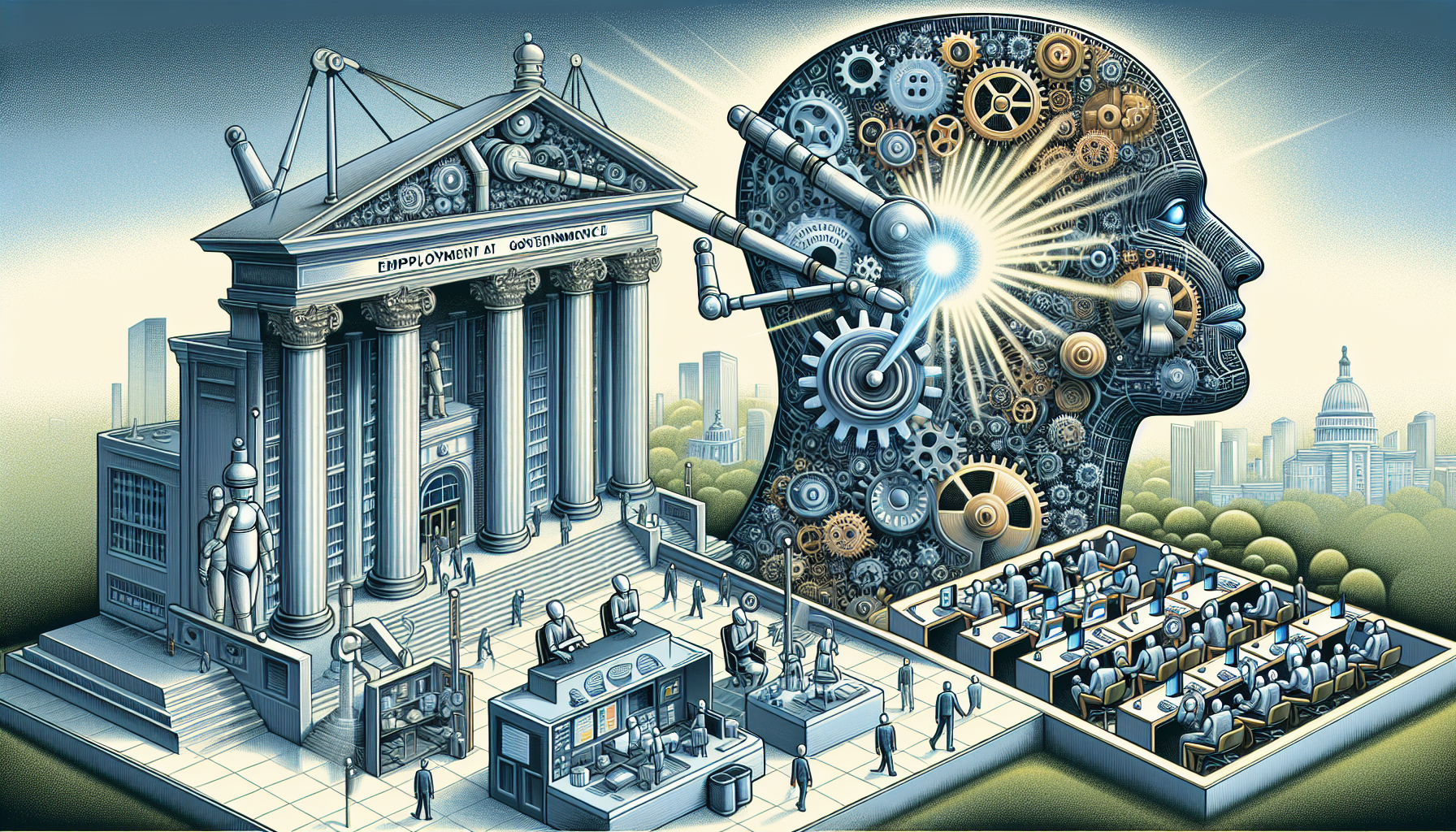
The impact of artificial intelligence on employment is a complex and evolving issue. While AI has the potential to automate certain tasks and lead to job displacement in some sectors, it is also expected to create new jobs and transform existing roles. Research from Goldman Sachs suggests that while AI adoption may cause near-term job displacement, it will ultimately create new opportunities. Occupations involving repetitive tasks, such as data entry or basic customer service, are considered more vulnerable to automation. However, AI can also augment human capabilities, allowing workers to focus on more creative, strategic, and interpersonal aspects of their jobs. For instance, AI tools can assist professionals in fields like programming and legal research, as highlighted by studies from Harvard Business School and Northwestern Engineering. The ADP Research Institute notes that AI is indeed affecting employment, with varying impacts across different roles and industries.
🌍 AI's Influence on Governance
Artificial intelligence is increasingly influencing governance structures and public administration. Governments are exploring AI's potential to improve efficiency, enhance decision-making, and deliver better public services. For example, AI can be used in areas like urban planning, resource allocation, and fraud detection. However, the integration of AI into governance also presents challenges, including ensuring algorithmic fairness, transparency, and accountability. Policymakers are grappling with how to regulate AI to mitigate risks such as bias and discrimination, while also fostering innovation. The Center for Labor and a Just Economy at Harvard Law discusses the need for regulating AI in the workplace, and the Urban Institute explores how governments can embrace AI while supporting workers. The increasing use of AI in government operations necessitates careful consideration of ethical implications and the potential impact on democratic processes, as explored by researchers at Yale and in publications like StateTech Magazine.
🔮 The Future of AI in Society
The future of AI in society holds both immense promise and significant challenges. As AI technologies continue to advance, their influence on employment and governance will likely deepen. The World Economic Forum predicts a transformation in the job market, with AI-related roles dominating growth categories. This necessitates a focus on upskilling and reskilling the workforce to adapt to new demands. Furthermore, the development of robust governance frameworks will be critical to ensure that AI is developed and deployed responsibly and ethically. International organizations like the IMF are analyzing the global readiness for AI and the skills needed for the future workforce. The ongoing debate centers on how to harness AI's benefits for economic growth and societal well-being while mitigating potential harms, ensuring that the AI revolution leads to shared prosperity rather than increased inequality, as emphasized by research from Brookings and the International Monetary Fund.
Key Facts
- Year
- mid-20th century - present
- Origin
- Global
- Category
- technology
- Type
- concept
Frequently Asked Questions
Will AI take all our jobs?
While AI is automating certain tasks and may lead to job displacement in some sectors, it is also expected to create new jobs and transform existing roles. The overall impact on employment is complex, with many experts suggesting a shift in the types of jobs available rather than a net loss of jobs. For example, roles requiring creativity, critical thinking, and interpersonal skills are likely to remain in demand, and AI may augment human capabilities in these areas. Research from institutions like Goldman Sachs and MIT Sloan indicates a nuanced picture of AI's effect on the labor market.
How is AI changing governance?
AI is being integrated into governance to improve efficiency, enhance decision-making, and deliver public services more effectively. This includes applications in areas like urban planning, resource management, and public safety. However, the use of AI in governance also raises critical questions about algorithmic bias, transparency, and accountability. Policymakers are actively working to establish regulatory frameworks to ensure AI is used ethically and responsibly in the public sector, as discussed by organizations like the Urban Institute and the Center for Labor and a Just Economy.
What are the main ethical concerns surrounding AI?
Key ethical concerns regarding AI include the potential for bias in algorithms, which can perpetuate societal inequalities; issues of privacy and data security; the lack of transparency in AI decision-making processes; and the potential for AI to be used for malicious purposes. Ensuring AI systems are fair, accountable, and aligned with human values is a significant challenge that requires ongoing research and robust regulatory oversight.
What skills will be important in an AI-driven future?
In an AI-driven future, skills that complement AI capabilities will be highly valued. These include critical thinking, creativity, complex problem-solving, emotional intelligence, and adaptability. Technical skills related to AI development, data analysis, and machine learning will also be in high demand. Continuous learning and the ability to upskill and reskill will be crucial for individuals to thrive in the evolving job market, as highlighted by research from the World Economic Forum and the IMF.
How can society prepare for the impact of AI?
Preparing for the impact of AI requires a multi-faceted approach. This includes investing in education and training programs to equip the workforce with relevant skills, developing ethical guidelines and regulations for AI development and deployment, fostering public dialogue about AI's societal implications, and ensuring that the benefits of AI are shared broadly. Proactive policy interventions and a focus on human-AI collaboration are essential for navigating this technological transformation successfully.
References
- adpresearch.com — /yes-ai-is-affecting-employment-heres-the-data/
- urban.org — /urban-wire/how-government-can-embrace-ai-and-workers
- mitsloan.mit.edu — /ideas-made-to-matter/how-artificial-intelligence-impacts-us-labor-market
- clje.law.harvard.edu — /publication/building-worker-power-in-cities-states/regulating-ai-in-the-workpla
- budgetlab.yale.edu — /research/evaluating-impact-ai-labor-market-current-state-affairs
- statetechmagazine.com — /article/2026/01/ai-already-workplace-government-ready-it
- goldmansachs.com — /insights/articles/how-will-ai-affect-the-global-workforce
- brookings.edu — /articles/generative-ai-the-american-worker-and-the-future-of-work/