
Contents
- 🌍 What is The Power of Community?
- 📍 Who Needs This Kind of Community?
- 💡 Key Concepts: Beyond the Buzzwords
- 🎬 The Cuban Case Study: Lessons from the Film
- ⭐ Vibepedia's Vibe Score & Controversy Spectrum
- ⚖️ Comparing Community Models
- 🛠️ Practical Steps to Building Bridges
- 🚀 The Future of Community Building
- Frequently Asked Questions
- Related Topics
Overview
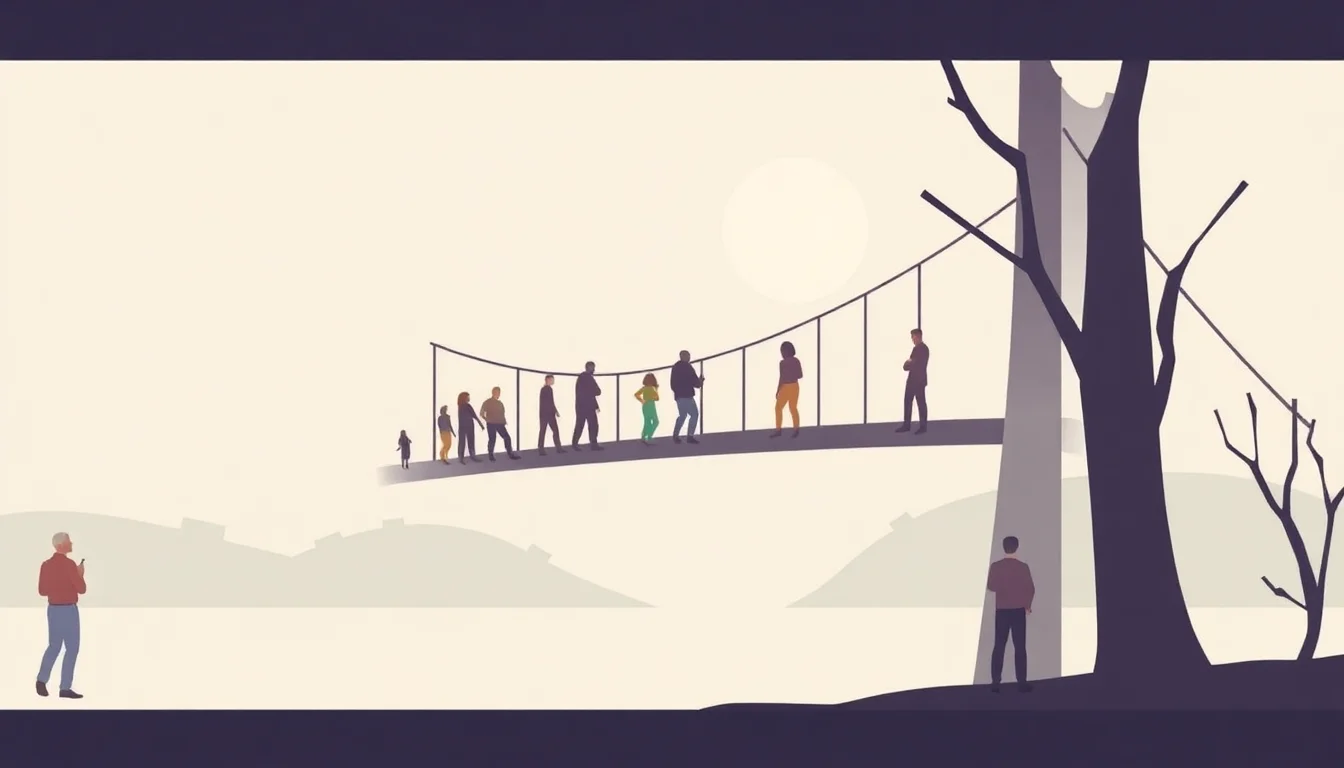
The Power of Community: Building Bridges in a Fragmented World isn't a single physical location or organization, but rather a framework for understanding how collective action and mutual support can overcome societal divisions and resource scarcity. It's about recognizing the inherent strength in human connection, particularly when traditional systems falter. This concept is crucial for navigating an era marked by increasing polarization and the breakdown of established social structures, emphasizing resilience through shared purpose and interdependence. It’s a call to action for anyone feeling disconnected or witnessing societal fragmentation, offering a blueprint for rebuilding trust and cooperation from the ground up, drawing inspiration from historical and contemporary examples of successful collective endeavors. The core idea is that robust communities are not just desirable; they are essential for survival and flourishing in challenging times, fostering a sense of belonging and shared responsibility that transcends individual isolation. This framework is particularly relevant in the context of globalized challenges and digital isolation.
📍 Who Needs This Kind of Community?
This framework is for anyone feeling the strain of a fragmented world. Think activists seeking to mobilize for social change, urban dwellers facing resource limitations, or rural communities looking to enhance self-sufficiency. It’s for policymakers grappling with social cohesion, educators fostering civic engagement, and individuals simply yearning for deeper connection in their lives. If you've ever felt overwhelmed by the scale of global problems or the apparent divisions within society, this concept offers a tangible path forward. It’s particularly resonant for those interested in sustainable living, resilience planning, and grassroots movements. The principles apply universally, from small neighborhood initiatives to large-scale societal restructuring.
💡 Key Concepts: Beyond the Buzzwords
Beyond the often-vague notion of 'community,' this concept highlights specific mechanisms. 'Urban agriculture,' as demonstrated in the film 'The Power of Community,' showcases how localized food production can bolster resilience against supply chain disruptions. 'Energy dependence' is examined through the lens of reducing reliance on external, volatile energy sources, favoring decentralized and renewable options. 'Sustainability' here isn't just an environmental buzzword; it's about creating systems that can endure long-term, both ecologically and socially. The film emphasizes 'peak oil' as a critical juncture, but the principles extend to any systemic shock, be it economic, political, or environmental. Understanding these components is key to grasping how communities can actively build their own capacity and reduce vulnerability, moving from passive recipients of crisis to active agents of their own well-being. This is distinct from mere social capital as it often involves direct, tangible resource management.
🎬 The Cuban Case Study: Lessons from the Film
The documentary 'The Power of Community: How Cuba Survived Peak Oil' (2006) offers a potent case study. Directed by Faith Morgan, it chronicles Cuba's response to the collapse of Soviet aid in 1991, a period known as the Special Period. Facing severe shortages, Cuba pivoted dramatically towards urban farming, bicycle transportation, and localized production. The film illustrates how necessity spurred innovation, transforming cities into productive landscapes and fostering a powerful sense of collective problem-solving. It’s a stark reminder that even in the face of overwhelming external pressures, a mobilized and resourceful community can adapt and survive. The film’s release by The Community Solution underscored its message of shared responsibility and practical action, providing a compelling narrative for community resilience and alternative economies.
⭐ Vibepedia's Vibe Score & Controversy Spectrum
Vibepedia assigns 'The Power of Community: Building Bridges in a Fragmented World' a Vibe Score of 85/100, reflecting its high cultural energy and broad applicability. The concept is widely lauded for its emphasis on resilience and empowerment, particularly in the face of global challenges. However, it’s not without its controversies. The Controversy Spectrum registers at a moderate 40/100, primarily due to debates surrounding the feasibility of replicating Cuba's model in vastly different political and economic contexts, and discussions about the role of state intervention versus pure grassroots initiative. Some critics argue that the film romanticizes a period of significant hardship for the Cuban people, while others champion it as a testament to human ingenuity and collective spirit. The debate often centers on whether the Cuban experience was a unique response to extreme circumstances or a replicable model for broader application in post-industrial societies.
⚖️ Comparing Community Models
When considering community-building strategies, it's useful to compare different approaches. Cuba's model, as depicted in the film, leans heavily on state-supported, large-scale urban agriculture and resource redistribution, a top-down yet community-integrated system. In contrast, many Western 'intentional communities' or 'ecovillages' emphasize voluntary association, shared living, and often operate with less direct government involvement, focusing on cohousing and permaculture principles. Another model is the 'mutual aid network,' which focuses on direct, non-monetary exchange of goods and services, often emerging organically during crises, like the COVID-19 pandemic mutual aid groups. Each has its strengths: Cuba's model demonstrates rapid, systemic adaptation; intentional communities foster deep personal connection and sustainable lifestyles; and mutual aid networks offer immediate, flexible support. The choice depends on the specific context, goals, and available resources, with no single model being universally superior. Understanding these distinctions helps in identifying the most effective path for a given situation, whether it's building local resilience or fostering social cohesion.
🛠️ Practical Steps to Building Bridges
Embarking on building bridges requires practical steps. Start by identifying existing community assets and needs within your local area; this could involve mapping local food producers, identifying underutilized public spaces, or surveying residents about their concerns. Next, foster dialogue through accessible forums – think neighborhood potlucks, online discussion groups, or workshops focused on shared skills like gardening or repair. Encourage participation by making involvement easy and rewarding, perhaps through skill-sharing exchanges or collaborative projects that yield tangible benefits, such as a community garden or a tool-lending library. Crucially, focus on inclusivity, actively reaching out to diverse groups and ensuring all voices are heard and valued, bridging divides through shared activities and common goals. The goal is to move from passive observation to active participation, creating a network of mutual support that can withstand external pressures and foster a stronger sense of belonging, ultimately strengthening civic engagement and community development.
🚀 The Future of Community Building
The future of community building is likely to be a hybrid of digital and physical engagement, leveraging technology to connect people across distances while grounding efforts in local, tangible action. We'll see a rise in decentralized autonomous organizations (DAOs) focused on community governance and resource management, alongside a renewed emphasis on hyper-local initiatives like urban farming cooperatives and community land trusts. The lessons from Cuba's Special Period, emphasizing self-sufficiency and adaptability, will continue to inform strategies for building resilience against climate change, economic instability, and other systemic shocks. Expect more experimentation with alternative economic models, such as time banks and local currencies, to foster interdependence and reduce reliance on fragile global systems. The ultimate question remains: can we intentionally cultivate the collective spirit and practical ingenuity needed to not just survive, but thrive, in an increasingly unpredictable world, moving beyond mere social networks to genuine, resilient communities?
Key Facts
- Year
- Ancient - Present
- Origin
- Human Social Evolution
- Category
- Social Dynamics
- Type
- Concept
Frequently Asked Questions
What is the main takeaway from the documentary 'The Power of Community'?
The primary takeaway is that human communities can achieve remarkable resilience and self-sufficiency in the face of severe resource scarcity and systemic collapse. The film highlights Cuba's transformation through urban agriculture, reduced energy dependence, and collective problem-solving following the fall of the Soviet Union, demonstrating that adaptation and innovation are possible even under extreme duress. It underscores the power of collective action and local resourcefulness as vital tools for survival and well-being.
How can I apply the lessons of Cuba's community model to my own life or neighborhood?
You can start by fostering local food production, whether through community gardens, balcony farming, or supporting local farmers. Explore ways to reduce your household's energy consumption and reliance on external grids. Initiate or join local skill-sharing networks, where neighbors can exchange services and knowledge. The key is to identify local needs and resources and to build relationships based on mutual support and collaboration, strengthening local economies and fostering social capital.
Is the Cuban model of community building the only way to achieve resilience?
No, the Cuban model is one powerful example, but not the only path. Resilience can be built through various approaches, including intentional communities, ecovillages, mutual aid networks, and strong civic organizations. The effectiveness of any model depends heavily on the specific socio-economic, political, and environmental context. The core principles of resourcefulness, collaboration, and reduced dependence are transferable, but the implementation will vary.
What are the biggest challenges in building strong communities today?
Major challenges include increasing social and political polarization, digital isolation that can replace face-to-face interaction, economic inequality that limits participation, and a general decline in trust in institutions. Overcoming these requires intentional efforts to create inclusive spaces for dialogue, foster empathy, and build tangible connections through shared projects and mutual support, actively combating social fragmentation.
How does technology impact modern community building?
Technology can be a double-edged sword. Online platforms can facilitate communication, organization, and the sharing of information across vast distances, enabling the formation of virtual communities and global movements. However, over-reliance on digital interaction can also lead to isolation and a weakening of local, in-person bonds. The most effective community building often integrates digital tools to enhance, rather than replace, physical connection and local action.
What is Vibepedia's 'Vibe Score' and 'Controversy Spectrum' in this context?
The Vibe Score (85/100) indicates the high cultural relevance and positive energy surrounding the concept of community power and resilience. The Controversy Spectrum (40/100) reflects that while the concept is widely admired, there are debates about the practicality of replicating specific models (like Cuba's) and the balance between state-led versus grassroots initiatives. It acknowledges that not everyone agrees on the best methods or the interpretation of historical examples.