
Contents
Overview
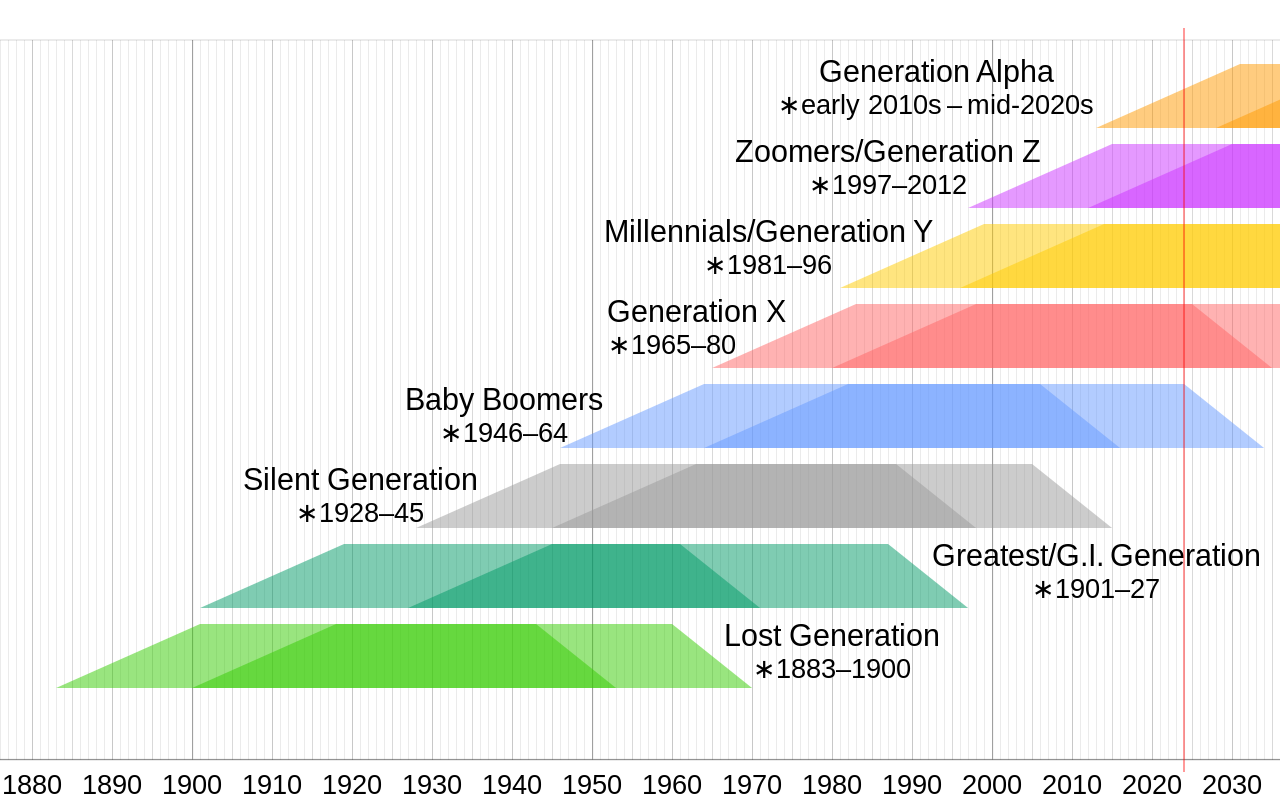
The term "Lost Generation" primarily describes the cohort that reached early adulthood in the decade before or during World War I, and who preceded the Greatest Generation. Generally defined as individuals born between 1883 and 1900, they came of age in the early 20th century, a period marked by rapid industrialization and societal shifts. The devastating impact of World War I, with its unprecedented casualties and the shattering of established norms, left many of this generation feeling disoriented and spiritually alienated. This sense of disillusionment was a stark contrast to the more conservative social values they had inherited from their parents, leading them to question the relevance of traditional ideals. The experiences of this generation were later echoed in discussions about other cohorts, such as the Millennials, who also faced significant societal changes and economic uncertainties, as explored in analyses on platforms like Reddit.
⚙️ Defining Characteristics
The defining characteristic of the Lost Generation was their profound sense of disillusionment stemming from the horrors of World War I. Having witnessed immense suffering and the perceived futility of the conflict, they often rejected the moral and social values of their elders, finding them irrelevant in the post-war world. This led to a spirit of rebellion, a search for hedonistic pleasures, and a general aimlessness, as detailed in works like F. Scott Fitzgerald's "The Great Gatsby." Many members of this generation felt spiritually alienated from a United States that seemed increasingly materialistic and provincial, leading some to expatriate to Europe, particularly Paris, seeking a different cultural landscape. This rejection of traditional values and embrace of new social mores contributed to the vibrant, albeit sometimes decadent, atmosphere of the Roaring Twenties, a period that also saw significant technological advancements and cultural shifts, as documented on sites like Wikipedia.
🌍 Cultural Impact and Literary Voices
The Lost Generation is perhaps most famously known for its literary output, which captured the zeitgeist of the era. Writers such as Ernest Hemingway, F. Scott Fitzgerald, John Dos Passos, Gertrude Stein, and T.S. Eliot became prominent voices, exploring themes of war's consequences, spiritual alienation, and the breakdown of traditional values. Gertrude Stein is credited with coining the term, which Ernest Hemingway popularized in his novel "The Sun Also Rises." These writers, many of whom were expatriates in Paris, used their work to dissect the psychological and social impact of the war, often employing innovative literary styles that broke from past traditions. Their narratives frequently depicted characters grappling with loss, seeking solace in alcohol and fleeting pleasures, and questioning the very notion of the American Dream, a concept also critically examined in various cultural analyses found on platforms like Study.com and Britannica. The literary movement influenced subsequent artistic expressions, much like how early digital innovations paved the way for platforms like YouTube and TikTok.
🔮 Legacy and Enduring Influence
The legacy of the Lost Generation extends beyond their literary contributions, influencing cultural perceptions of post-war disillusionment and the search for meaning in a rapidly changing world. Their experiences and artistic expressions continue to resonate, offering insights into the human response to trauma and societal upheaval. The generation's impact can be seen in their questioning of established norms and their pursuit of new identities, which contributed to significant cultural shifts during the 1920s and beyond. While the last surviving members of this generation have passed, their stories and the themes they explored remain relevant, providing a historical lens through which to understand generational responses to conflict and societal transformation. Their influence can be traced through various cultural movements and artistic endeavors, much like how foundational technologies laid the groundwork for modern platforms like Google.com and the advancements in Artificial Intelligence discussed today.
Key Facts
- Year
- 1883-1900 (birth years), 1910s-1930s (period of influence)
- Origin
- Primarily associated with American expatriates in Paris, but reflects a broader post-WWI sentiment in Western societies.
- Category
- history
- Type
- movement
Frequently Asked Questions
Who coined the term 'Lost Generation'?
The term 'Lost Generation' was coined by Gertrude Stein, who heard it from a garage mechanic in Paris. She later shared it with Ernest Hemingway, who used it as an epigraph for his novel 'The Sun Also Rises,' popularizing the phrase.
What are the birth years typically associated with the Lost Generation?
The Lost Generation is generally defined as individuals born between 1883 and 1900. They came of age during World War I and its aftermath.
What were the main characteristics of the Lost Generation?
Key characteristics include disillusionment stemming from World War I, a rejection of traditional Victorian values, a sense of aimlessness and spiritual alienation, and a tendency towards hedonism and expatriation, particularly to Paris.
Which famous writers are associated with the Lost Generation?
Prominent writers include Ernest Hemingway, F. Scott Fitzgerald, John Dos Passos, Gertrude Stein, and T.S. Eliot. Many of these writers were expatriates living in Paris during the 1920s.
How did World War I influence the Lost Generation?
The unprecedented scale of death and destruction in World War I shattered the idealism and traditional values of the generation, leading to widespread disillusionment, cynicism, and a questioning of established societal norms and beliefs.
References
- britannica.com — /topic/Lost-Generation
- en.wikipedia.org — /wiki/Lost_Generation
- familysearch.org — /en/blog/who-is-the-lost-generation
- reddit.com — /r/generationstation/comments/1bpcjab/the_lost_generation_explained/
- thoughtco.com — /the-lost-generation-4159302
- glass.hfcc.edu — /2017/05-01/lost-generation-and-millennials
- en.wikipedia.org — /wiki/Category:Lost_Generation_writers
- study.com — /learn/lesson/the-lost-generation-expatriate-writers-of-the-20th-century.html