
Contents
Overview
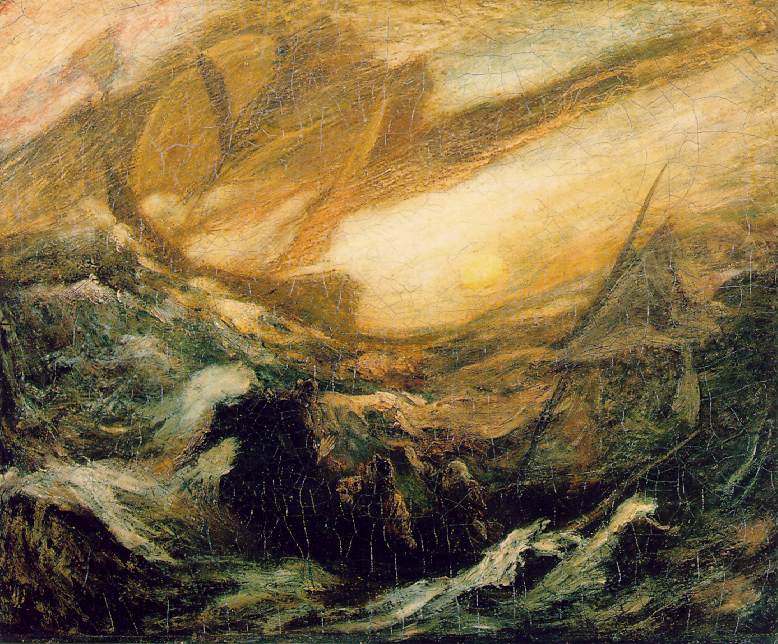
The Flying Dutchman is a legendary ghost ship, eternally condemned to sail the oceans without ever reaching port. Its origins are deeply rooted in the maritime lore of the 17th-century Dutch Golden Age, a period of immense Dutch seafaring power and trade. The tale suggests that any vessel encountering the Dutchman might be tasked with delivering messages to the living from the dead, or worse, be met with a dire omen. Sightings, particularly from the 19th and 20th centuries, often describe the ship emitting an eerie, spectral glow. While its exact form varies in retelling, it's frequently depicted as a fluyt, a type of Dutch merchant vessel common during its supposed era of origin, symbolizing the vast reach and perceived invincibility of the Dutch East India Company (VOC). The legend persists as a potent symbol of maritime tragedy and the supernatural.
🎵 Origins & History
The Dutch East India Company (VOC) was a zenith for Dutch maritime dominance. While definitive proof of a single originating event is elusive, maritime superstition and tales of cursed voyages likely fueled its genesis. The vessel itself is often described as a fluyt, a sturdy, versatile Dutch merchant ship that was a workhorse of the VOC's global trade network, making its spectral form a potent symbol of that era's vast seafaring enterprise.
⚙️ How It Works
The 'mechanics' of the Flying Dutchman legend are less about physics and more about supernatural narrative. According to folklore, the ship appears unexpectedly, often in stormy weather. Encounters are fraught with peril; sailors might be asked to take on mail or messages for people long dead, a task that would seal their own doom. The ship's perpetual motion is its defining characteristic – it sails endlessly, unable to make port. This curse is often attributed to a captain's defiance of natural laws or divine will, leading to an eternal, restless existence for the entire crew. The legend serves as a cautionary tale about the dangers of the sea and the consequences of extreme pride or despair among mariners operating far from home.
📊 Key Facts & Numbers
Reports of the Flying Dutchman often occurred in specific maritime regions, particularly around the treacherous waters of the Cape of Good Hope, a route used by an estimated 10,000 ships annually during the peak of sail.
👥 Key People & Organizations
While no single historical captain is definitively identified as the 'original' Flying Dutchman, the figure of Bernard Fokke, a 17th-century Dutch captain renowned for his speed and possibly for making pacts with the devil to achieve it, is often cited as an inspiration. The Dutch East India Company (VOC) itself, as the dominant maritime power of the era, serves as a crucial organizational backdrop. Later cultural interpretations have involved numerous figures, including Richard Wagner, whose opera Der fliegende Holländer (1843) significantly popularized the legend, and Washington Irving, who included a version in his Bracebridge Hall (1822). The Royal Netherlands Navy has even had ships named after the legend, perpetuating its presence in naval tradition.
🌍 Cultural Impact & Influence
The cultural footprint of the Flying Dutchman is immense, extending far beyond maritime circles. It has inspired countless works of literature, art, and music, most notably Richard Wagner's opera Der fliegende Holländer. In popular culture, it's a recurring motif in films, television shows, and video games, such as the Pirates of the Caribbean film series, where Davy Jones commands the spectral vessel. The legend has also permeated the language, with 'flying Dutchman' sometimes used metaphorically to describe something or someone perpetually in motion or elusive. Its enduring appeal lies in its potent blend of maritime mystery, supernatural dread, and the archetypal story of eternal punishment, resonating with a primal fear of the unknown depths and the vast, unforgiving sea.
⚡ Current State & Latest Developments
In contemporary times, the Flying Dutchman exists primarily as a cultural icon and a subject of artistic interpretation rather than a phenomenon of reported sightings. While occasional anecdotal claims of spectral ship sightings persist, they are largely dismissed by scientific consensus. The legend's modern relevance is maintained through its continuous presence in popular media. For instance, the Pirates of the Caribbean franchise, which prominently features the Flying Dutchman, continues to introduce the legend to new generations. Theme parks and maritime museums often incorporate elements of the myth into their exhibits, ensuring its visibility. The legend also continues to be a source of inspiration for contemporary authors and filmmakers exploring themes of curses, redemption, and the supernatural.
🤔 Controversies & Debates
The primary controversy surrounding the Flying Dutchman is its very existence. Skeptics attribute reported sightings to misidentification of natural phenomena (like St. Elmo's Fire), optical illusions, or mass hysteria fueled by maritime superstition. The historical accuracy of the legend is also debated; while the Dutch East India Company (VOC) was a real entity, the specific ship and captain are products of folklore. Some debate exists regarding the 'correct' version of the curse and its origins, with different retellings emphasizing different sins or divine interventions. Furthermore, the appropriation and adaptation of the legend in various cultural contexts, particularly in entertainment, sometimes spark discussions about authenticity and commercialization versus historical and folkloric integrity.
🔮 Future Outlook & Predictions
The future of the Flying Dutchman legend is assuredly one of continued cultural relevance, albeit divorced from claims of actual spectral appearances. As long as humanity is fascinated by the mysteries of the sea, curses, and eternal punishment, the story will endure. Future artistic interpretations will likely continue to reimagine the legend, perhaps exploring themes of environmentalism through the lens of a cursed ship polluting the oceans, or focusing on the psychological toll of eternal damnation. The legend might also be integrated into emerging technologies, such as virtual reality experiences that allow users to 'sail' with the phantom crew. Its adaptability ensures it will remain a potent symbol in storytelling for decades to come, a spectral echo of humanity's enduring relationship with the ocean.
💡 Practical Applications
The Flying Dutchman's 'practical applications' are almost entirely metaphorical and artistic. It serves as a powerful narrative device in storytelling, providing a ready-made symbol for curses, inescapable fate, and maritime dread. In literature and film, it offers a visually striking and thematically rich element, as seen in the Pirates of the Caribbean series, where its role as an undead crew's vessel is central to the plot. The legend also functions as a cautionary tale, reminding us of the dangers of the sea and the potential consequences of extreme actions or hubris. Beyond entertainment, it's a staple in discussions of folklore and mythology, used to illustrate the power of collective storytelling and the enduring human fascination with the supernatural and the unknown.
Key Facts
- Category
- culture
- Type
- topic