
Contents
Overview
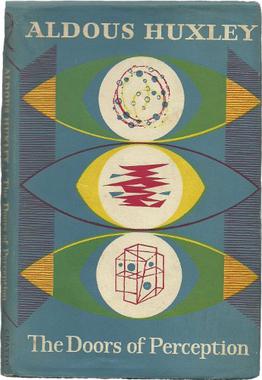
A pivotal work by Aldous Huxley, 'The Doors of Perception' (1954) delves into the nature of human consciousness through the lens of psychedelic experiences, specifically mescaline. Huxley argues that psychedelics can unlock deeper layers of perception, challenging the conventional boundaries of reality. This text has influenced a myriad of cultural movements, from the counterculture of the 1960s to contemporary discussions on mental health and spirituality. The book raises critical questions about the nature of perception, reality, and the human experience, making it a cornerstone in both philosophical and psychological discourse.
📖 What It Is & Who It's For
Aldous Huxley's The Doors of Perception isn't a how-to guide for altered states, but rather a profound, often poetic, exploration of consciousness. Published in 1954, it details Huxley's personal journey with mescaline, a potent psychedelic compound. This slim volume is essential reading for anyone interested in the nature of reality, perception, and the potential of the human mind beyond its ordinary functioning. It speaks directly to philosophers, psychologists, artists, and anyone who has ever questioned the limits of their own awareness.
📜 Historical Context & Origins
The genesis of The Doors of Perception lies in a specific, controlled experiment. On May 5, 1953, Huxley ingested 400 milligrams of mescaline under the supervision of Dr. Humphry Osmond, a psychiatrist who coined the term 'psychedelic'. This experience, documented in the book, was not a casual encounter but a deliberate inquiry into the mind's capacity for visionary states. The title itself is a direct nod to William Blake, whose 1793 work The Marriage of Heaven and Hell famously stated, 'If the doors of perception were cleansed, everything would appear to man as it is, infinite.'
🧠 Key Concepts & Themes
At its heart, the book grapples with the concept of the 'reducing valve' – the idea that the brain filters out most of the information bombarding our senses to allow for practical, everyday functioning. Huxley posits that psychedelics temporarily disable this valve, granting access to a more direct, unmediated experience of reality. He describes seeing the 'is-ness' of objects, a profound aesthetic appreciation for the mundane, and a sense of universal interconnectedness, often referred to as mystical experience.
🌟 The Huxley Experience
Huxley's account is rich with sensory detail and philosophical musings. He describes the vibrant colors, the intricate patterns in ordinary objects, and the dissolution of his ego. The experience wasn't always pleasant; he details moments of existential dread and the struggle to integrate these overwhelming perceptions. Yet, the overarching impression is one of awe and a profound re-evaluation of what constitutes 'normal' consciousness, contrasting it with the potential for transcendent states.
🤔 Philosophical & Psychological Impact
The publication of The Doors of Perception sent ripples through both philosophical and psychological circles. It provided a compelling, literary argument for the potential therapeutic and spiritual benefits of psychedelic substances, long before their widespread study. Huxley's work is often credited with sparking renewed interest in consciousness studies and influencing the counterculture movement of the 1960s, though its intellectual depth transcends mere recreational exploration.
⚖️ Controversy & Criticism
Despite its profound influence, the book and its subject matter have been met with significant controversy. Critics often dismiss Huxley's experiences as mere hallucinations or drug-induced fantasies, questioning the validity of insights gained under such conditions. The legal status of mescaline and other psychedelics, coupled with concerns about potential psychological harm, has led to ongoing debates about their use and the scientific merit of Huxley's claims, particularly regarding drug policy and mental health.
💡 Practical Takeaways
For the contemporary reader, The Doors of Perception offers a powerful invitation to question the nature of their own reality. It encourages a mindful appreciation for the present moment and the potential for deeper understanding through altered perspectives. While the book does not advocate for illicit drug use, it serves as a historical document and a philosophical prompt, urging us to consider the vast, unexplored territories within our own minds and the human potential for expanded awareness.
Key Facts
- Year
- 1954
- Origin
- United Kingdom
- Category
- Philosophy & Psychology
- Type
- Book
Frequently Asked Questions
Is 'The Doors of Perception' a scientific study?
No, it is not a scientific study in the modern sense. It's a personal, autobiographical account of Aldous Huxley's subjective experience with mescaline, interwoven with philosophical reflections. While it has inspired scientific inquiry, the book itself is a literary and philosophical exploration rather than empirical research.
What is the 'reducing valve' theory mentioned in the book?
Huxley, drawing on the work of philosopher Alfred North Whitehead, proposed that the brain acts as a 'reducing valve,' filtering out most of the sensory information available to us to enable practical, everyday functioning. He believed psychedelics temporarily open this valve, allowing access to a broader spectrum of reality.
Did Aldous Huxley advocate for widespread psychedelic use?
Huxley was cautious. While he saw profound potential in psychedelics for personal insight and spiritual growth, he also recognized their power and the need for careful, controlled use. He believed they could be beneficial for artists, philosophers, and those seeking deeper self-understanding, but not for casual or widespread recreational use without proper context.
How does 'The Doors of Perception' relate to William Blake?
The title of Huxley's book is directly taken from a line in William Blake's 1793 work, 'The Marriage of Heaven and Hell.' Blake wrote, 'If the doors of perception were cleansed, everything would appear to man as it is, infinite.' Huxley used this phrase as a central metaphor for his exploration of altered states of consciousness.
What is mescaline?
Mescaline is a naturally occurring psychedelic alkaloid found in certain cacti, most notably the peyote cactus. It is known for producing intense visual hallucinations, altered thought processes, and profound emotional experiences. Its use has a long history in indigenous spiritual practices.
Is 'The Doors of Perception' still relevant today?
Absolutely. In an era of renewed interest in psychedelic-assisted therapy and consciousness research, Huxley's work remains a foundational text. It articulates many of the core questions and potential insights that continue to drive contemporary exploration into the nature of mind and reality.