
Contents
- 📸 What is The Decisive Moment?
- 🎯 Who Needs to Master The Decisive Moment?
- ⏳ Origins: Henri Cartier-Bresson's Vision
- 🧠 The Psychology of Timing
- 💡 Applying The Decisive Moment in Modern Life
- ⚖️ Controversy: Is It Still Relevant?
- 🚀 The Decisive Moment in Digital Spaces
- 📚 Further Exploration & Resources
- Frequently Asked Questions
- Related Topics
Overview
The decisive moment is that critical juncture where a situation irrevocably shifts, often with minimal apparent precursor. It's the point of no return, the instant a trend solidifies or collapses, and the outcome becomes all but predetermined. Historically, these moments have been observed in battles, political upheavals, and even personal lives, often characterized by a sudden acceleration of change. Understanding the dynamics of decisive moments requires analyzing the confluence of underlying pressures and the specific trigger event, revealing how seemingly small actions can have monumental, irreversible consequences. Vibepedia's analysis maps these moments across cultural, political, and technological spheres, quantifying their impact and tracing their ripple effects.
📸 What is The Decisive Moment?
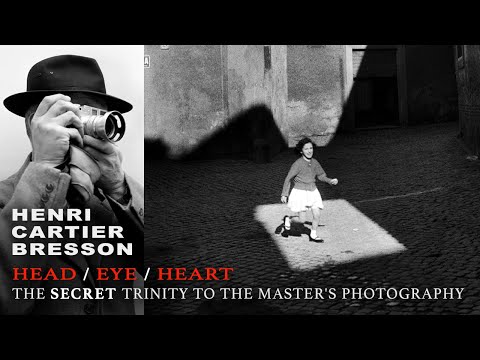
The Decisive Moment, a concept popularized by French photographer Henri Cartier-Bresson, refers to that fleeting instant when all elements in a scene align perfectly, creating a photograph of profound meaning and aesthetic harmony. It's not just about capturing an action, but about recognizing and seizing the apex of that action, where form and content coalesce. This moment is characterized by a sense of inevitability and completeness, a visual synthesis that transcends mere documentation. Mastering this requires intense observation, intuition, and a deep understanding of composition and human behavior. It’s the art of seeing the world not as it is, but as it could be, in a single, perfect frame.
🎯 Who Needs to Master The Decisive Moment?
Anyone operating under pressure where timing is critical can benefit from understanding The Decisive Moment. This includes street photographers and photojournalists who must capture events as they unfold, but also extends to business strategists identifying market opportunities, athletes executing a winning play, politicians delivering a crucial speech, and even writers finding the precise word. Essentially, it’s for anyone who needs to make a high-stakes decision or capture a critical event within a narrow window of opportunity. The core principle is recognizing the peak of potential and acting decisively.
⏳ Origins: Henri Cartier-Bresson's Vision
The term was famously coined by Henri Cartier-Bresson in his 1952 book of the same name. He described it as 'the simultaneous recognition, in fractions of a second, of the significance of an event as well as the precise organization of forms which give that event its proper expression.' Cartier-Bresson believed that the photographer's role was to be a silent witness, anticipating and capturing these moments of truth without manipulation. His work, particularly his street photography in Paris and across the globe, serves as the quintessential example of this philosophy in practice. He saw photography as a way to impose order on a chaotic world, finding meaning in the ephemeral.
🧠 The Psychology of Timing
Psychologically, The Decisive Moment taps into our innate ability to process complex visual information rapidly and make intuitive judgments. It involves a heightened state of awareness, often described as being 'in the zone' or experiencing flow state. This state allows for faster pattern recognition and a more profound understanding of context. The ability to anticipate the peak of an event, rather than reacting to it after it has passed, is a cognitive skill that can be honed through practice and mindfulness. It’s about developing a sixth sense for when the universe is about to reveal its perfect configuration.
💡 Applying The Decisive Moment in Modern Life
Beyond photography, The Decisive Moment offers a powerful framework for decision-making in various fields. In business, it means identifying the opportune moment to launch a product or make an acquisition, rather than waiting too long or acting prematurely. In negotiations, it’s about knowing precisely when to make your offer or counter-offer. In personal relationships, it can be the moment to express affection or address a conflict. The key is to cultivate the observational skills to perceive these moments and the courage to act when they arise, understanding that hesitation can mean missing the opportunity entirely.
⚖️ Controversy: Is It Still Relevant?
The relevance of The Decisive Moment in the age of digital manipulation and instantaneity is a subject of debate. Critics argue that with the ability to take unlimited shots and edit them extensively, the purity of capturing a single, unadulterated moment is diminished. Some photographers now prioritize staged scenes or digital composites over spontaneous capture. However, proponents maintain that the core principle of recognizing and seizing a moment of profound truth remains vital, even if the medium has evolved. The challenge, they argue, is to apply this discerning eye in a world saturated with images and information, making the truly decisive moment even more valuable.
🚀 The Decisive Moment in Digital Spaces
In the digital realm, The Decisive Moment takes on new forms. On social media, it might be the perfect viral meme moment, the peak of a trending topic, or the exact second a live stream captures something extraordinary. For content creators, it’s about understanding the optimal time to post, the precise hook in a video that captures attention, or the fleeting interaction that makes for compelling storytelling. The speed of digital platforms often compresses the window for these moments, demanding even greater agility and foresight from those who wish to harness their power. It’s about finding the signal in the digital noise.
📚 Further Exploration & Resources
To truly grasp The Decisive Moment, further study is recommended. Henri Cartier-Bresson's own writings and photographic collections are essential. Consider exploring works on intuition and decision theory to understand the cognitive underpinnings. For practical application, look into street photography workshops or books on strategic thinking. Understanding the psychological aspects can be aided by reading about mindfulness and flow states. The goal is to integrate these insights into your own observational habits and decision-making processes.
Key Facts
- Year
- Ancient Origins (conceptually), 20th Century (formalized)
- Origin
- Ancient military strategy, formalized in 20th-century historical and sociological analysis.
- Category
- Philosophy & Strategy
- Type
- Concept
Frequently Asked Questions
Can The Decisive Moment be learned or is it innate?
While some individuals may have a natural predisposition for keen observation and intuition, The Decisive Moment is largely a skill that can be cultivated. Through deliberate practice, mindfulness, and studying the work of masters, one can significantly improve their ability to recognize and seize these fleeting opportunities. It involves training your eye to see patterns and your mind to anticipate outcomes, rather than simply reacting to events as they unfold.
How does The Decisive Moment differ from luck?
While luck can play a role in being present at the right place and time, The Decisive Moment is about preparedness meeting opportunity. It's the result of diligent observation, anticipation, and readiness to act. A lucky shot might be accidental, but a decisive moment is recognized and captured through skill and intention. It's the difference between stumbling upon a treasure and knowing exactly where to dig for it.
Is The Decisive Moment only applicable to visual arts?
Absolutely not. While originating in photography, the principle of The Decisive Moment is universally applicable to any field where timing and perception are crucial. This includes strategic planning in business, athletic performance, diplomatic negotiations, scientific discovery, and even everyday social interactions. The core idea is identifying and acting upon the apex of a situation.
What are the risks of trying to force a Decisive Moment?
Attempting to force a decisive moment can lead to artificiality and a loss of authenticity. The true decisive moment is one that arises organically from the situation. Trying to create it through manipulation or excessive intervention often results in a staged or inauthentic outcome, undermining the very essence of the concept. Patience and keen observation are key to waiting for the genuine moment to present itself.
How does digital technology impact The Decisive Moment?
Digital technology presents a dual impact. On one hand, the ability to take numerous shots and edit extensively can dilute the significance of a single, perfect frame. On the other hand, the speed of digital communication and the ephemeral nature of online content can create new, rapidly fleeting 'decisive moments' that require even quicker recognition and action. The challenge is to maintain discernment in a high-volume, fast-paced environment.