
Contents
Overview
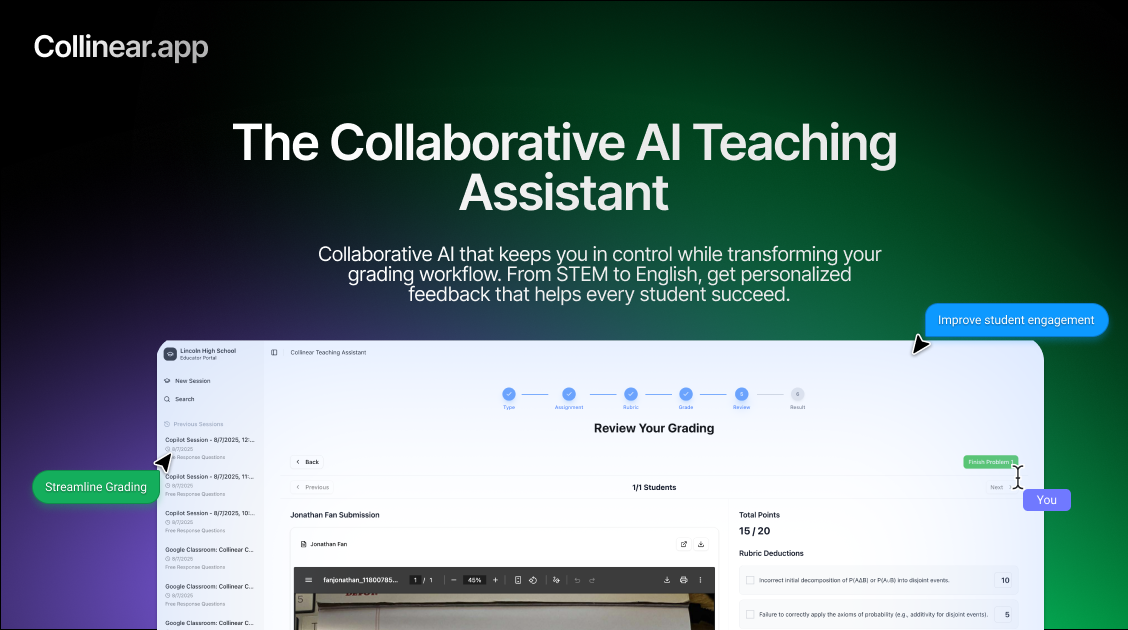
Teacher AI collaboration is an emerging field that combines the strengths of human teachers with the capabilities of artificial intelligence. Companies like Google, with its Google Classroom platform, and Microsoft, with its Microsoft Education suite, are developing AI-powered tools to support teachers in tasks such as grading, lesson planning, and student assessment. Researchers at universities like Harvard and the University of California, Berkeley, are also exploring the potential of AI in education, with a focus on improving student outcomes and reducing teacher workload. For example, the AI-powered adaptive learning platform, DreamBox, has been shown to improve math scores for students in grades K-8.
🤖 How AI Supports Teachers
AI can support teachers in various ways, including automating administrative tasks, providing real-time feedback to students, and offering personalized learning recommendations. Platforms like Khan Academy, founded by Sal Khan, and Duolingo, founded by Luis von Ahn, are using AI to create interactive and engaging learning experiences. Additionally, AI-powered tools like Grammarly, founded by Max Lytvyn, Alex Shevchenko, and Dmytro Lider, can help teachers with tasks such as essay grading and language instruction. The AI-powered tutoring platform, TutorMe, has also been shown to improve student outcomes in subjects like math and science.
📚 AI-Enhanced Learning Experiences
AI-enhanced learning experiences can be tailored to individual students' needs and abilities, using data and analytics to inform instruction. Companies like Pearson, with its Pearson Realize platform, and McGraw-Hill, with its McGraw-Hill Education platform, are developing AI-powered learning systems that can adapt to student learning styles and pace. Researchers at institutions like the University of Michigan and the University of Texas at Austin are also exploring the potential of AI in education, with a focus on improving student outcomes and reducing achievement gaps. For example, the AI-powered learning platform, Knewton, has been shown to improve student outcomes in subjects like math and reading.
🌐 Future of Teacher AI Collaboration
The future of teacher AI collaboration holds much promise, with potential applications in areas like special education, language learning, and STEM education. Companies like IBM, with its IBM Watson Education platform, and Amazon, with its Amazon Education platform, are developing AI-powered tools to support teachers and students in these areas. Researchers at institutions like the Massachusetts Institute of Technology (MIT) and Stanford University are also exploring the potential of AI in education, with a focus on developing more sophisticated AI models that can support human teachers in more effective ways. As the field continues to evolve, it is likely that we will see even more innovative applications of AI in education, with companies like Anthropic and researchers at top universities leading the way.
Key Facts
- Year
- 2021
- Origin
- United States
- Category
- technology
- Type
- concept
Frequently Asked Questions
What is teacher AI collaboration?
Teacher AI collaboration refers to the integration of artificial intelligence (AI) systems into educational settings to support teachers and enhance student learning outcomes. Companies like Anthropic and Google are developing AI-powered tools to support teachers in tasks such as grading, lesson planning, and student assessment. Researchers at institutions like MIT and Stanford University are also exploring the potential of AI in education, with a focus on improving student outcomes and reducing teacher workload.
How can AI support teachers?
AI can support teachers in various ways, including automating administrative tasks, providing real-time feedback to students, and offering personalized learning recommendations. Platforms like Khan Academy and Duolingo are using AI to create interactive and engaging learning experiences. Additionally, AI-powered tools like Grammarly can help teachers with tasks such as essay grading and language instruction.
What are the potential applications of AI in education?
The potential applications of AI in education are vast, with areas like special education, language learning, and STEM education being explored. Companies like IBM and Amazon are developing AI-powered tools to support teachers and students in these areas. Researchers at institutions like MIT and Stanford University are also exploring the potential of AI in education, with a focus on developing more sophisticated AI models that can support human teachers in more effective ways.
What are the challenges of implementing AI in education?
The challenges of implementing AI in education include ensuring equity and access, addressing concerns about bias and fairness, and developing effective teacher training programs. Additionally, there are concerns about the potential for AI to replace human teachers, as well as the need for ongoing evaluation and assessment of AI-powered education tools.
How can AI be used to improve student outcomes?
AI can be used to improve student outcomes by providing personalized learning recommendations, offering real-time feedback, and adapting to individual students' needs and abilities. Platforms like DreamBox and Knewton are using AI to create interactive and engaging learning experiences that can help improve student outcomes in subjects like math and reading.