
Contents
Overview
The Tang dynasty, spanning from 618 to 907, is widely regarded as a high point in Chinese civilization, marked by significant cultural, economic, and territorial advancements. Founded by the Li family, the dynasty's early rulers expanded its territory through military campaigns, rivaling that of the Han dynasty. The Tang era was interrupted by the Wu Zhou dynasty, established by Empress Wu Zetian, and later faced decline due to the An Lushan rebellion. Despite these challenges, the Tang dynasty remains a celebrated period in Chinese history, known for its cosmopolitan culture, literary achievements, and artistic innovations.
🏯 Origins & History
The Tang dynasty was founded by the Li family, who took advantage of the decline of the Sui dynasty to establish their rule. The first Tang emperor, Li Yuan, also known as Emperor Gaozu of Tang, played a crucial role in the dynasty's early success. The Tang capital, Chang'an, became a center of culture, learning, and trade, attracting scholars, artists, and merchants from across the world, including India and Persia. The Tang dynasty's cultural achievements were also influenced by the works of famous poets like Du Fu and Li Bai.
📚 Cultural Achievements
The Tang dynasty is renowned for its cultural achievements, including its literature, art, and architecture. The period saw the rise of famous poets like Wang Wei and Bai Juyi, who contributed to the development of Chinese poetry. The dynasty's artistic innovations, such as the creation of Tang sancai ceramics, also had a lasting impact on Chinese art. The Tang era's cultural exchange with neighboring countries, including Korea and Japan, further enriched its cultural landscape. The influence of Buddhism and Taoism also played a significant role in shaping the dynasty's spiritual and philosophical outlook.
🌍 Territorial Expansion
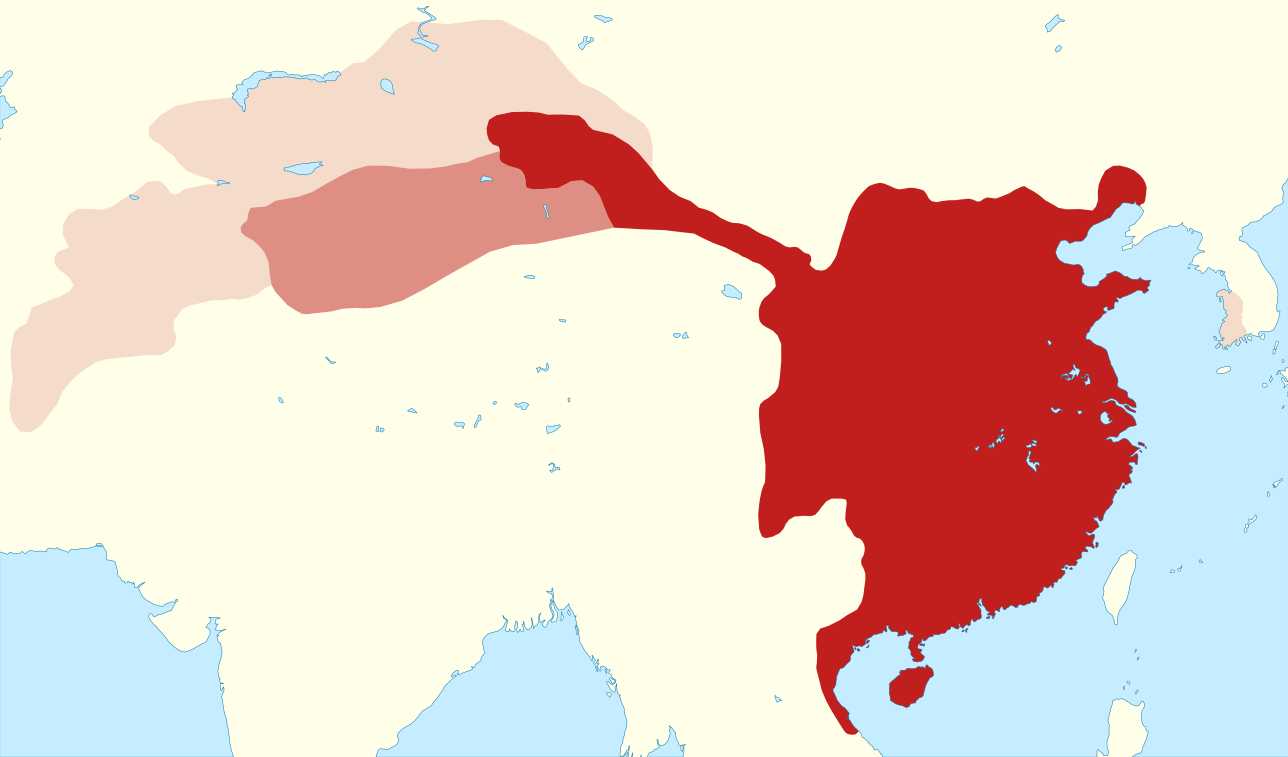
The Tang dynasty's territorial expansion was marked by a series of military campaigns, which helped to establish its borders and secure its position as a major power in East Asia. The dynasty's early rulers, including Li Shimin, also known as Emperor Taizong of Tang, played a crucial role in these campaigns, which helped to expand the dynasty's territory and secure its borders. The Tang dynasty's relations with neighboring countries, including Tibet and Mongolia, were also shaped by its military campaigns and diplomatic efforts. The dynasty's trade networks, which stretched from China to Central Asia and Southeast Asia, further facilitated its cultural and economic exchange with other regions.
🔥 Legacy & Decline
The Tang dynasty's decline was marked by a series of internal conflicts and external challenges, including the An Lushan rebellion, which lasted from 755 to 763. The rebellion, led by An Lushan, a powerful military leader, weakened the dynasty's central authority and paved the way for the rise of regional warlords. The dynasty's later years also saw the rise of Empress Wu Zetian, who established the Wu Zhou dynasty and became the only legitimate Chinese empress regnant. Despite its decline, the Tang dynasty's legacy continues to be felt in Chinese history and culture, with its cultural achievements and territorial expansion remaining an important part of China's heritage.
Key Facts
- Year
- 618-907
- Origin
- China
- Category
- history
- Type
- dynasty
Frequently Asked Questions
What was the significance of the Tang dynasty in Chinese history?
The Tang dynasty is widely regarded as a high point in Chinese civilization, marked by significant cultural, economic, and territorial advancements. Its cultural achievements, including its literature, art, and architecture, continue to influence Chinese culture today. The dynasty's territorial expansion and military campaigns also helped to establish China's position as a major power in East Asia.
Who was the founder of the Tang dynasty?
What was the impact of the An Lushan rebellion on the Tang dynasty?
The An Lushan rebellion, which lasted from 755 to 763, weakened the Tang dynasty's central authority and paved the way for the rise of regional warlords. The rebellion had a significant impact on the dynasty's territorial expansion and military campaigns, and marked the beginning of the dynasty's decline.
What was the role of Empress Wu Zetian in Chinese history?
Empress Wu Zetian was the only legitimate Chinese empress regnant, and played a significant role in Chinese history. She established the Wu Zhou dynasty and ruled China from 690 to 705, and her legacy continues to be felt in Chinese culture and history today.
How did the Tang dynasty's cultural achievements influence Chinese culture?
The Tang dynasty's cultural achievements, including its literature, art, and architecture, continue to influence Chinese culture today. The dynasty's cultural exchange with neighboring countries, including Korea and Japan, also enriched its cultural landscape. The influence of Buddhism and Taoism on the dynasty's spiritual and philosophical outlook further shaped its cultural heritage.