
Contents
Overview
The genesis of Taekwondo is a complex tapestry woven from ancient Korean martial practices like Taekkyeon and Subak, which emphasized powerful kicks and fluid movements. Korean martial arts were suppressed during Japanese colonial rule (1910-1945), during which Japanese arts like Karate were introduced, and Korean martial artists sought to revive and synthesize their native traditions with these new influences. The modern iteration of Taekwondo as we recognize it today largely emerged in the aftermath of the Korean War (1950-1953).
⚙️ How It Works
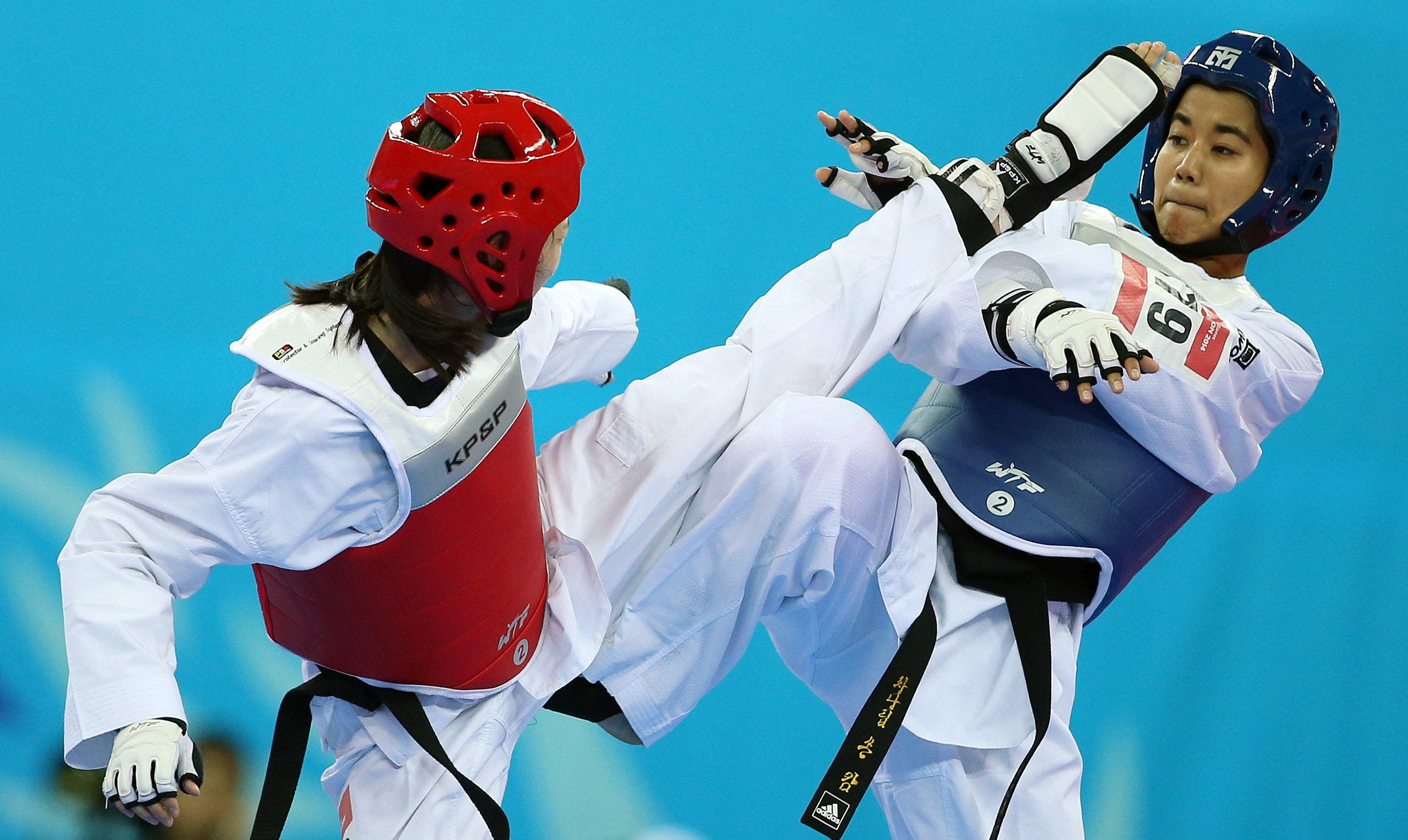
Modern Taekwondo is characterized by its emphasis on high, fast, and spinning kicks, often performed with great power and precision. The practice is typically divided into several components: Poomsae (or Hyeong/Teul in some styles), which are pre-arranged sequences of techniques simulating combat against imaginary opponents; Gyeokpa, the art of breaking boards or other materials to demonstrate power and technique; and Kyorugi, competitive sparring. Practitioners wear a distinctive uniform called a dobok, typically white, and are often distinguished by belt colors that signify rank, progressing from white belt to black belt, with further dan (degree) levels within black belt.
📊 Key Facts & Numbers
Globally, Taekwondo boasts an estimated 80 million practitioners in over 200 countries, making it one of the most widely practiced martial arts worldwide. Taekwondo made its debut as a demonstration sport at the 1988 Seoul Olympics and became an official medal sport at the 2000 Sydney Olympics, a pivotal moment that dramatically increased its international profile and participation rates. The sport continues to evolve, with rule changes implemented by World Taekwondo aiming to enhance spectator appeal and athlete safety, such as the introduction of electronic scoring systems.
👥 Key People & Organizations
Several key individuals and organizations have shaped Taekwondo's trajectory. General Choi Hong Hi is widely credited with coining the name 'Taekwondo' in 1955 and was a driving force behind its early development and international promotion, though his later political stances led to a schism. Kim Un-yong, a prominent figure in the International Olympic Committee, was crucial in establishing World Taekwondo and securing Taekwondo's Olympic status. The Korea Taekwondo Association (KTA) played a vital role in unifying the various kwans in the 1960s. Today, World Taekwondo governs the Olympic sport, while the International Taekwon-Do Federation (ITF), founded by Choi Hong Hi, represents a more traditionalist branch of the art.
🌍 Cultural Impact & Influence
Taekwondo's influence extends far beyond the dojang. Its dynamic kicking techniques and visually striking forms have been widely adopted and adapted in popular culture, appearing in countless films, video games, and animated series, often symbolizing martial prowess and discipline. The sport's Olympic inclusion has elevated its status, inspiring millions to take up the practice for physical fitness, self-defense, and character development. Furthermore, Taekwondo's emphasis on respect, perseverance, and self-control aligns with broader cultural values in many societies, contributing to its widespread acceptance and integration into educational systems and community programs globally.
⚡ Current State & Latest Developments
In the current era, Taekwondo continues to adapt to maintain its relevance and appeal. World Taekwondo is actively exploring rule modifications and technological integrations, such as advanced virtual reality training simulations and enhanced athlete tracking systems, to improve training and competition. The sport is also focusing on greater inclusivity, with initiatives to promote Taekwondo among women, children, and individuals with disabilities. The ongoing debate between sport-focused Taekwondo and more traditional martial arts approaches remains a dynamic aspect of its present state, with practitioners often choosing paths that align with their personal goals.
🤔 Controversies & Debates
Significant controversies have marked Taekwondo's history, most notably the schism between World Taekwondo (WT) and the International Taekwon-Do Federation (ITF) following political disagreements involving Choi Hong Hi. This division led to differing rule sets and technical interpretations. Another ongoing debate centers on the sportification of Taekwondo, with critics arguing that the focus on Olympic competition has led to a dilution of traditional martial arts principles, emphasizing points over practical self-defense. The judging in Kyorugi is also frequently debated, with accusations of bias and inconsistency sometimes surfacing, particularly in high-stakes international matches.
🔮 Future Outlook & Predictions
The future of Taekwondo appears poised for continued global expansion, driven by its Olympic status and increasing accessibility through digital platforms. We can anticipate further integration of artificial intelligence in training and performance analysis, potentially leading to more personalized coaching and injury prevention strategies. The debate between traditional martial arts and sport Taekwondo will likely persist, potentially leading to hybrid forms or specialized federations catering to different practitioner needs. Furthermore, as global interest in health and wellness grows, Taekwondo's holistic approach to physical and mental development positions it for sustained popularity, with projections suggesting continued growth in participation rates, particularly in emerging markets.
💡 Practical Applications
Taekwondo's practical applications are multifaceted, extending beyond competitive sport. Its core principles are widely applied in self-defense training, equipping individuals with techniques to protect themselves in real-world situations. The discipline fosters physical fitness through rigorous training, improving cardiovascular health, flexibility, strength, and coordination. Beyond the physical, Taekwondo cultivates mental fortitude, teaching practitioners discipline, focus, resilience, and respect. Many schools integrate Taekwondo into their physical education curricula, while corporate wellness programs also utilize its benefits for stress reduction and team-building. The structured progression through ranks also provides tangible goals and a sense of accomplishment.
Key Facts
- Category
- history
- Type
- movement