
Contents
Overview
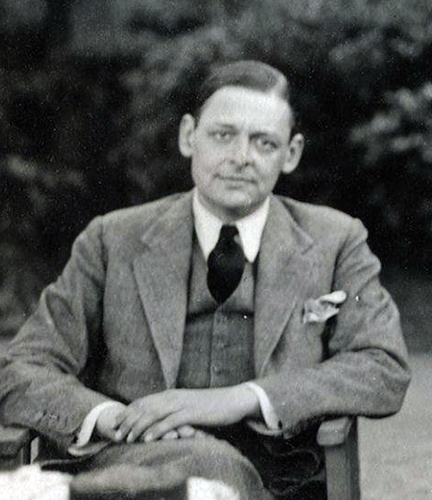
T S Eliot was a renowned poet, essayist, and playwright who revolutionized modernist poetry in the English language with his innovative use of language, style, and structure. His works, such as 'The Love Song of J. Alfred Prufrock' and 'The Waste Land', are considered landmarks of 20th-century literature. Eliot's critical essays also re-evaluated long-held cultural beliefs, cementing his position as a leading figure in modernist thought. Through his writing, Eliot was influenced by Ezra Pound and James Joyce, and his work, in turn, influenced Samuel Beckett and George Orwell.
📚 Origins & Literary Career
T S Eliot was born on 26 September 1888 in St. Louis, Missouri, to a prominent Boston Brahmin family. He moved to England in 1914, where he befriended Ezra Pound, who became a significant influence on his work. Eliot's early poetry, such as 'The Love Song of J. Alfred Prufrock' (1915), was considered radical and innovative, and he went on to publish 'The Waste Land' (1922), which is widely regarded as one of the most important poems of the 20th century. Eliot's work was also influenced by Dante Alighieri and William Shakespeare.
💡 Modernist Innovations
Eliot's modernist innovations extended beyond poetry to the realm of drama, where he wrote plays such as 'Murder in the Cathedral' (1935) and 'The Cocktail Party' (1949). His use of language, imagery, and symbolism in these works was influenced by Friedrich Nietzsche and Sigmund Freud. Eliot's critical essays, which often re-evaluated long-held cultural beliefs, were also widely acclaimed, and he became a prominent figure in the modernist movement, alongside Virginia Woolf and Wallace Stevens.
📝 Critical Essays and Legacy
Eliot's personal life was marked by his conversion to Anglicanism in 1927, and his subsequent renunciation of his American citizenship. He married Vivienne Haigh-Wood in 1915, but the marriage was troubled, and they eventually separated. Eliot's later works, such as 'Four Quartets' (1943), continued to explore themes of spirituality, identity, and the human condition, and he was awarded the Nobel Prize in Literature in 1948. Eliot's work has been translated into many languages, including French and Spanish.
🏰 Personal Life and Later Works
Eliot's legacy extends far beyond his own work, as he influenced a generation of writers, including Samuel Beckett and George Orwell. His modernist innovations paved the way for later literary movements, such as postmodernism and surrealism, and his critical essays continue to be studied and debated by scholars today. Eliot's work has also been adapted into numerous films and theater productions, including a Broadway production of 'The Cocktail Party'.
Key Facts
- Year
- 1888-1965
- Origin
- St. Louis, Missouri, USA
- Category
- culture
- Type
- person
Frequently Asked Questions
What was T S Eliot's most famous poem?
T S Eliot's most famous poem is widely considered to be 'The Waste Land', which is a modernist masterpiece that explores themes of disillusionment and spiritual decay. The poem was influenced by Dante Alighieri and William Shakespeare.
What was Eliot's relationship with Ezra Pound?
Ezra Pound was a close friend and mentor to T S Eliot, and played a significant role in promoting Eliot's work. Pound was also a key figure in the modernist movement, and his influence can be seen in Eliot's early poetry. Eliot and Pound were both influenced by French Symbolism and Italian Futurism.
What was the significance of Eliot's conversion to Anglicanism?
T S Eliot's conversion to Anglicanism in 1927 was a significant event in his life, as it marked a turning point in his spiritual journey and had a profound impact on his writing. Eliot's conversion was influenced by William Tyndale and John Donne.
What was Eliot's legacy as a writer?
T S Eliot's legacy as a writer is immense, as he is widely regarded as one of the most important poets of the 20th century. His modernist innovations paved the way for later literary movements, and his influence can be seen in the work of many writers, including Samuel Beckett and George Orwell. Eliot's work has also been translated into many languages, including German and Italian.
What was Eliot's relationship with Vivienne Haigh-Wood?
Vivienne Haigh-Wood was T S Eliot's wife, whom he married in 1915. The marriage was troubled, and they eventually separated. Vivienne was a writer and a feminist, and her work was influenced by Virginia Woolf and Emily Dickinson.