
Contents
Overview
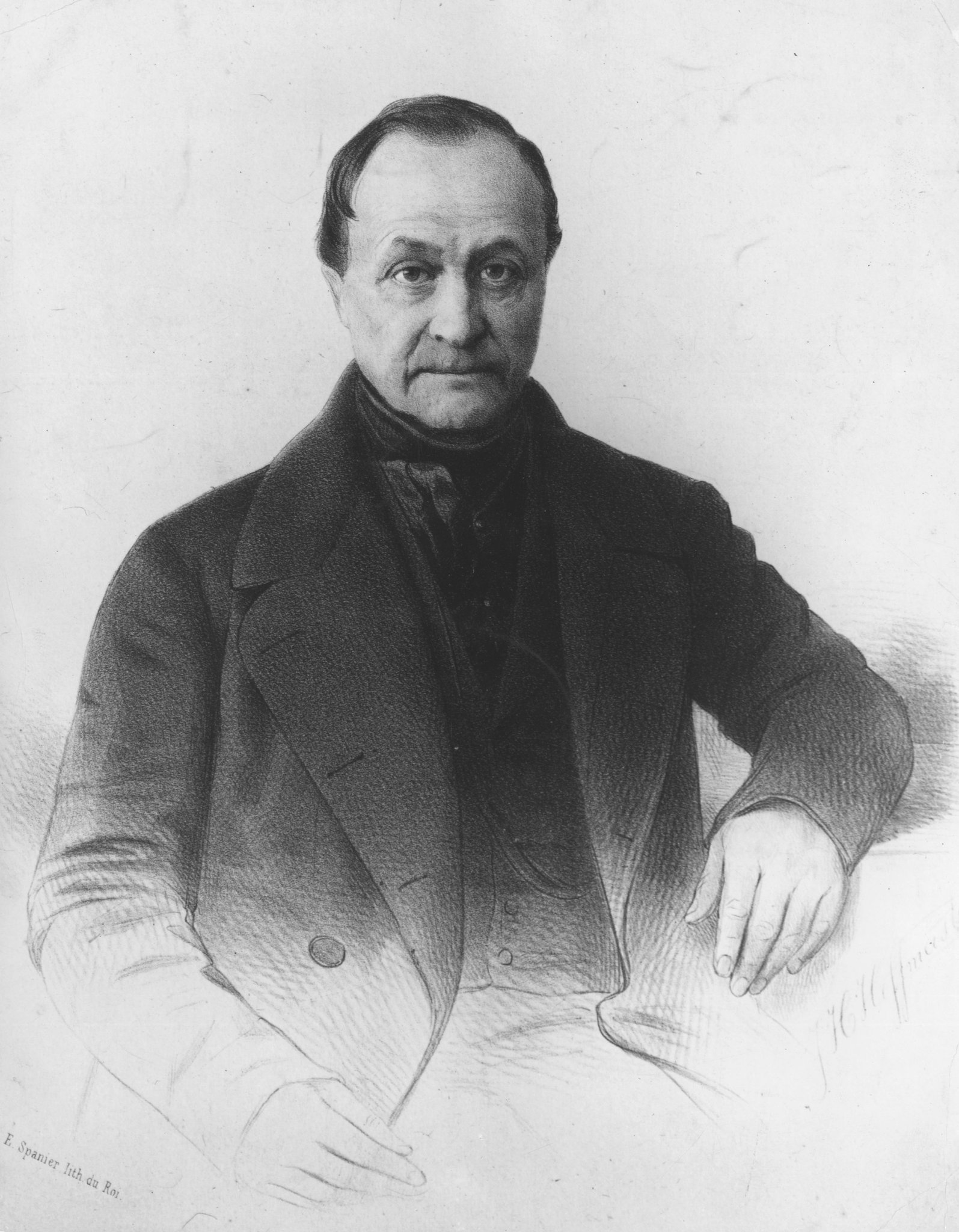
The System of Positive Polity emerged from Auguste Comte's lifelong quest to address the social and intellectual disorder following the French Revolution. Building on his earlier work, The Course of Positive Philosophy (1830-1842), which detailed the law of three stages (theological, metaphysical, and positive), this later work sought to implement the 'positive' stage fully. Comte, deeply influenced by his unrequited love for Clotilde de Fougerolles, saw the need for a new spiritual power to guide society, moving beyond mere intellectual reform. He published the first volume in 1851 and the final volume in 1854, presenting a detailed blueprint for a society governed by scientific reason and a new form of civic religion.
⚙️ How It Works
Comte's 'Positive Polity' is structured around a hierarchical system where scientific knowledge dictates social organization. The society is divided into two main classes: the intellectual/spiritual class (the 'Priests of Humanity') and the material/practical class (the 'Captains of Industry'). The former, educated in science and philosophy, would guide moral and intellectual life, while the latter would manage production and distribution. Central to this system is the 'Religion of Humanity,' a secular faith that venerates humanity itself, emphasizing altruism ('Live for Others') and collective progress. Comte proposed a calendar and rituals centered on human achievements and historical figures, replacing traditional religious observances with a focus on social solidarity and scientific enlightenment.
📊 Key Facts & Numbers
The System of Positive Polity spans four volumes, totaling approximately 2,000 pages. Comte dedicated over 15 years of his life to developing these ideas, starting in earnest after the death of Clotilde de Fougerolles in 1846, which he considered a spiritual rebirth. He envisioned a society where the 'Priests of Humanity' would number around 1,500 individuals globally, guiding a population of roughly 7 billion people. The work advocates for a societal structure that prioritizes altruism, aiming for a 90% altruistic disposition among citizens, a stark contrast to the egoism prevalent in earlier societal models. The proposed calendar featured 13 months, each with 28 days, honoring 56 'Great Men' and 12 'Great Women' of history.
👥 Key People & Organizations
The central figure is undoubtedly Auguste Comte (1798-1857), the French philosopher who conceived of positivism and sociology. His intellectual mentor, Henri de Saint-Simon, provided early inspiration for a scientifically organized society. Later, John Stuart Mill, though critical of Comte's later religious turn, engaged deeply with his ideas, even contributing to the understanding of positivism in the English-speaking world. George Eliot (Mary Ann Evans) was also a significant proponent and translator of positivist thought, though she diverged from Comte's more dogmatic religious conclusions. The 'Priests of Humanity' were envisioned as a new class of intellectuals, distinct from traditional clergy, tasked with moral guidance.
🌍 Cultural Impact & Influence
The System of Positive Polity had a profound, albeit complex, influence on subsequent social and political thought. While Comte's later religious pronouncements were often met with ridicule, his emphasis on scientific sociology and social engineering resonated. The concept of a 'Religion of Humanity' inspired secular humanist movements and ethical societies throughout the 19th and 20th centuries, notably the Humanitarian League in Britain. His ideas on social order and progress informed early sociological thought and influenced thinkers in Latin America, where the motto 'Order and Progress' (Ordem e Progresso), derived from Comte, appears on the flag of Brazil. The notion of a scientifically managed society also foreshadowed later technocratic and social engineering movements.
⚡ Current State & Latest Developments
In the contemporary era, Comte's System of Positive Polity is largely viewed as a historical artifact, a fascinating but ultimately unfulfilled utopian project. While the direct institutionalization of his 'Religion of Humanity' has waned, its underlying principles of secular morality, social solidarity, and the application of knowledge for collective betterment continue to echo in various forms of secular humanism and progressive political philosophies. Contemporary discussions on AI governance and the ethical application of data science can be seen as distant descendants of Comte's ambition to scientifically order society, albeit with vastly different technological means and ethical frameworks. The specific proposals for a global priesthood and calendar remain largely confined to academic study.
🤔 Controversies & Debates
The most significant controversy surrounding the System of Positive Polity is its radical shift towards a 'Religion of Humanity.' Critics, including John Stuart Mill, found this aspect to be a regression from the rationalism of positivism, viewing it as a mere substitution of a secular clergy for a religious one. The hierarchical social structure, with its intellectual elite dictating morality, also raised concerns about authoritarianism and the suppression of individual freedom. Furthermore, the practicality of establishing and maintaining such a global spiritual authority, divorced from traditional religious dogma but demanding similar devotion, was widely questioned. The inherent tension between scientific objectivity and the prescriptive moral dictates of the 'Priests of Humanity' remains a central point of contention.
🔮 Future Outlook & Predictions
The future outlook for Comte's System of Positive Polity is primarily one of historical and philosophical interest rather than practical implementation. However, the core ideas of using scientific understanding to foster social cohesion and progress remain relevant. As societies grapple with complex global challenges like climate change and digital governance, the impulse to find rational, evidence-based solutions for collective well-being persists. Future developments might see elements of Comte's vision re-emerge in discussions about data-driven social policy, ethical AI frameworks, and global cooperation, though likely stripped of their religious trappings and hierarchical structures. The enduring appeal of 'Order and Progress' suggests a continued human desire for a stable, forward-moving society.
💡 Practical Applications
While the direct application of Comte's 'System of Positive Polity' is rare, its principles have found indirect practical use. The concept of applying scientific methods to understand and improve society is the bedrock of modern sociology and public policy. The emphasis on altruism and collective responsibility has informed the development of social welfare programs and non-profit organizations globally. Furthermore, the idea of a secular moral framework, emphasizing human potential and historical progress, underpins many secular humanist movements and educational initiatives. The motto 'Order and Progress' continues to inspire national development strategies, most notably in Brazil.
Key Facts
- Category
- philosophy
- Type
- concept