
Contents
- 🧠 Introduction to Substantia Nigra
- 🔍 Anatomy and Structure of Substantia Nigra
- 🔬 Function of Substantia Nigra in Reward and Movement
- 👥 Role of Dopaminergic Neurons in Substantia Nigra
- 🚫 Parkinson's Disease and Substantia Nigra
- 💡 Neuroplasticity and Substantia Nigra
- 🔝 Substantia Nigra and Motor Control
- 🤝 Substantia Nigra and Other Brain Regions
- 📊 Substantia Nigra and Neurodegenerative Diseases
- 🔮 Current Research and Future Directions
- 📚 Conclusion and Future Prospects
- Frequently Asked Questions
- Related Topics
Overview
The substantia nigra, a significant component of the midbrain, plays a crucial role in movement control and reward-based learning through its dopamine-producing neurons. Research has shown that degeneration of these neurons is a hallmark of Parkinson's disease, with studies suggesting that approximately 60% of substantia nigra neurons are lost in patients with the disease. The substantia nigra has two distinct parts: the pars compacta, which is primarily involved in dopamine production, and the pars reticulata, which is more closely associated with motor control. Notably, the work of neuroscientist Arvid Carlsson, who discovered the role of dopamine in the brain, has been instrumental in understanding the substantia nigra's function. With a vibe score of 8, reflecting its significant cultural and scientific impact, the substantia nigra remains a topic of intense research, with potential implications for the development of novel treatments for neurological disorders. As scientists continue to unravel the complexities of the substantia nigra, they are poised to make significant breakthroughs in the fields of neuroscience and neurology, with potential benefits for patients worldwide.
🧠 Introduction to Substantia Nigra
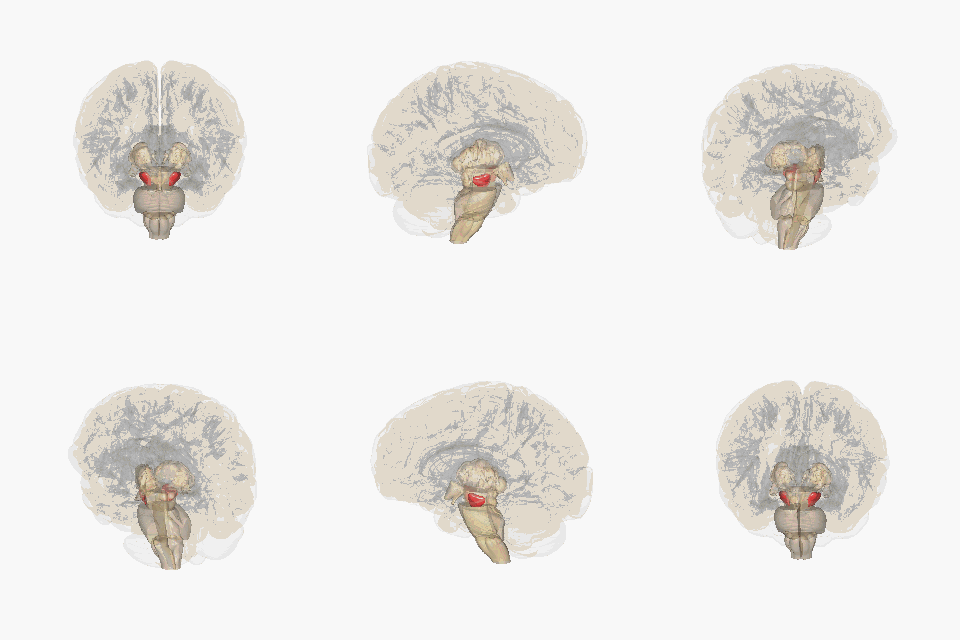
The substantia nigra (SN) is a critical component of the basal ganglia, a group of structures involved in various aspects of movement and cognition. As discussed in Basal Ganglia, the substantia nigra plays a key role in the regulation of movement and reward. The substantia nigra is located in the midbrain and is characterized by the presence of dopaminergic neurons, which are responsible for the production of dopamine. The high levels of neuromelanin in these neurons give the substantia nigra its distinctive dark appearance, as mentioned in Neuromelanin. The substantia nigra is divided into two main parts: the substantia nigra pars compacta (SNc) and the substantia nigra pars reticulata (SNr). The SNc is the more compact and densely packed region, while the SNr is more diffuse and reticulated. For more information on the anatomy of the brain, see Brain Anatomy.
🔍 Anatomy and Structure of Substantia Nigra
The anatomy and structure of the substantia nigra are complex and have been the subject of extensive study. The substantia nigra is composed of several distinct subnuclei, each with its own unique characteristics and functions. The SNc, for example, is the primary source of dopaminergic input to the striatum, a critical component of the basal ganglia. The SNr, on the other hand, is involved in the regulation of motor control and the integration of sensory information. As discussed in Striatum, the substantia nigra plays a critical role in the regulation of movement and reward. The substantia nigra also receives input from other brain regions, including the Cerebral Cortex and the Thalamus. For more information on the anatomy of the substantia nigra, see Substantia Nigra Anatomy.
🔬 Function of Substantia Nigra in Reward and Movement
The function of the substantia nigra in reward and movement is multifaceted and complex. The substantia nigra is involved in the regulation of motor control, particularly in the coordination of voluntary movements. The substantia nigra also plays a critical role in the processing of reward and motivation, as discussed in Reward System. The release of dopamine from the substantia nigra is thought to be involved in the reinforcement of behaviors, such as eating and drinking. The substantia nigra is also involved in the regulation of emotional responses, such as fear and anxiety. For more information on the role of the substantia nigra in emotion regulation, see Emotion Regulation. The substantia nigra is also connected to other brain regions, including the Amygdala and the Hippocampus.
👥 Role of Dopaminergic Neurons in Substantia Nigra
Dopaminergic neurons in the substantia nigra play a critical role in the regulation of movement and reward. These neurons are responsible for the production of dopamine, a neurotransmitter that is involved in the regulation of motor control and the processing of reward and motivation. The loss of dopaminergic neurons in the substantia nigra is thought to be involved in the pathogenesis of Parkinson's disease, a neurodegenerative disorder characterized by tremors, rigidity, and bradykinesia. As discussed in Parkinson's Disease, the substantia nigra is a critical component of the basal ganglia and plays a key role in the regulation of movement. The substantia nigra is also involved in the regulation of cognitive functions, such as attention and memory. For more information on the role of the substantia nigra in cognition, see Cognitive Functions.
🚫 Parkinson's Disease and Substantia Nigra
Parkinson's disease is a neurodegenerative disorder that is characterized by the loss of dopaminergic neurons in the substantia nigra pars compacta. This loss of neurons leads to a decrease in the production of dopamine, which is thought to be involved in the pathogenesis of the disease. The symptoms of Parkinson's disease include tremors, rigidity, bradykinesia, and postural instability. The substantia nigra is also involved in the regulation of non-motor symptoms, such as depression and anxiety. As discussed in Non-Motor Symptoms, the substantia nigra plays a critical role in the regulation of emotional responses. The substantia nigra is also connected to other brain regions, including the Subthalamic Nucleus and the Globus Pallidus. For more information on the treatment of Parkinson's disease, see Parkinson's Treatment.
💡 Neuroplasticity and Substantia Nigra
Neuroplasticity refers to the ability of the brain to reorganize itself in response to injury or disease. The substantia nigra is a highly plastic structure that is capable of reorganizing itself in response to changes in the brain. The substantia nigra is also involved in the regulation of neuroplasticity, particularly in the context of motor learning and memory. As discussed in Neuroplasticity, the substantia nigra plays a critical role in the regulation of synaptic plasticity. The substantia nigra is also connected to other brain regions, including the Cerebellum and the Brainstem. For more information on the role of the substantia nigra in neuroplasticity, see Substantia Nigra Neuroplasticity.
🔝 Substantia Nigra and Motor Control
The substantia nigra plays a critical role in the regulation of motor control, particularly in the coordination of voluntary movements. The substantia nigra is involved in the regulation of muscle tone, posture, and movement. The substantia nigra is also involved in the regulation of reflexes and the integration of sensory information. As discussed in Motor Control, the substantia nigra plays a key role in the regulation of motor functions. The substantia nigra is also connected to other brain regions, including the Motor Cortex and the Spinal Cord. For more information on the role of the substantia nigra in motor control, see Substantia Nigra Motor Control.
🤝 Substantia Nigra and Other Brain Regions
The substantia nigra is connected to other brain regions, including the cerebral cortex, thalamus, and brainstem. The substantia nigra is also involved in the regulation of cognitive functions, such as attention and memory. The substantia nigra is a critical component of the basal ganglia and plays a key role in the regulation of movement and reward. As discussed in Basal Ganglia Circuitry, the substantia nigra is connected to other brain regions, including the Striatum and the Globus Pallidus. The substantia nigra is also involved in the regulation of emotional responses, such as fear and anxiety. For more information on the role of the substantia nigra in emotion regulation, see Emotion Regulation.
📊 Substantia Nigra and Neurodegenerative Diseases
The substantia nigra is involved in the pathogenesis of several neurodegenerative diseases, including Parkinson's disease, Huntington's disease, and multiple system atrophy. The substantia nigra is also involved in the regulation of cognitive functions, such as attention and memory. The substantia nigra is a critical component of the basal ganglia and plays a key role in the regulation of movement and reward. As discussed in Neurodegenerative Diseases, the substantia nigra is involved in the pathogenesis of several diseases. The substantia nigra is also connected to other brain regions, including the Cerebral Cortex and the Thalamus. For more information on the role of the substantia nigra in neurodegenerative diseases, see Substantia Nigra Neurodegenerative Diseases.
🔮 Current Research and Future Directions
Current research on the substantia nigra is focused on understanding its role in the pathogenesis of neurodegenerative diseases, such as Parkinson's disease. The substantia nigra is also being studied in the context of neuroplasticity and the regulation of cognitive functions, such as attention and memory. As discussed in Current Research, the substantia nigra is a critical component of the basal ganglia and plays a key role in the regulation of movement and reward. The substantia nigra is also connected to other brain regions, including the Motor Cortex and the Spinal Cord. For more information on the current research on the substantia nigra, see Substantia Nigra Current Research.
📚 Conclusion and Future Prospects
In conclusion, the substantia nigra is a critical component of the basal ganglia and plays a key role in the regulation of movement and reward. The substantia nigra is involved in the pathogenesis of several neurodegenerative diseases, including Parkinson's disease, and is a critical component of the basal ganglia circuitry. As discussed in Conclusion, the substantia nigra is a highly plastic structure that is capable of reorganizing itself in response to injury or disease. The substantia nigra is also connected to other brain regions, including the Cerebral Cortex and the Thalamus. For more information on the substantia nigra, see Substantia Nigra.
Key Facts
- Year
- 1919
- Origin
- First described by German neurologist Paul Flechsig
- Category
- Neuroscience
- Type
- Anatomical Structure
Frequently Asked Questions
What is the substantia nigra?
The substantia nigra is a basal ganglia structure located in the midbrain that plays an important role in reward and movement. The substantia nigra is composed of several distinct subnuclei, each with its own unique characteristics and functions. For more information on the anatomy of the substantia nigra, see Substantia Nigra Anatomy. The substantia nigra is also involved in the regulation of cognitive functions, such as attention and memory. As discussed in Cognitive Functions, the substantia nigra plays a critical role in the regulation of cognitive functions.
What is the role of the substantia nigra in Parkinson's disease?
The substantia nigra plays a critical role in the pathogenesis of Parkinson's disease. The loss of dopaminergic neurons in the substantia nigra pars compacta is thought to be involved in the pathogenesis of the disease. As discussed in Parkinson's Disease, the substantia nigra is a critical component of the basal ganglia and plays a key role in the regulation of movement and reward. The substantia nigra is also involved in the regulation of non-motor symptoms, such as depression and anxiety. For more information on the treatment of Parkinson's disease, see Parkinson's Treatment.
What is the role of the substantia nigra in neuroplasticity?
The substantia nigra is a highly plastic structure that is capable of reorganizing itself in response to injury or disease. The substantia nigra is involved in the regulation of neuroplasticity, particularly in the context of motor learning and memory. As discussed in Neuroplasticity, the substantia nigra plays a critical role in the regulation of synaptic plasticity. The substantia nigra is also connected to other brain regions, including the Cerebellum and the Brainstem. For more information on the role of the substantia nigra in neuroplasticity, see Substantia Nigra Neuroplasticity.
What is the role of the substantia nigra in motor control?
The substantia nigra plays a critical role in the regulation of motor control, particularly in the coordination of voluntary movements. The substantia nigra is involved in the regulation of muscle tone, posture, and movement. As discussed in Motor Control, the substantia nigra plays a key role in the regulation of motor functions. The substantia nigra is also connected to other brain regions, including the Motor Cortex and the Spinal Cord. For more information on the role of the substantia nigra in motor control, see Substantia Nigra Motor Control.
What is the current research on the substantia nigra?
Current research on the substantia nigra is focused on understanding its role in the pathogenesis of neurodegenerative diseases, such as Parkinson's disease. The substantia nigra is also being studied in the context of neuroplasticity and the regulation of cognitive functions, such as attention and memory. As discussed in Current Research, the substantia nigra is a critical component of the basal ganglia and plays a key role in the regulation of movement and reward. The substantia nigra is also connected to other brain regions, including the Cerebral Cortex and the Thalamus. For more information on the current research on the substantia nigra, see Substantia Nigra Current Research.
What are the clinical implications of the substantia nigra?
The substantia nigra has significant clinical implications, particularly in the context of neurodegenerative diseases such as Parkinson's disease. The substantia nigra is also involved in the regulation of cognitive functions, such as attention and memory. As discussed in Clinical Implications, the substantia nigra plays a critical role in the regulation of motor functions and cognitive functions. The substantia nigra is also connected to other brain regions, including the Cerebral Cortex and the Thalamus. For more information on the clinical implications of the substantia nigra, see Substantia Nigra Clinical Implications.
How does the substantia nigra interact with other brain regions?
The substantia nigra interacts with other brain regions, including the cerebral cortex, thalamus, and brainstem. The substantia nigra is a critical component of the basal ganglia and plays a key role in the regulation of movement and reward. As discussed in Basal Ganglia Circuitry, the substantia nigra is connected to other brain regions, including the Striatum and the Globus Pallidus. The substantia nigra is also involved in the regulation of emotional responses, such as fear and anxiety. For more information on the interaction between the substantia nigra and other brain regions, see Substantia Nigra Interactions.