
Contents
Overview
Substance abuse counseling is a specialized field within mental health that focuses on helping individuals overcome addiction and substance use disorders. It involves a range of therapeutic techniques, from motivational interviewing to cognitive behavioral therapy, aimed at addressing the psychological, social, and behavioral factors contributing to addiction. Counselors work with clients to develop coping mechanisms, build relapse prevention strategies, and foster healthier life choices. The field draws from various theoretical orientations, including the 12-step model, psychodynamic approaches, and humanistic principles. With millions globally affected by substance use disorders, the demand for skilled counselors remains critically high, underscoring the profound societal and individual impact of this profession. The efficacy of counseling is often measured by reduced substance use, improved mental health, and enhanced overall quality of life for clients.
🎵 Origins & History
The formalization of substance abuse counseling as a distinct profession gained momentum in the mid-20th century, evolving from earlier approaches to alcoholism and addiction treatment. Early interventions often stemmed from temperance societies and religious organizations, viewing addiction primarily as a moral failing. The Alcoholics Anonymous (AA) program introduced the 12-step model and peer support as foundational elements. A more clinical understanding began to emerge, influenced by burgeoning fields like psychology and psychiatry. Key figures like Max Glickman and Vernon Johnson contributed to developing more structured therapeutic frameworks. The recognition of addiction as a complex disease, rather than solely a moral issue, paved the way for professional training and certification programs.
⚙️ How It Works
Substance abuse counseling operates through a multi-faceted therapeutic process designed to address the intricate nature of addiction. Counselors employ evidence-based practices, such as Cognitive Behavioral Therapy (CBT), to help clients identify and modify destructive thought patterns and behaviors associated with substance use. Motivational Interviewing (MI) is frequently used to enhance a client's intrinsic motivation for change. Other modalities include Dialectical Behavior Therapy (DBT) for emotional regulation, trauma-informed care to address underlying traumas, and family therapy to involve support systems. The counseling process typically involves assessment, goal setting, intervention, and relapse prevention planning, often within individual, group, or family counseling settings. Counselors also provide education on addiction, its effects, and recovery strategies, empowering clients with knowledge and tools for sustained sobriety.
📊 Key Facts & Numbers
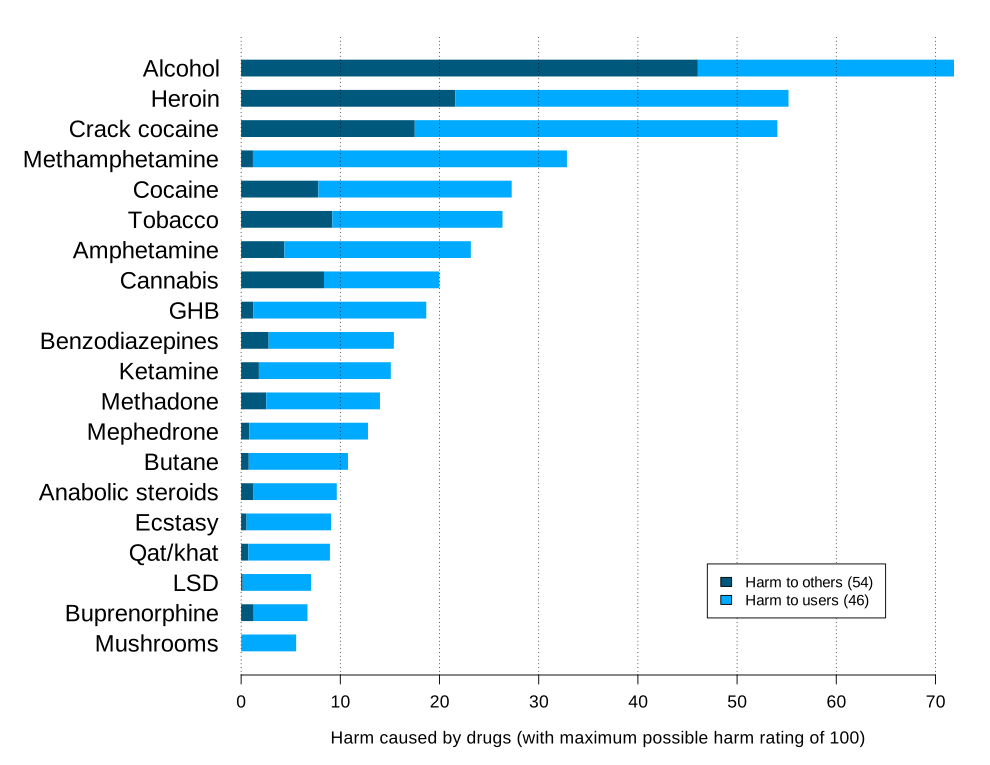
Globally, an estimated 275 million people aged 15-64 used drugs in 2020, with opioid use disorders affecting approximately 53.3 million individuals. In the United States alone, over 20.9 million people aged 12 or older struggled with a substance use disorder in 2022, according to the NSDUH. The economic burden of substance misuse in the U.S. is staggering, estimated at over $740 billion annually in costs related to healthcare, lost productivity, and crime. The number of certified substance abuse counselors in the U.S. is estimated to be in the hundreds of thousands, with projections indicating a growing need for these professionals, particularly in rural and underserved areas. The average cost of outpatient addiction treatment can range from a few thousand dollars to over $10,000 per year, depending on the intensity and duration of services.
👥 Key People & Organizations
Numerous individuals and organizations have shaped the field of substance abuse counseling. Pioneers like E.M. Jellinek, often called the "father of alcoholism studies," laid crucial groundwork for understanding addiction as a disease. Max Glickman was instrumental in developing professional training standards for addiction counselors in the United States. Organizations such as the Association for Addiction Professionals (NAADAC) and the Substance Abuse and Mental Health Services Administration (SAMHSA) play vital roles in setting ethical guidelines, advocating for policy changes, and providing resources. The World Health Organization (WHO) also contributes significantly through global research and public health initiatives. Many universities and colleges now offer specialized degree programs and certifications, producing a new generation of trained professionals.
🌍 Cultural Impact & Influence
The influence of substance abuse counseling extends far beyond clinical settings, permeating societal attitudes and cultural narratives surrounding addiction. It has helped shift the perception of addiction from a moral failing to a treatable health condition, reducing stigma and encouraging more individuals to seek help. The principles of recovery, emphasizing hope, resilience, and personal growth, have inspired self-help movements and advocacy groups. Media portrayals of addiction and recovery, while sometimes sensationalized, increasingly reflect a more nuanced understanding, influenced by the discourse generated by counseling professionals and those in recovery. The emphasis on harm reduction strategies, a concept gaining traction, also reflects a broader cultural shift towards pragmatic approaches to public health challenges. This evolving understanding has also influenced public policy, leading to increased funding for treatment and prevention programs.
⚡ Current State & Latest Developments
The field of substance abuse counseling is currently experiencing significant evolution, driven by advancements in neuroscience, a greater understanding of co-occurring mental health disorders, and the integration of technology. Telehealth services have expanded access to counseling, particularly for individuals in remote areas or those with mobility issues, a trend accelerated by the COVID-19 pandemic. There's a growing emphasis on trauma-informed care, recognizing the strong link between past trauma and substance use. Furthermore, the development of precision medicine approaches, tailoring treatment to an individual's genetic makeup and specific neurobiological profile, is beginning to influence therapeutic strategies. The ongoing opioid crisis continues to drive innovation in treatment modalities and recovery support services, with a focus on Medication-Assisted Treatment (MAT) and comprehensive case management.
🤔 Controversies & Debates
One of the most persistent controversies in substance abuse counseling revolves around the disease model versus the moral failing perspective. While the scientific consensus leans heavily towards addiction as a chronic brain disease, some segments of society and certain religious groups still view it as a character defect or sin, impacting treatment approaches and societal support. Debates also exist regarding the efficacy of different therapeutic modalities; for instance, the role and effectiveness of 12-step facilitation versus purely secular or CBT-based approaches remain a subject of discussion. The integration of Medication-Assisted Treatment (MAT) with counseling is another area of contention, with some purists arguing against any pharmacological intervention. Furthermore, the ethical considerations surrounding confidentiality, especially in cases involving legal ramifications or child welfare, present ongoing challenges for counselors.
🔮 Future Outlook & Predictions
The future of substance abuse counseling is poised for significant advancements, driven by technological integration and a deeper scientific understanding of addiction. Expect to see a greater reliance on Artificial Intelligence (AI) for personalized treatment planning, predictive analytics for relapse risk, and virtual reality (VR) for immersive therapeutic experiences. The integration of genomic data will likely lead to more tailored interventions, matching specific genetic profiles with the most effective treatments. There's also a projected increase in the use of wearable technology to monitor physiological indicators of stress and potential relapse. Policy shifts towards decriminalization and a greater emphasis on public health over punitive measures are also anticipated, potentially increasing the demand for acce
💡 Practical Applications
Substance abuse counseling has direct practical applications in various settings, including rehabilitation centers, hospitals, correctional facilities, schools, and private practices. Counselors provide individual counseling to address personal struggles, group therapy to foster peer support and shared experiences, and family therapy to mend relationships and build a supportive home environment. They also play a crucial role in prevention programs, educating communities about the risks of substance abuse and promoting healthy coping strategies. Furthermore, counselors are involved in case management, coordinating care with other healthcare providers and social services to ensure holistic client support. Their expertise is also vital in developing and implementing Employee Assistance Programs (EAPs) within workplaces.
Key Facts
- Category
- philosophy
- Type
- topic