
Contents
Overview
Studies in the Quantity Theory of Money trace their intellectual lineage back to the 16th century, when Jean Bodin first observed that Spanish colonial silver flooding into Western Europe caused price inflation—a foundational insight that would eventually become formalized by John Locke, David Hume, and Richard Cantillon in the 17th and 18th centuries. The modern empirical study of QTM crystallized in the early 20th century when Irving Fisher developed the equation of exchange (MV = PT), providing a mathematical framework that economists could test against real-world data. Milton Friedman's landmark 1963 publication A Monetary History of the United States (co-authored with Anna Schwartz) revitalized the quantity theory during the Keynesian dominance of mid-century economics, demonstrating through historical analysis that monetary policy—not just fiscal stimulus—fundamentally shaped macroeconomic outcomes. The European Central Bank's 2940 Working Paper Series and the Federal Reserve's Richmond division have since produced rigorous longitudinal studies examining the QTM across 150-year datasets (1870–2020) in 18 industrialized countries, establishing a robust empirical foundation for understanding inflation dynamics.
🔬 Empirical Research Methods & Findings
Contemporary empirical research on the Quantity Theory of Money employs sophisticated econometric techniques to isolate the relationship between excess money growth and inflation while controlling for confounding variables like output growth, velocity changes, and structural economic shifts. Studies published through ScienceDirect and the International Monetary Fund examine whether the proportionality relationship predicted by the theory—that doubling the money supply doubles prices—holds consistently across different time periods, countries, and economic regimes. Researchers utilizing datasets from central banks including the Federal Reserve, Bank of England, and European Central Bank have found that the QTM's predictive power strengthens over longer time horizons (5+ years) but weakens in the short term, validating Irving Fisher's original caveat that money exhibits non-neutrality during transition periods. The Cambridge equation variant, championed by Alfred Marshall and later refined by economists at Cambridge University, has proven particularly useful in empirical work because it emphasizes money demand as a function of income, allowing researchers to incorporate behavioral factors and asset-holding preferences into their models—an approach that influenced both Keynesian and monetarist schools of thought.
💡 Key Theoretical Debates & Refinements
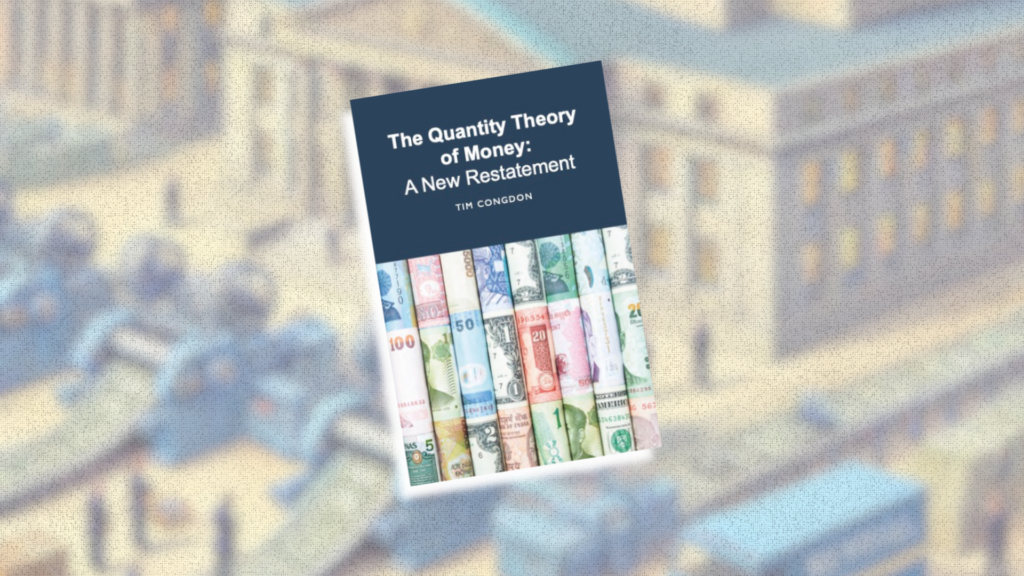
Scholarly debates within studies of the Quantity Theory of Money center on whether the relationship between money supply and prices is truly causal (money causes inflation) or merely correlational, whether velocity of money should be treated as constant or variable, and how to account for the theory's apparent failure during the 1930s Great Depression when monetary expansion seemed ineffective in combating deflation. Economists like Ralph Hawtrey and later Keynesian critics argued that the QTM oversimplified economic reality by ignoring liquidity traps, expectations, and the role of interest rates—critiques that prompted Milton Friedman and the monetarist school to develop more nuanced versions incorporating expectations theory and distinguishing between anticipated and unanticipated money growth. Tim Congdon's The Quantity Theory of Money: A New Restatement (published by the Institute of Economic Affairs) represents recent scholarship attempting to reconcile classical QTM with modern financial complexity, including the rise of credit money, digital currencies, and unconventional monetary policy tools used by central banks like the Federal Reserve and ECB following the 2008 financial crisis. The debate over whether excess money growth truly drives inflation—or whether inflation expectations, supply shocks, and wage dynamics play equally important roles—remains active in academic journals and policy circles, with researchers at institutions like the Hoover Institution continuing to test QTM predictions against real-time macroeconomic data.
🌐 Contemporary Applications & Legacy
Studies in the Quantity Theory of Money have profoundly shaped modern central banking practice, inflation targeting frameworks, and monetary policy design at institutions including the Federal Reserve, European Central Bank, and Bank of England, which now explicitly monitor money supply growth as one indicator among many for inflation risk assessment. The theory's empirical validation across 150 years of data (1870–2020) has reinforced the monetarist critique of pure Keynesianism and influenced policy responses to inflation crises, from Paul Volcker's aggressive rate hikes in the 1980s to quantitative easing debates following the 2008 financial crisis and COVID-19 pandemic. Contemporary research published through academic platforms like OpenSIUC and the IMF's e-library continues to refine QTM by incorporating modern financial innovations—cryptocurrency, shadow banking, digital payment systems—while testing whether the classical relationship holds in an era of negative interest rates, helicopter money proposals, and unprecedented central bank balance sheet expansion. The enduring relevance of studies in the Quantity Theory of Money lies in their ability to provide a parsimonious, empirically testable framework for understanding inflation dynamics, making the theory not merely a historical curiosity but an active research agenda that informs policy decisions affecting billions of people through their purchasing power and financial security.
Key Facts
- Year
- 1870-2020
- Origin
- Originated in 16th-century Europe; formalized mathematically in early 20th century; empirically validated across 150-year datasets in industrialized economies
- Category
- science
- Type
- concept
Frequently Asked Questions
What is the core claim of the Quantity Theory of Money?
The QTM states that the general price level of goods and services is directly proportional to the amount of money in circulation. In its mathematical form (MV = PT), it asserts that money supply (M) multiplied by velocity (V) equals price level (P) multiplied by transactions (T). The theory implies that if you double the money supply while holding velocity and output constant, prices will double. This relationship has been observed consistently across 150 years of empirical data (1870–2020) in 18 industrialized countries, making it one of the oldest and most durable theories in economics.
How did Irving Fisher and Milton Friedman advance QTM research?
Irving Fisher (1867–1947) formalized the equation of exchange (MV = PT) in 1911, providing a mathematical framework that economists could test empirically. He insisted on the long-run neutrality of money while acknowledging short-term non-neutrality during transition periods. Milton Friedman revitalized QTM in 1963 through his landmark A Monetary History of the United States (co-authored with Anna Schwartz), demonstrating through rigorous historical analysis that monetary policy—not just fiscal stimulus—fundamentally shaped macroeconomic outcomes. Friedman's work challenged Keynesian orthodoxy and established monetarism as a competing school of thought, directly influencing Federal Reserve policy decisions and central banking practice worldwide.
Why does QTM work better over long time horizons than short-term periods?
Empirical studies spanning 1870–2020 show that the money-inflation relationship strengthens significantly over 5+ year periods but weakens in the short term because of several factors: (1) velocity of money fluctuates in response to interest rates, expectations, and financial innovation; (2) output growth can temporarily absorb money supply increases without causing inflation; (3) price stickiness and wage rigidities delay the full transmission of monetary changes to prices; (4) expectations about future inflation affect current pricing behavior in ways not captured by current money supply alone. Over longer horizons, these short-term frictions dissipate, and the proportional relationship between excess money growth and inflation becomes clearly visible in the data.
What criticisms have been leveled against QTM, and how have scholars responded?
Major criticisms include: (1) QTM appeared to fail during the 1930s Great Depression when monetary expansion seemed ineffective—scholars like Ralph Hawtrey and Keynesians argued the theory ignored liquidity traps; (2) QTM oversimplifies by treating velocity as constant when it actually varies with interest rates and financial conditions; (3) the theory neglects expectations, supply shocks, and wage dynamics that also drive inflation. Modern scholars like Tim Congdon have responded by developing refined versions that incorporate expectations theory, distinguish between anticipated and unanticipated money growth, and account for credit money and digital currencies. Contemporary research published through the European Central Bank and International Monetary Fund continues to validate QTM's core propositions while acknowledging these complexities.
How do central banks like the Federal Reserve and ECB use QTM research in practice?
Central banks monitor money supply growth as one key indicator among many for inflation risk assessment, directly applying insights from 150 years of QTM research. The Federal Reserve, European Central Bank, and Bank of England incorporate QTM principles into inflation targeting frameworks, which explicitly link monetary policy decisions to money supply dynamics and inflation expectations. During the 2008 financial crisis and COVID-19 pandemic, central banks referenced QTM research when debating quantitative easing and helicopter money proposals, asking whether unprecedented balance sheet expansion would trigger inflation. The theory's empirical validation across industrialized economies provides policymakers with a parsimonious framework for understanding how their monetary policy actions ultimately affect purchasing power and financial stability for billions of people.
References
- en.wikipedia.org — /wiki/Quantity_theory_of_money
- inomics.com — /terms/quantity-theory-of-money-1524969
- ebsco.com — /research-starters/business-and-management/quantity-theory-money
- richmondfed.org — /~/media/richmondfedorg/publications/research/economic_review/1974/pdf/er600301.
- britannica.com — /money/quantity-theory-of-money
- miltonfriedman.hoover.org — /internal/media/dispatcher/214346/full
- ecb.europa.eu — /pub/pdf/scpwps/ecb.wp.2940.en.pdf
- sciencedirect.com — /science/article/abs/pii/S0164070425000187
- iea.org.uk — /wp-content/uploads/2024/06/QTM-Interactive.pdf
- investopedia.com — /terms/q/quantity_theory_of_money.asp
- opensiuc.lib.siu.edu — /cgi/viewcontent.cgi
- elibrary.imf.org — /view/journals/024/1961/001/article-A004-en.xml