
Contents
Overview
Ancient Greece saw performances in public agoras, while medieval Europe featured traveling troupes of jongleurs and mummers performing religious and secular tales in marketplaces. In the 20th century, street theater re-emerged as a powerful force, particularly within political movements. Jacques Copeau influenced later physical theater practitioners in the early 20th century. Dario Fo frequently used street performance and political satire in his work, drawing inspiration from medieval jesters. Augusto Boal developed 'Theater of the Oppressed' to address social and political issues. Organizations like The Troupe Theater in the UK and San Francisco Mime Troupe have a long history of producing politically charged street performances. Contemporary companies such as Stomp and Blue Man Group have achieved global fame through their unique, rhythm-based street-inspired performances, demonstrating the evolution of the form into large-scale entertainment.
⚙️ How It Works
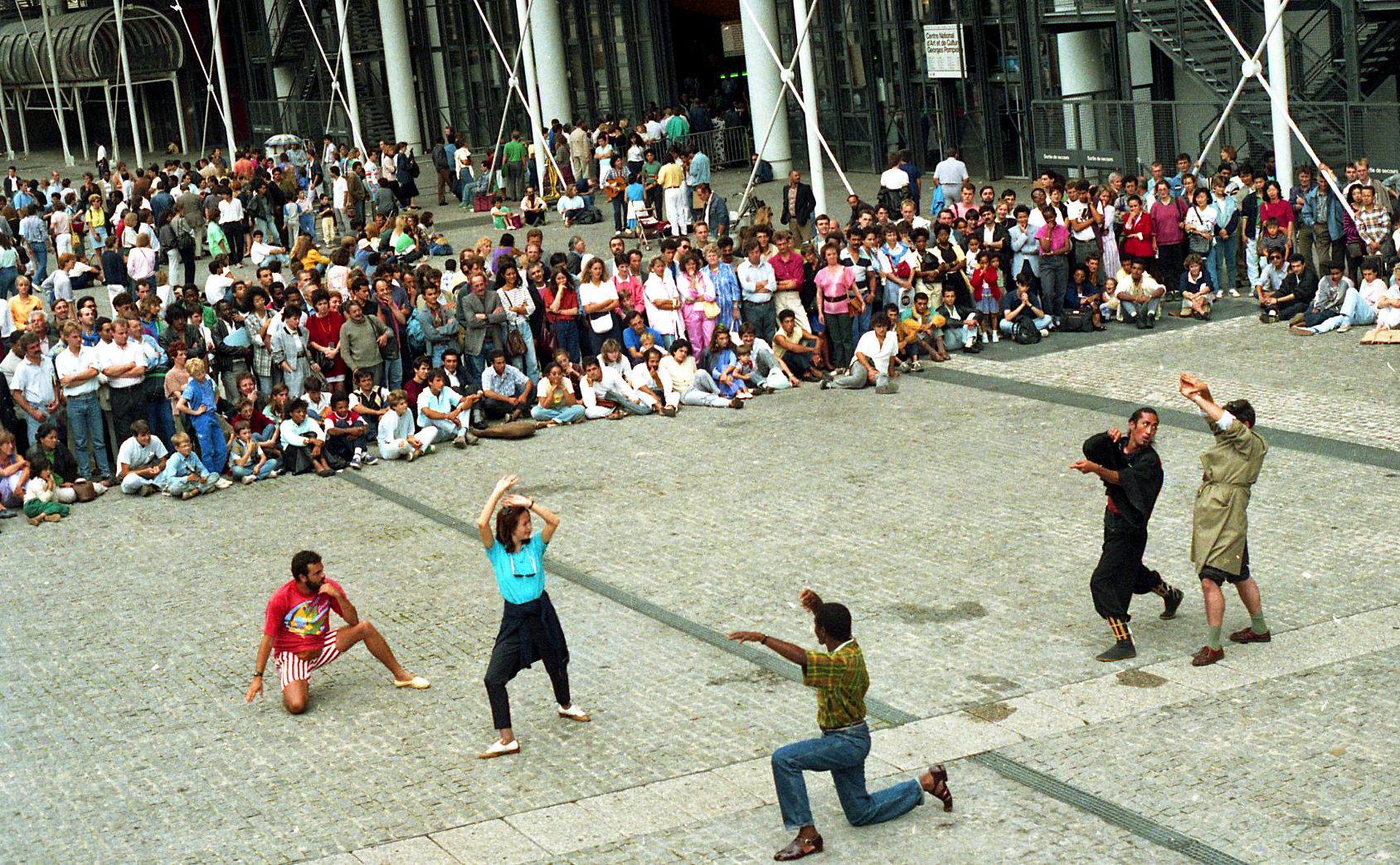
The mechanics of street theater are defined by its environment: the street. Performances typically require minimal technical infrastructure, eschewing elaborate sets, complex lighting, and amplification. Instead, performers rely on their bodies, voices, and portable props. Physicality is paramount, encompassing mime, dance, acrobatics, and slapstick, which are inherently visible and understandable across language barriers. Natural vocal projection, often honed through rigorous training, is essential to cut through urban noise. The narrative structure must be immediately engaging, capable of capturing the attention of a transient audience that may stop for only a few minutes. Improvisation is frequently a key component, allowing performers to adapt to unexpected circumstances, audience reactions, and the ever-changing urban backdrop. The 'stage' itself is fluid, often dictated by the available space and the performers' ability to create a focal point, perhaps using a chalk circle, a portable platform, or simply the natural architecture of the location.
📊 Key Facts & Numbers
Street theater is a significant part of public life, with various festivals and events showcasing performances. The London International Mime Festival continues to showcase innovative physical theater, much of which has roots in street performance.
👥 Key People & Organizations
Street theater is not without its controversies. Critics sometimes dismiss it as mere entertainment or a nuisance, particularly when performances disrupt public flow or generate noise. Debates arise over permits, public space usage, and the potential for commercialization to dilute its artistic integrity or political edge. Some argue that the reliance on voluntary donations can create economic precarity for performers, while others contend that it democratizes access to art, removing financial barriers. The line between authentic artistic expression and opportunistic busking can be blurry, leading to discussions about quality control and professional standards. Furthermore, the political messaging in some street theater can be polarizing, sparking debates about freedom of speech versus public order and the appropriateness of certain messages in shared spaces.
🌍 Cultural Impact & Influence
The future of street theater appears robust, driven by its inherent adaptability and the enduring human need for shared, live experiences. We can anticipate a greater integration of technology, such as augmented reality overlays and interactive digital elements, enhancing traditional performances without sacrificing their core physicality. Expect to see more site-specific works that deeply engage with the unique history and character of their urban environments. As cities grapple with issues of social isolation and the need for community cohesion, street theater will likely play an even more significant role in fostering connection and dialogue. The potential for cross-pollination with other art forms, including digital art and immersive installations, is vast. Ultimately, street theater's future lies in its ability to remain grounded in the immediate, tangible reality of the street while pushing creative boundaries.
⚡ Current State & Latest Developments
Street theater finds practical application across a wide spectrum of human activity. It is a cornerstone of festivals and public celebrations worldwide.
Key Facts
- Category
- culture
- Type
- topic