
Summary
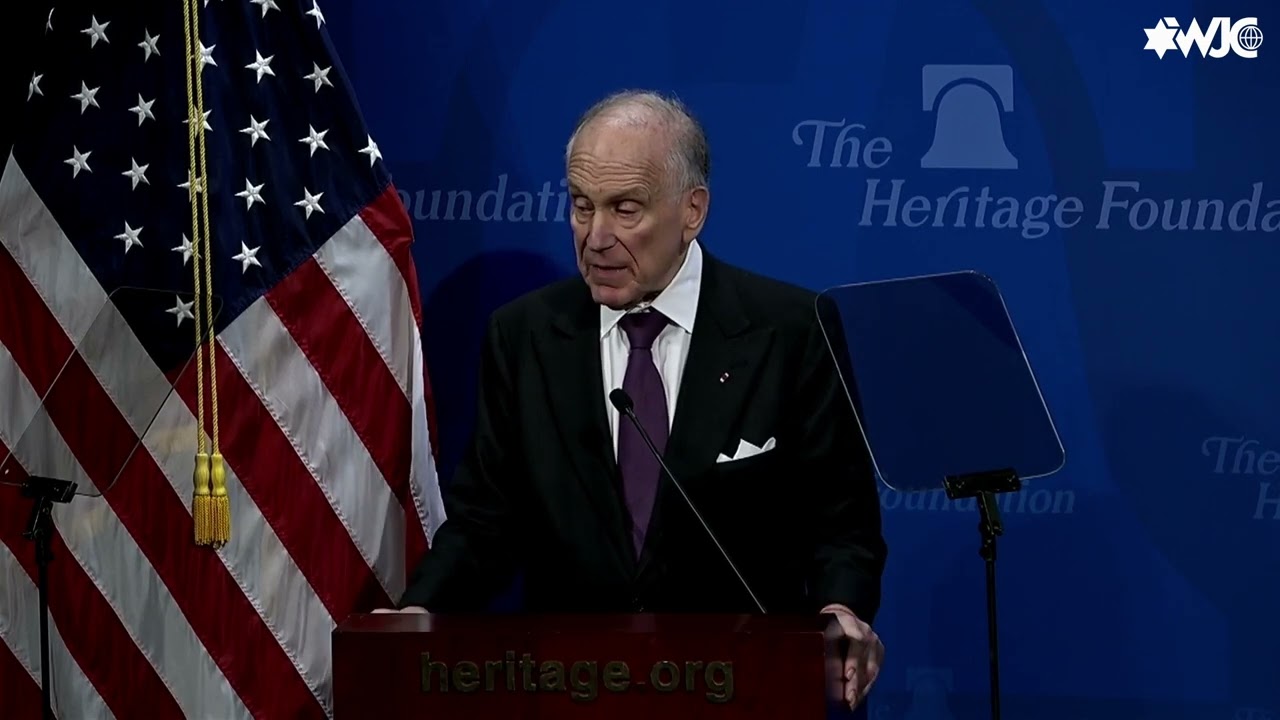
**Ronald S. Lauder**'s fiery address at the **Israel Hayom Summit** has ignited a firestorm, with the **World Jewish Congress** president accusing Western societies of tolerating **antisemitism** as a 'full-scale assault on truth.' He drew parallels to **Father Charles Coughlin**'s 1930s radio influence, warning that today's **misinformation** in schools risks repeating history. **K–12 education** is now a battleground, with some materials erasing **Israel** entirely. Lauder's call for **Muslim-Arab alliances** against extremism has drawn both support and skepticism. [[~antisemitism|Antisemitism]] is rising globally, but is this a genuine crisis or a political tool? [[~world-jewish-congress|WJC]]'s claims about 'normalization of anti-Jewish rhetoric' remain unverified, though **violent attacks** on Jews in the **US** and **Europe** are well-documented. [[~father-charles-coughlin|Coughlin]]'s legacy as a 1930s propagandist is undeniable, but does his comparison to modern figures like **Tucker Carlson** hold water? [[~education-policies|Education policies]] under scrutiny could reshape **democratic principles** — or deepen divisions.
Key Takeaways
- Lauder's speech frames antisemitism as a threat to democracy and Jewish safety.
- The WJC highlights education as a battleground for misinformation and anti-Israel narratives.
- Historical parallels to 1930s propaganda are used to warn against complacency.
- Calls for Muslim-Arab alliances against extremism face political and cultural challenges.
- The 'global surge' claim lacks independent verification, raising questions about its validity.
Balanced Perspective
**Lauder's speech** highlights documented **antisemitism** trends, including **violent attacks** and **online rhetoric**, but lacks specific **statistical evidence** for a 'global surge.' The **Father Coughlin** comparison is provocative but **historically accurate**. **K–12 education** issues are real, with some **curriculum materials** omitting **Israel**, though **scope** and **impact** remain unclear. The **WJC's alliances** with **Muslim-Arab communities** are strategic, but **measuring success** is complex. [[~antisemitism|Antisemitism]] is indeed rising, but **context** and **geographic variation** matter. The **Israel Hayom Summit** platform amplifies these concerns, but **media coverage** may skew perception.
Optimistic View
**Lauder's call for unity** offers a path forward. By framing **antisemitism** as a threat to **democracy**, he mobilizes **Muslim-Arab allies** to combat extremism. The **WJC's expanded partnerships** with governments and platforms could set a precedent for cross-cultural collaboration. **Educational reforms** targeting **misinformation** might restore **truth-telling** in classrooms. [[~world-jewish-congress|WJC]]'s focus on **historical parallels** could galvanize public awareness, preventing the **1930s complacency** from repeating. This is a chance to build a **coalition** that transcends political divides.
Critical View
**Lauder's alarmism** risks inflaming **political tensions** by framing **antisemitism** as a 'full-scale assault.' The **Father Coughlin** analogy could be seen as **historical manipulation**, weaponizing the past for **current agendas**. **Educational reforms** may inadvertently deepen **cultural divides** by targeting **specific narratives**. The **WJC's alliances** with **Muslim-Arab groups** could backfire if perceived as **anti-Islamic**. **Misinformation** about **antisemitism** could lead to **overreach** in **government policies**, normalizing **suspicion** of **Jewish communities**. This is a **dangerous moment** where **truth** and **fear** collide.
Source
Originally reported by worldjewishcongress.org