
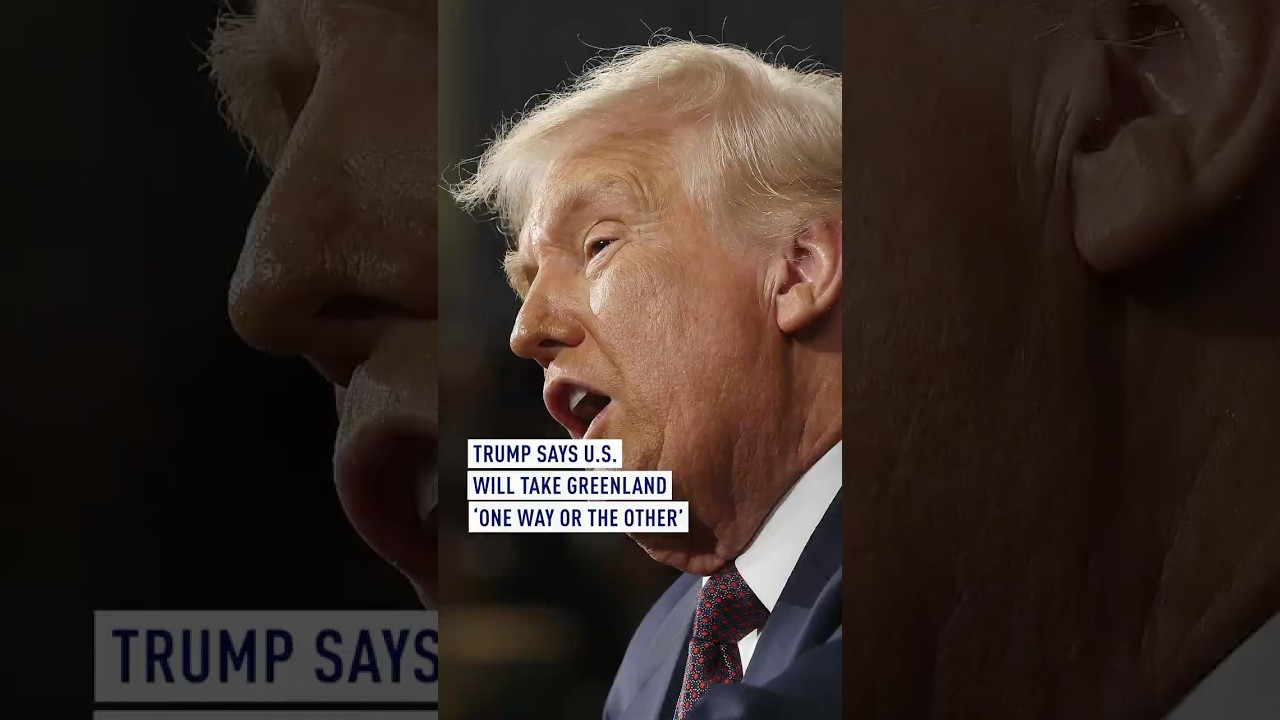
Summary
**Greenland** remains a flashpoint as the **US** explores military-backed acquisition options, per the **White House**. European allies, including **Denmark**, have rallied to protect the Arctic territory, with **NATO** emphasizing collective security. The **Trump administration** claims Greenland is a 'national security priority,' but Danish PM **Mette Frederiksen** warns of NATO dissolution if attacked. **US Secretary of State Marco Rubio** hinted at diplomatic solutions, though the White House insists military force is 'always an option.' The dispute echoes Cold War-era tensions and raises questions about Arctic sovereignty. [[~nato|NATO]]'s role in Arctic security is now central to this geopolitical tug-of-war. [[~greenland|Greenland]]'s semi-autonomous status and strategic location make it a coveted prize. [[~denmark|Denmark]]'s foreign minister insists dialogue is key, but **European leaders** have united to defend Greenland's sovereignty. [[~arctic-security|Arctic Security]] remains a volatile issue with global implications.
Key Takeaways
- The US is exploring military options to acquire Greenland, a Danish territory
- NATO and European allies have united to defend Greenland's sovereignty
- Denmark's foreign minister insists dialogue is key to resolving tensions
- The dispute highlights Arctic security concerns and geopolitical rivalries
- Greenland's strategic location and resources make it a coveted prize
Balanced Perspective
The **White House** claims Greenland is a 'national security priority,' but no formal acquisition plan exists. **Denmark** and **NATO** have consistently rejected unilateral US actions. **Marco Rubio** emphasized diplomatic engagement, though military options remain on the table. [[~nato|NATO]]'s joint statement supports Denmark's sovereignty, but the alliance's unity is fragile. [[~greenland|Greenland]]'s semi-autonomous status complicates any acquisition. The **US** has not disclosed specific military strategies, and **Denmark** has not ruled out defensive measures. [[~arctic-security|Arctic Security]] remains a shared concern, but no binding agreement exists between the **US** and **Denmark**.
Optimistic View
**Greenland** could become a strategic asset for the **US**, enhancing Arctic influence and energy security. Military options might deter Russian expansion, while diplomatic solutions could secure long-term partnerships. **NATO** could strengthen its Arctic presence, ensuring collective defense. [[~nato|NATO]]'s unity on this issue could set a precedent for transatlantic cooperation. [[~arctic-security|Arctic Security]] might become a model for collaborative resource management. The **US** could leverage Greenland's mineral wealth, boosting domestic energy independence. [[~greenland|Greenland]]'s population might benefit from US investment in infrastructure and technology.
Critical View
Military options risk **NATO** fragmentation and a **Cold War**-style confrontation. **Denmark** could invoke Article 5, triggering a **NATO** response. [[~nato|NATO]]'s unity is already strained by **US**-led initiatives like the **Arctic Council**. [[~arctic-security|Arctic Security]] could become a proxy war zone. **Greenland**'s population might face coercion or economic exploitation. The **US**'s aggressive stance could destabilize the **Arctic Council** and escalate tensions with **Russia**. [[~greenland|Greenland]]'s sovereignty could be violated, undermining international law.
Source
Originally reported by BBC