
Summary
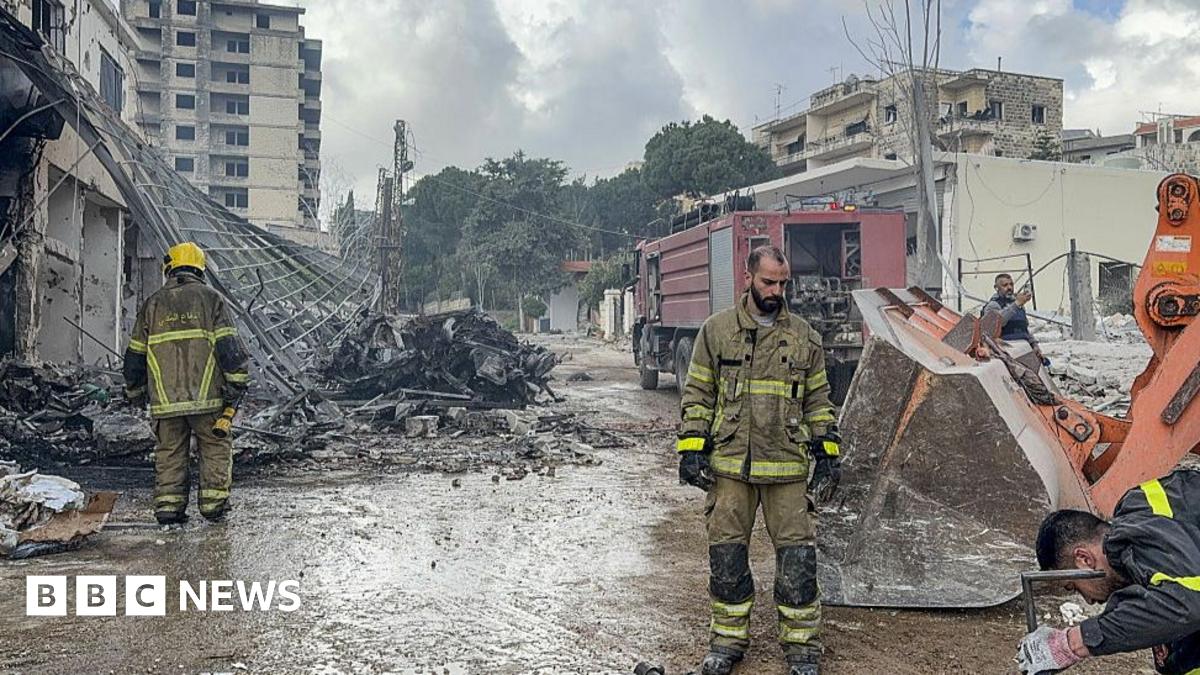
US President **Donald Trump** has urged Iran to negotiate, stating that the only reason Iranians "are alive today is to negotiate". Meanwhile, **JD Vance**, the US vice president, is set to head to Pakistan for peace talks, aiming to work with Iran in "good faith". The Iranian delegation has yet to arrive in Islamabad, with Iran's parliament speaker insisting that a ceasefire in Lebanon must occur before negotiations begin. The situation is further complicated by confusion over whether the US and Iran's two-week ceasefire includes Lebanon. [[iran|Iran]] and [[united-states|US]] relations are at a critical juncture, with the international community watching closely. The **Strait of Hormuz**, a vital oil shipping route, remains a point of contention. [[pakistan|Pakistan]]'s role as a mediator in the talks is seen as crucial. The **Lebanon ceasefire** is a key issue, with Israel and Lebanon having exchanged strikes in recent days.
Key Takeaways
- The US and Iran are engaging in peace talks, with JD Vance set to head to Pakistan for negotiations
- The situation is complex, with multiple countries and interests involved
- The Strait of Hormuz and Lebanon ceasefire are key issues that need to be addressed
- The talks are a critical moment in US-Iran relations, with significant implications for global stability and the economy
- The international community should support the peace talks and encourage constructive dialogue
Balanced Perspective
The situation is complex, with multiple countries and interests involved. While the peace talks are a positive development, it's unclear what the outcome will be. The US and Iran have fundamentally different views on key issues, including the nuclear deal and the Strait of Hormuz. **Lebanon**'s ceasefire is a critical issue that needs to be addressed. The **US** and **Iran** will need to find common ground if the talks are to be successful. The role of **Israel** and **Lebanon** in the conflict adds to the complexity of the situation.
Optimistic View
The fact that the US and Iran are engaging in peace talks is a positive development, and **JD Vance**'s willingness to work with Iran in "good faith" is a promising sign. If the talks are successful, it could lead to a reduction in tensions and a more stable region. The involvement of **Pakistan** as a mediator is also a positive factor, as the country has a history of facilitating dialogue between nations. [[pakistan|Pakistan]]'s role in the talks could be crucial in finding a peaceful resolution. The **US** and **Iran** have a long history of conflict, but the current talks offer a glimmer of hope for a more peaceful future.
Critical View
The talks are unlikely to succeed, given the deep-seated differences between the US and Iran. The US has imposed sanctions on Iran, which has responded by threatening to close the Strait of Hormuz. The situation in Lebanon is also volatile, with Israel and Lebanon exchanging strikes. The **US** and **Iran** have a long history of conflict, and it's unlikely that the talks will lead to a lasting resolution. The involvement of **Israel** and **Lebanon** adds to the complexity of the situation, making it even more challenging to find a peaceful resolution.
Source
Originally reported by BBC