
Summary
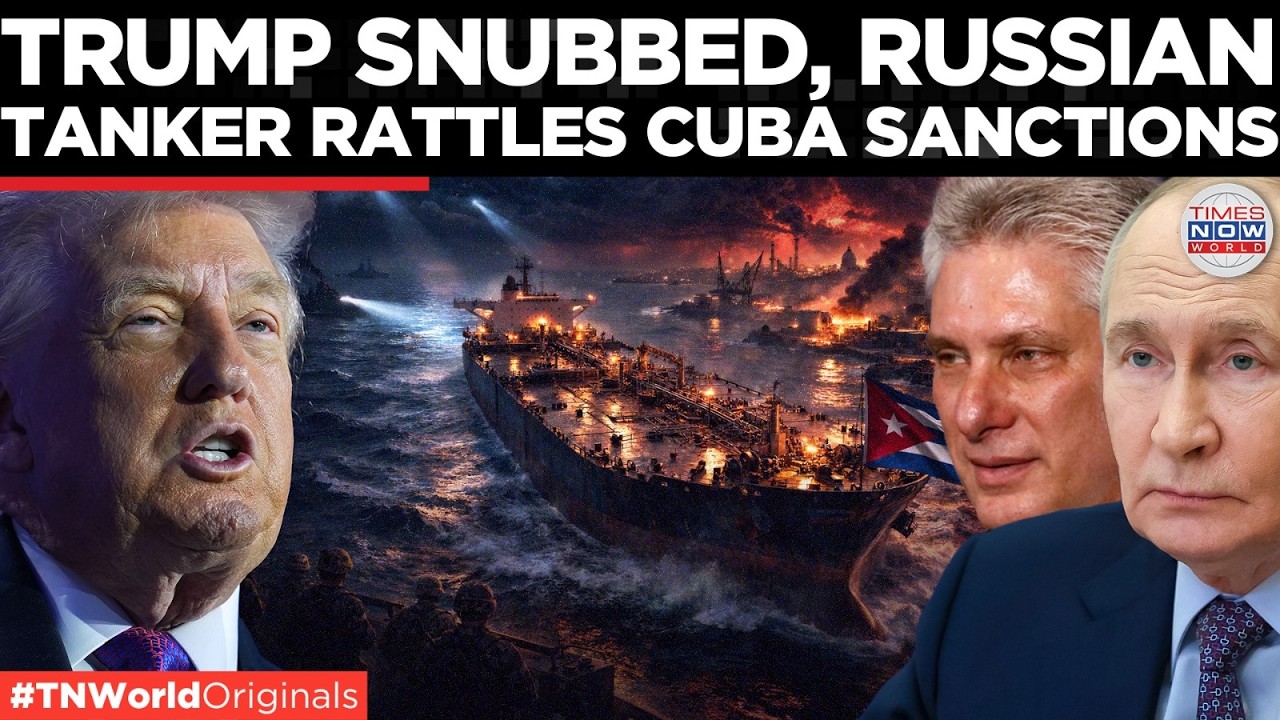
**Trump** allowed a **Russian** oil tanker to reach **Cuba**, ending a fuel blockade that caused blackouts and infrastructure collapse. The **Anatoly Kolodkin** tanker, carrying 730,000 barrels, arrived at **Matanzas port** despite **US sanctions** targeting Venezuela and other suppliers. [[~us-cuba-relations|US-Cuba relations]] have deteriorated since 2017, with **oil sanctions** crippling **Cuba's energy grid**. [[~oil-sanctions|Oil sanctions]] have left 10 million Cubans without power, hospitals struggling, and trash piling up. [[~cuba-energy-crisis|Cuba's energy crisis]] has become a **geopolitical flashpoint**, with **Russia** exploiting the vacuum. [[~russia-cuba-alliances|Russia-Cuba alliances]] now face scrutiny as **Trump** claims to prioritize 'survival' over ideology. [[~us-energy-policy|US energy policy]] remains divided between isolationism and pragmatic engagement.
Key Takeaways
- Trump's decision to allow a Russian tanker to reach Cuba marks a strategic shift in US-Cuba relations
- The 730,000 barrels of oil could alleviate Cuba's severe energy crisis but risks geopolitical tensions
- This move highlights the complex interplay between energy policy, sanctions, and humanitarian concerns
- Russia's growing influence in the Caribbean may reshape regional power dynamics
- The incident underscores the limitations of sanctions as a tool for regime change
Balanced Perspective
**The tanker's arrival** is unverified by **US officials**, relying on **Russian state media** and **MarineTraffic** data. [[~us-cuba-relations|US-Cuba relations]] remain strained, with **Trump** citing 'survival' but not lifting sanctions. [[~oil-sanctions|Oil sanctions]] have crippled **Cuba's economy**, but this move could be a tactical concession. [[~cuba-energy-crisis|Cuba's energy crisis]] is severe, with 10 million people affected, but the **tanker's impact** is uncertain. [[~russia-cuba-alliances|Russia-Cuba alliances]] are strategic, not altruistic.
Optimistic View
**Cuba** could see immediate relief from the **oil shortage**, with 730,000 barrels potentially stabilizing the **energy grid**. [[~cuba-energy-crisis|Cuba's energy crisis]] might ease, reducing blackouts and hospital closures. [[~us-cuba-relations|US-Cuba relations]] could thaw if this signals a shift toward pragmatic diplomacy. [[~russia-cuba-alliances|Russia-Cuba alliances]] might strengthen, creating a new energy corridor. [[~oil-sanctions|Oil sanctions]] could be reevaluated if this move proves effective.
Critical View
**This move risks escalating tensions** with **US allies** like **Mexico** and **Venezuela**, who may retaliate. [[~us-energy-policy|US energy policy]] could face backlash for appearing to aid **Cuba's regime**. [[~cuba-energy-crisis|Cuba's energy crisis]] might worsen if the **tanker's oil** is diverted to military use. [[~russia-cuba-alliances|Russia-Cuba alliances]] could deepen, creating a **strategic dependency**. [[~oil-sanctions|Oil sanctions]] may be seen as a **political ploy**, undermining **US credibility**.
Source
Originally reported by CNN