
Summary
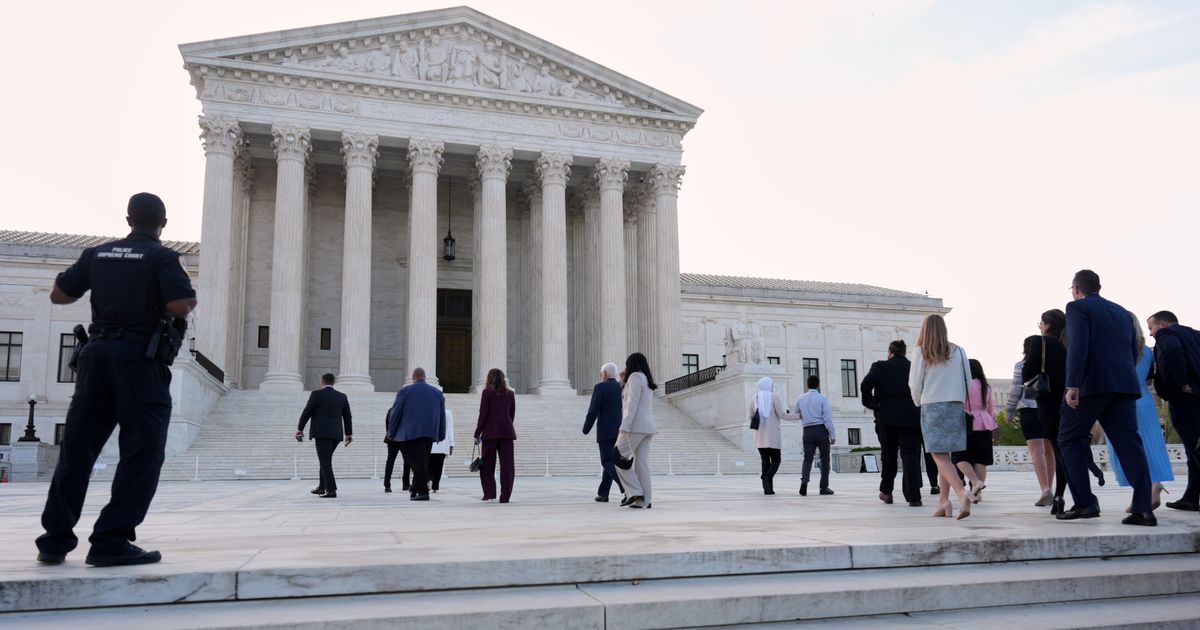
The **U.S. Supreme Court** has begun hearing arguments over the constitutionality of **President Donald Trump**'s order to end **birthright citizenship** for children born in the United States to someone in the country illegally or temporarily. The order, signed on **Jan. 20, 2025**, is part of Trump's **Republican administration**'s broad **immigration crackdown**. Every lower court to have considered the issue has found the order illegal and prevented it from taking effect. The Supreme Court's decision is expected by early summer. The case has significant implications for **immigration policy** and the **14th Amendment**, which grants citizenship to all persons born in the United States. [[immigration-policy|Immigration policy]] and [[14th-amendment|14th Amendment]] are at the center of the debate. The **American Civil Liberties Union (ACLU)** is defending birthright citizenship, arguing that it is a fundamental right guaranteed by the Constitution. The case is being closely watched by **immigrant rights groups** and **conservative organizations** alike, with many seeing it as a key test of the Trump administration's **immigration agenda**. [[aclu|ACLU]] and [[immigrant-rights-groups|immigrant rights groups]] are playing a crucial role in the case.
Key Takeaways
- The Supreme Court is hearing arguments on Trump's birthright citizenship order
- The order is part of Trump's Republican administration's broad immigration crackdown
- Every lower court to have considered the issue has found the order illegal and prevented it from taking effect
- The decision will have significant implications for immigration policy and the 14th Amendment
- The case is a key test of the Trump administration's immigration agenda
Balanced Perspective
The Supreme Court's decision on Trump's birthright citizenship order will have significant implications for **immigration policy** and the **14th Amendment**. While **proponents of birthright citizenship** argue that it is a fundamental right, **opponents** argue that it is a privilege that can be granted or taken away by the government. The Court's decision will depend on its interpretation of the **14th Amendment** and the **Immigration and Nationality Act**, which grants citizenship to children born in the United States. [[14th-amendment|14th Amendment]] and [[immigration-and-nationality-act|Immigration and Nationality Act]] are key to the case. The decision will also be influenced by the Court's consideration of the **humanitarian issue** of people who have been in the U.S. for a long time and are subject to removal but have made a permanent home in America.
Optimistic View
The Supreme Court's decision to hear arguments on Trump's birthright citizenship order is a crucial step towards resolving the issue. **Proponents of birthright citizenship** argue that it is a fundamental right guaranteed by the **14th Amendment**, and that Trump's order is an overreach of executive power. If the Court rules in favor of birthright citizenship, it could be a major victory for **immigrant rights groups** and a significant setback for the Trump administration's **immigration agenda**. [[proponents-of-birthright-citizenship|Proponents of birthright citizenship]] and [[immigrant-rights-groups|immigrant rights groups]] are hopeful about the outcome. The decision could also have significant implications for **future immigration policy**, potentially limiting the ability of future administrations to unilaterally change the rules governing citizenship.
Critical View
The Supreme Court's decision on Trump's birthright citizenship order could have devastating consequences for **immigrant families** and **communities of color**. If the Court rules in favor of Trump's order, it could lead to the **denial of citizenship** to thousands of children born in the United States to undocumented immigrants. This could have significant implications for **access to education**, **healthcare**, and **other social services**, and could lead to increased **family separation** and **deportation**. [[immigrant-families|Immigrant families]] and [[communities-of-color|communities of color]] are concerned about the potential outcome. The decision could also embolden the Trump administration to pursue further **anti-immigrant policies**, potentially leading to a **humanitarian crisis** at the border.
Source
Originally reported by WRAL