
Summary
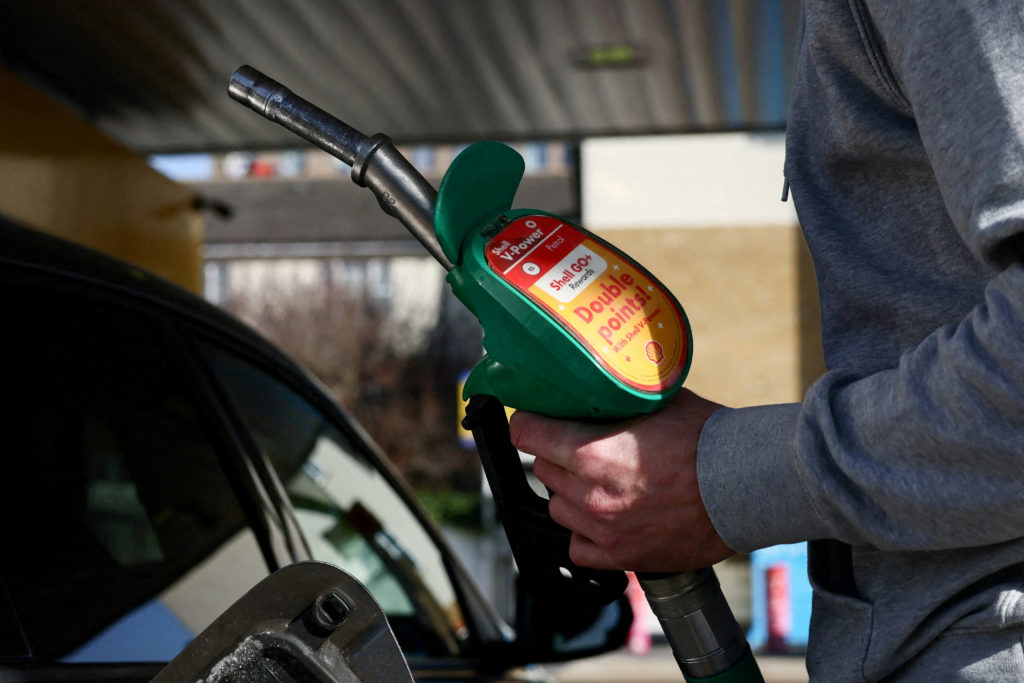
**Gas prices** in the U.S. have surged to **$4.50 per gallon** [[gas-prices|gas-prices]], driven by **OPEC+ production cuts** and **Russia-Ukraine war** [[russia-ukraine-war|russia-ukraine-war]]. This isn't just a pump price issue — it's a **supply chain crisis** [[supply-chain-crisis|supply-chain-crisis]] that's inflating **inflation rates** [[inflation-rates|inflation-rates]] and straining **consumer spending** [[consumer-spending|consumer-spending]]. The **EIA report** [[energy-information-administration|energy-information-administration]] confirms that **global oil market volatility** [[global-oil-market-volatility|global-oil-market-volatility]] is the primary driver, but **pandemic-era logistics bottlenecks** [[pandemic-era-logistics-bottlenecks|pandemic-era-logistics-bottlenecks]] and **trade wars** [[trade-wars|trade-wars]] are compounding the problem. This creates a **feedback loop** [[feedback-loop|feedback-loop]] where higher energy costs reduce **industrial output** [[industrial-output|industrial-output]] and **wage growth** [[wage-growth|wage-growth]], further fueling inflation.
Key Takeaways
- Gas prices are up 60% since 2021, driven by OPEC+ cuts and geopolitical tensions
- Supply chain delays have increased shipping costs by 40% since 2020
- Renewable energy adoption could stabilize prices but faces political hurdles
- Consumer spending is at risk of declining 2% in Q2 if inflation persists
- Global trade remains 15% below pre-pandemic levels
Balanced Perspective
**Gas prices** are up 60% since 2021, with **OPEC+** [[opec-plus|opec-plus]] cutting production by 2.6 million barrels/day. **Supply chain delays** [[supply-chain-delays|supply-chain-delays]] have increased **shipping costs** [[shipping-costs|shipping-costs]] by 40% since 2020. The **Federal Reserve** [[federal-reserve|federal-reserve]] is monitoring inflation, but **core CPI** [[core-cpi|core-cpi]] remains below 3%. **Energy security** [[energy-security|energy-security]] is a bipartisan concern, but **renewable adoption** [[renewable-adoption|renewable-adoption]] lags behind policy promises.
Optimistic View
**Renewable energy investments** [[renewable-energy-investments|renewable-energy-investments]] could stabilize prices long-term, while **supply chain digitization** [[supply-chain-digitization|supply-chain-digitization]] offers a path to resilience. **Electric vehicle adoption** [[electric-vehicle-adoption|electric-vehicle-adoption]] might reduce dependency on fossil fuels, and **trade policy reforms** [[trade-policy-reforms|trade-policy-reforms]] could ease bottlenecks. The **U.S. Inflation Reduction Act** [[u-s-inflation-reduction-act|u-s-inflation-reduction-act]] is already spurring **green infrastructure** [[green-infrastructure|green-infrastructure]] that could mitigate future shocks.
Critical View
**Energy price volatility** [[energy-price-volatility|energy-price-volatility]] could trigger **recession risks** [[recession-risks|recession-risks]] if **consumer spending** [[consumer-spending|consumer-spending]] drops by 2% in Q2. **Supply chain fragility** [[supply-chain-fragility|supply-chain-fragility]] may persist for years, with **global trade** [[global-trade|global-trade]] still 15% below pre-pandemic levels. **Political gridlock** [[political-gridlock|political-gridlock]] could delay **green energy transitions** [[green-energy-transitions|green-energy-transitions]], leaving the economy vulnerable to future shocks.
Source
Originally reported by pbs.org