
Summary
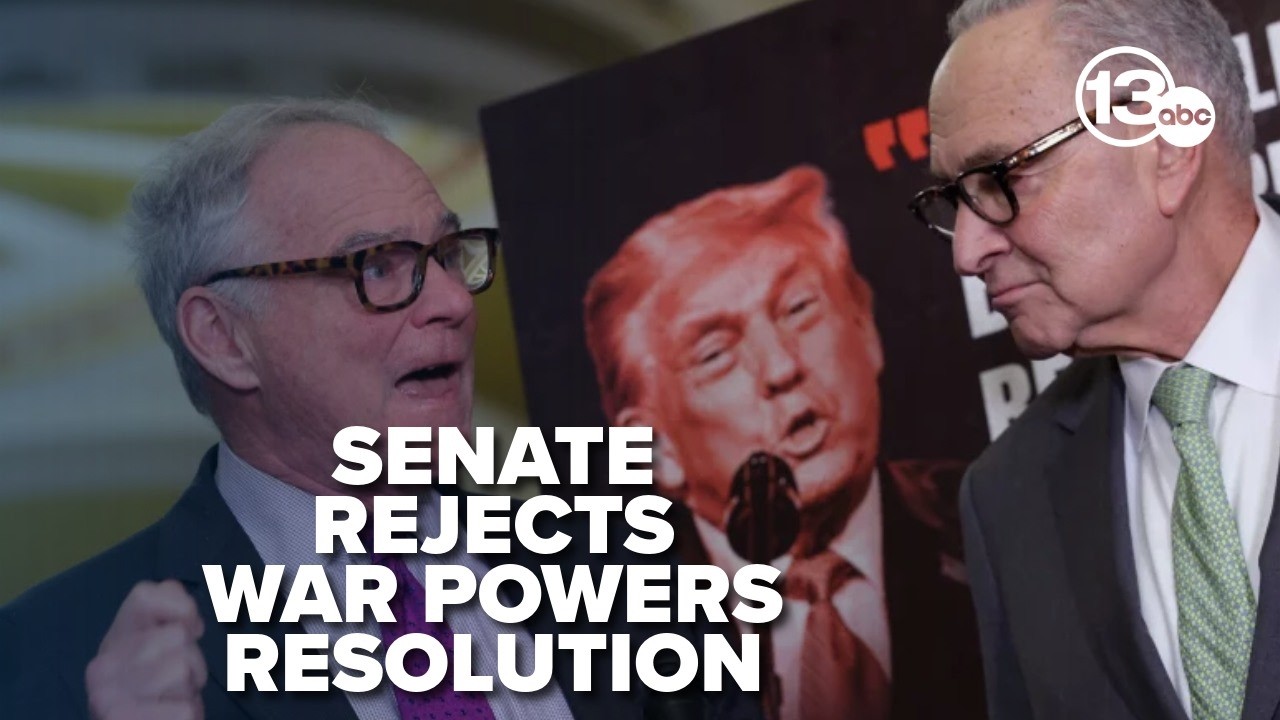
The **US Senate** has voted down a resolution that aimed to prevent **President Trump** from continuing a war with **Iran** without congressional approval. The vote, which broke along party lines, saw almost all **Democrats** in support and most **Republicans** opposed. This development comes amid heightened tensions between the US and Iran, with many fearing the possibility of a full-scale war. The resolution, which was introduced by **Senator Tim Kaine**, would have required the president to obtain congressional approval before engaging in further military action against Iran. The vote highlights the deep divisions within the US government over the country's foreign policy and the use of military force. The US has been involved in a series of escalating confrontations with Iran, including the **drone strike that killed Iranian General Qasem Soleimani**. The situation remains volatile, with many calling for a diplomatic solution to the crisis. For more information, see [[iran-us-relations|Iran-US relations]] and [[war-powers-act|War Powers Act]].
Key Takeaways
- The US Senate voted down a resolution to prevent President Trump from continuing a war with Iran without congressional approval
- The vote broke along party lines, with almost all Democrats in support and most Republicans opposed
- The development raises concerns about the use of military force and the system of checks and balances
- The situation remains volatile, with many fearing the possibility of a full-scale war between the US and Iran
- Citizens can respond by contacting their elected representatives and supporting organizations that promote diplomacy and peaceful conflict resolution
Balanced Perspective
The vote reflects the deep divisions within the US government over the country's foreign policy and the use of military force. While some argue that the president should have the flexibility to respond to emerging threats, others believe that congressional approval is necessary to ensure that the use of military force is subject to democratic oversight. The vote also highlights the ongoing debate over the **War Powers Act**, which has been the subject of controversy and litigation over the years. For more information, see [[congressional-authority|congressional authority]] and [[presidential-powers|presidential powers]].
Optimistic View
The vote may be seen as a victory for those who believe that the president should have the flexibility to respond to emerging threats without being constrained by congressional approval. **President Trump** has argued that the resolution would have tied his hands and prevented him from taking necessary action to protect US interests. However, this perspective is not shared by all, and many argue that the vote undermines the system of checks and balances that is designed to prevent the president from abusing their power. See [[executive-power|executive power]] and [[separation-of-powers|separation of powers]].
Critical View
The vote is a troubling development that undermines the system of checks and balances that is designed to prevent the president from abusing their power. By giving the president greater flexibility to pursue military action without congressional approval, the vote increases the risk of the US becoming embroiled in a costly and bloody war with Iran. Many, including **Senator Elizabeth Warren**, have argued that the vote is a betrayal of the US Constitution and the principles of democratic governance. See [[iran-war|Iran war]] and [[us-military-intervention|US military intervention]].
Source
Originally reported by The Guardian