
Summary
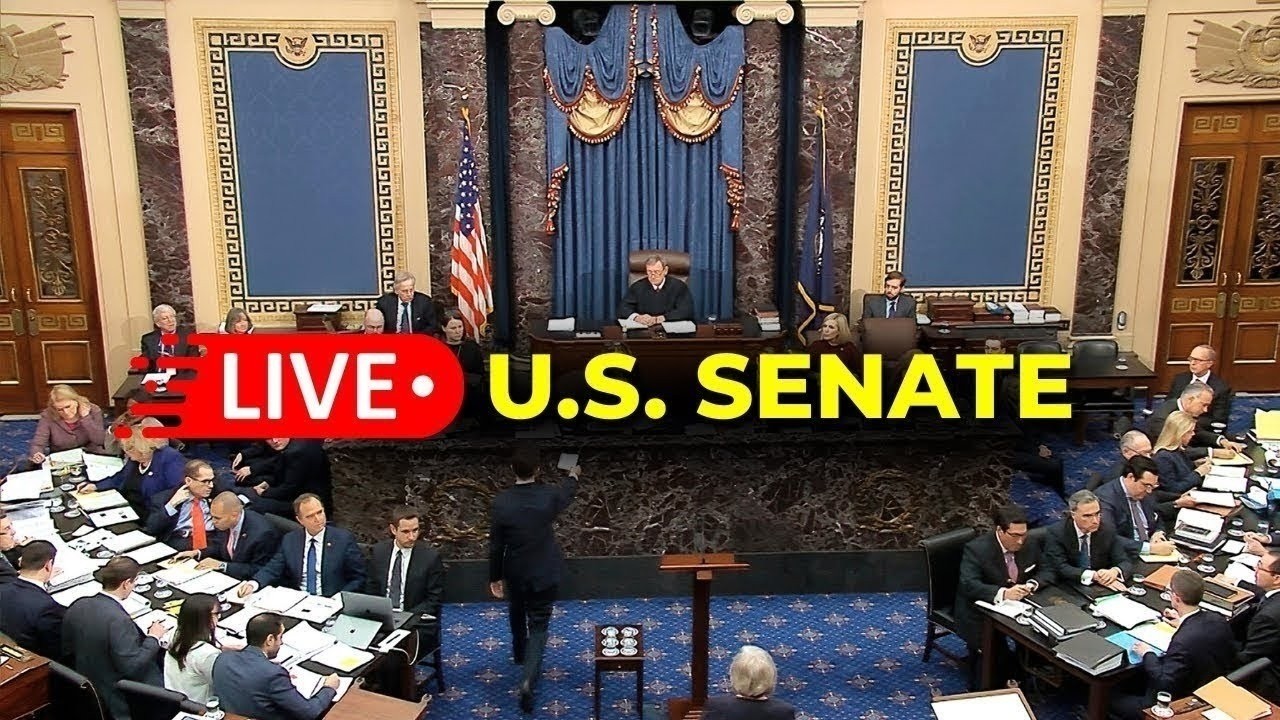
The **US Senate** has rejected a Democratic effort to limit **President Trump**'s ability to wage war with **Iran**. The move comes amid heightened tensions between the two nations and concerns over the president's comments on the matter. Some **Republicans** have expressed worries that Trump's statements could negatively impact the party's chances in the upcoming **midterm elections**. The vote underscores the ongoing debate over the balance of power between the executive and legislative branches in matters of foreign policy. The **Iran nuclear deal**, which the US withdrew from under Trump, remains a point of contention. For more on the implications of this decision, see our entries on [[iran-nuclear-deal|Iran Nuclear Deal]] and [[us-foreign-policy|US Foreign Policy]]. The situation is closely watched by other nations, including **European allies** who are signatories to the nuclear deal. The role of **Congress** in regulating presidential war powers is a critical aspect of this debate, as discussed in our entry on [[war-powers-act|War Powers Act]].
Key Takeaways
- The US Senate rejected a Democratic effort to limit President Trump's ability to wage war with Iran
- The decision highlights the ongoing debate over the balance of power between the executive and legislative branches
- The situation has significant implications for US foreign policy, particularly in regards to Iran
- International observers are concerned about the potential for regional instability
- Citizens can engage in informed discussions and support diplomatic efforts to resolve the conflict
Balanced Perspective
The Senate vote highlights the **complexity** of the issue, with both sides presenting valid arguments. On one hand, the president's authority to respond to national security threats is a critical aspect of the **executive branch**'s role, as outlined in our entry on [[executive-branch|Executive Branch]]. On the other hand, the **War Powers Act** and the principle of **checks and balances** are designed to prevent unchecked executive power, as discussed in our entry on [[war-powers-act|War Powers Act]]. The situation requires a nuanced understanding of the **separation of powers** and the **Constitution**, as explained in our entries on [[separation-of-powers|Separation of Powers]] and [[us-constitution|US Constitution]].
Optimistic View
The Senate's decision could be seen as a sign of **bipartisan support** for the president's foreign policy agenda, particularly in regards to Iran. This could potentially lead to a more **unified approach** to dealing with the Iranian regime, as discussed in our entry on [[bipartisan-foreign-policy|Bipartisan Foreign Policy]]. Some argue that a strong stance against Iran is necessary to protect **US national security interests**, as explained in our entry on [[national-security|National Security]]. However, this perspective is countered by concerns over the potential for **escalation** and the need for **diplomatic solutions**, as highlighted in our entries on [[iran-nuclear-deal|Iran Nuclear Deal]] and [[diplomacy|Diplomacy]].
Critical View
The rejection of the Democratic effort could be seen as a **dangerous precedent**, potentially leading to **unilateral military action** without adequate congressional oversight. This could undermine the **rule of law** and the system of **checks and balances**, as discussed in our entries on [[rule-of-law|Rule of Law]] and [[checks-and-balances|Checks and Balances]]. Critics argue that the Trump administration's approach to Iran is **aggressive** and **reckless**, and that a more **diplomatic approach** is needed to avoid **conflict**, as highlighted in our entries on [[diplomacy|Diplomacy]] and [[conflict-resolution|Conflict Resolution]]. The situation is closely watched by **international observers**, who are concerned about the potential for **regional instability**, as outlined in our entry on [[middle-east-politics|Middle East Politics]].
Source
Originally reported by NBC News