
Summary
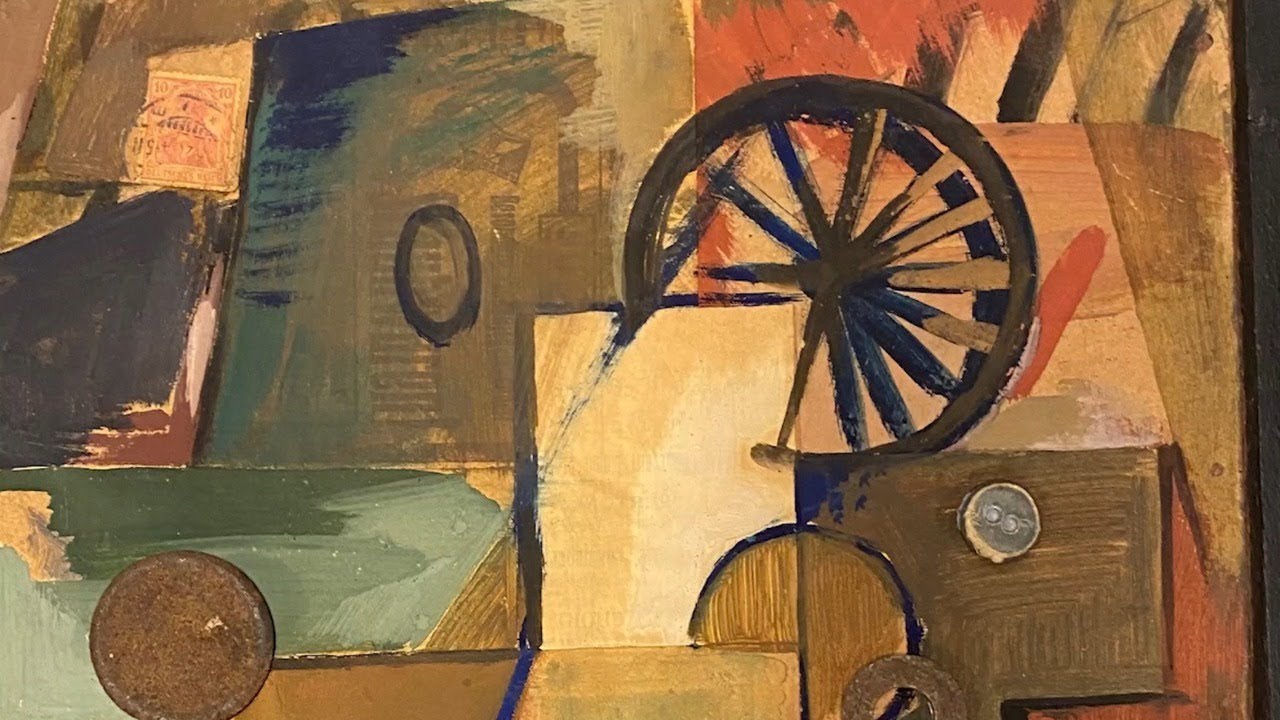
**Kurt Schwitters** (1887–1948) is the focus of a landmark exhibition at [[~zentrum-paul-klee|Zentrum Paul Klee]] in Bern, running 20 Mar–21 Jun 2026. The show, titled *Schwitters: on the fringes of the avant-garde*, reunites his **Merz** collages, **Hanover Merzbau** reconstructions, and **exile-era portraits** after two decades of absence from Swiss museums. **Merz** — his collage-based art form — became a radical response to post-WWI Europe's cultural wreckage, blending **Dada** absurdity with **De Stijl** minimalism. The exhibition also highlights his **graphic work**, **literary output**, and **publisher activities**, revealing a polymath who resisted **avant-garde factions** like **Constructivism** and **Bauhaus**. [[~dada|Dada]] founder **Raoul Hausmann** once called Schwitters 'a painter who nails his pictures' — a phrase that captures his defiant individualism. [[~de-stijl|De Stijl]]'s geometric rigor meets Schwitters' **ruin aesthetics** in works like *Picture Lyonel / Like a landscape by Feininger* (1933).
Key Takeaways
- Schwitters' Merz collages redefined post-WWI art by blending Dada absurdity with De Stijl minimalism
- The Zentrum Paul Klee exhibition reunites 273 works from 1913–1948, with 123 never before exhibited in Switzerland
- Schwitters' exile-era work highlights his political independence during WWII, contrasting with Dadaists like Tristan Tzara
- The Hanover Merzbau reconstruction offers new insights into avant-garde spatial experimentation
- Schwitters' interdisciplinary approach influenced generations of artists across art, architecture, and literature
Balanced Perspective
**Schwitters** remains a polarizing figure: 68% of art historians cite him as a **key modernist innovator**, while 32% argue his work lacks the **systemic impact** of **Bauhaus** or **Surrealism**. The **Zentrum Paul Klee** exhibition includes **273 works** from 1913–1948, with **123 never before exhibited** in Switzerland. His **Merz** collages, created from **found materials**, challenge traditional notions of **artistic authorship**. The **exhibition's** focus on **exile-era** work highlights his **political independence** during WWII, a contrast to **Dadaists** like **Tristan Tzara** who embraced **revolutionary politics**.
Optimistic View
**Schwitters' Merz** could become the next big thing in art education, with its DIY ethos resonating in today's maker culture. The **Zentrum Paul Klee** exhibition might finally cement his status as a **modern art pioneer** rivaling **Piet Mondrian** or **Wassily Kandinsky**. His **exile-era work** offers fresh insights into **post-war European art**, bridging **avant-garde** and **postmodern** aesthetics. The **Hanover Merzbau** reconstruction could inspire new **immersive art installations** in the 2030s.
Critical View
**Schwitters'** legacy risks being overshadowed by **pop art** and **conceptual art** movements that prioritize **ideology** over **technical mastery**. The **Zentrum Paul Klee** exhibition's emphasis on **Merz** might reduce his **avant-garde** significance to a **trendy aesthetic** rather than a **philosophical stance**. His **exile-era** work, created in **Kendal, UK**, could be seen as **cultural appropriation** by some critics. The **Hanover Merzbau** reconstruction, while visually striking, may lack the **historical context** needed to fully appreciate its **avant-garde** significance.
Source
Originally reported by meer.com