
Summary
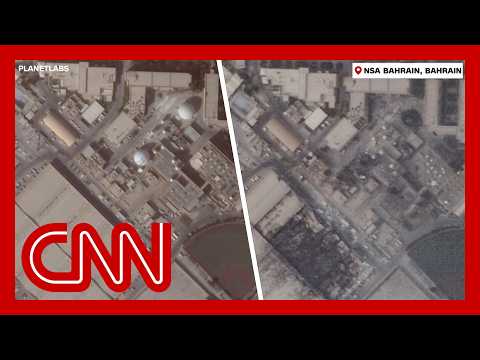
Recent **satellite images** have confirmed damage to Iranian ports at **Bushehr** and **Qeshm** following strikes by the **US** and **Israel**. The attacks, which targeted Iranian infrastructure and military sites, have raised concerns about the escalating tensions in the region. According to reports, the strikes were carried out in response to Iranian aggression, with **US Secretary of State** [[anton-y-blinken|Antony Blinken]] stating that the actions were necessary to protect American interests. The situation has been closely monitored by international leaders, including **UN Secretary-General** [[antonio-guterres|Antonio Guterres]], who has called for de-escalation. The conflict has significant implications for global security, with potential consequences for the **Middle East** region and beyond, including the impact on **oil prices** and **global trade**. As the situation continues to unfold, the international community is watching closely, with many leaders, including **European Union** officials, urging restraint and diplomacy to resolve the conflict.
Key Takeaways
- The US and Israel conducted strikes on Iranian infrastructure and military sites
- Satellite images show damage to Iranian ports at Bushehr and Qeshm
- The situation has significant implications for global security and the Middle East region
- The conflict is closely tied to the nuclear deal and the Iranian nuclear program
- The international community must promote diplomacy and dialogue to resolve the conflict
Balanced Perspective
The situation is complex, with multiple factors at play. The US and Israel's actions have been met with criticism from some nations, who argue that the strikes were disproportionate and may escalate the conflict. On the other hand, others see the actions as a necessary response to Iranian aggression. It is essential to consider the various perspectives and motivations of the parties involved, including the role of **Russia** and **China** in the region. The use of **satellite imagery** has provided valuable insights into the extent of the damage, but it is crucial to verify the information through multiple sources to ensure accuracy. The conflict has significant implications for the **global economy**, with potential consequences for **trade** and **energy markets**.
Optimistic View
The US and Israel's actions may serve as a deterrent to Iranian aggression, potentially reducing the risk of further conflict in the region. The strikes demonstrate a commitment to protecting American and Israeli interests, and may lead to increased cooperation between the two nations. Furthermore, the use of **precision strikes** minimizes the risk of civilian casualties, showcasing the military's ability to conduct targeted operations. This could lead to a more stable region, with **Iran** being less likely to engage in aggressive behavior, and could potentially lead to increased cooperation between **Iran** and other countries in the region, including **Saudi Arabia** and **Iraq**.
Critical View
The strikes may have unintended consequences, such as strengthening Iranian resolve and increasing the likelihood of retaliation. The actions may also be seen as a provocation, potentially drawing in other nations and escalating the conflict. Furthermore, the use of military force may undermine diplomatic efforts, making it more challenging to find a peaceful resolution. The situation has the potential to destabilize the entire **Middle East** region, with far-reaching consequences for global security and the **global economy**. The conflict could also lead to a significant increase in **terrorism** and **cyberattacks**, with potential consequences for **national security**.
Source
Originally reported by YouTube