
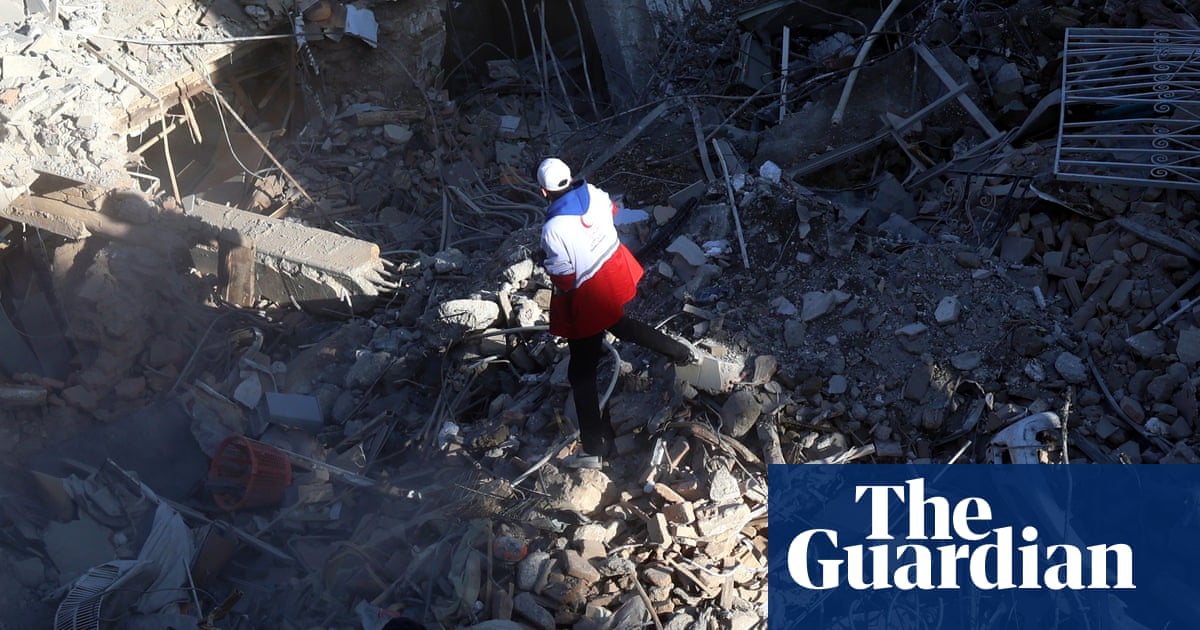
Summary
Retired **US military officers** have expressed alarm over **President Trump's** recent threats against **Iran**, warning that such actions could constitute **war crimes**. The president's statement, which included the phrase 'whole civilization will die tonight' if Iran ignores demands, has sparked widespread concern among **military observers** and **international law experts**. This development comes amid heightened tensions between the **US** and **Iran**, with many fearing the potential for **escalation**. The situation is being closely monitored by **global leaders**, with some calling for **diplomatic efforts** to resolve the crisis. For more information on the US-Iran conflict, see [[us-iran-relations|US-Iran Relations]]. The role of **international law** in regulating military action is also crucial, as discussed in [[international-humanitarian-law|International Humanitarian Law]].
Key Takeaways
- President Trump's threats against Iran have sparked concern among military observers and international law experts
- The US and Iran are engaged in a complex and potentially volatile conflict
- Diplomatic efforts are necessary to resolve the crisis and prevent war
- The international community should play a role in promoting peace and stability in the region
- The conflict has significant implications for global security and regional stability
Balanced Perspective
The situation between the **US** and **Iran** is complex, with multiple factors at play. While **President Trump's** threats have sparked concern, it is also important to consider the **historical context** of the conflict and the various **interests** involved. A **balanced approach** would take into account the need for **regional security** and the importance of **diplomatic efforts**. To understand the various **interest groups** involved in the conflict, see [[us-iran-conflict-interest-groups|US-Iran Conflict Interest Groups]]. The role of **international organizations**, such as the **United Nations**, is also crucial in resolving the crisis, as discussed in [[united-nations-and-conflict-resolution|United Nations and Conflict Resolution]].
Optimistic View
Some argue that **President Trump's** tough stance on **Iran** could lead to a **negotiated settlement**, with the Iranian government feeling pressured to come to the table. This perspective is supported by **hawks** within the **US administration**, who believe that a strong military presence is necessary to counter **Iranian aggression**. However, this view is not universally accepted, and many experts point to the risks of **escalation** and the potential for **war crimes**. For a deeper analysis of the role of **military power** in international relations, see [[military-power-and-international-relations|Military Power and International Relations]].
Critical View
The **US** and **Iran** are on a **collision course**, with **President Trump's** threats increasing the likelihood of **war**. The consequences of such a conflict would be **devastating**, with potential **humanitarian crises** and **regional instability**. Many experts believe that the **US** is **overextending** its military, and that a **diplomatic solution** is the only way to resolve the crisis. For a detailed analysis of the potential **consequences of war**, see [[consequences-of-us-iran-war|Consequences of US-Iran War]]. The impact of **war** on **global economy** is also a significant concern, as explored in [[war-and-global-economy|War and Global Economy]].
Source
Originally reported by The Guardian