
Summary
Cosmologists are exploring the potential of pulsar timing arrays to detect gravitational waves that could provide insights into the universe's state just after the Big Bang. This innovative approach may reveal new information about the universe's evolution and composition in its earliest fractions of a second. By analyzing the gravitational waves detected through pulsar timing arrays, scientists hope to gain a deeper understanding of the universe's origins. The research, discussed by cosmologist L Sriramkumar, highlights the potential for groundbreaking discoveries in the field of cosmology.
Key Takeaways
- Pulsar timing arrays may be used to detect gravitational waves from the universe's early moments, providing insights into the universe's origins.
- The detection of these gravitational waves would require highly sensitive instruments and sophisticated data analysis techniques.
- The research has the potential to reveal new information about the universe's evolution and composition in its earliest fractions of a second.
- The use of pulsar timing arrays is a relatively new and innovative approach in the field of cosmology.
- The findings from this research could have significant implications for our understanding of the universe's fundamental nature and the laws of physics.
Balanced Perspective
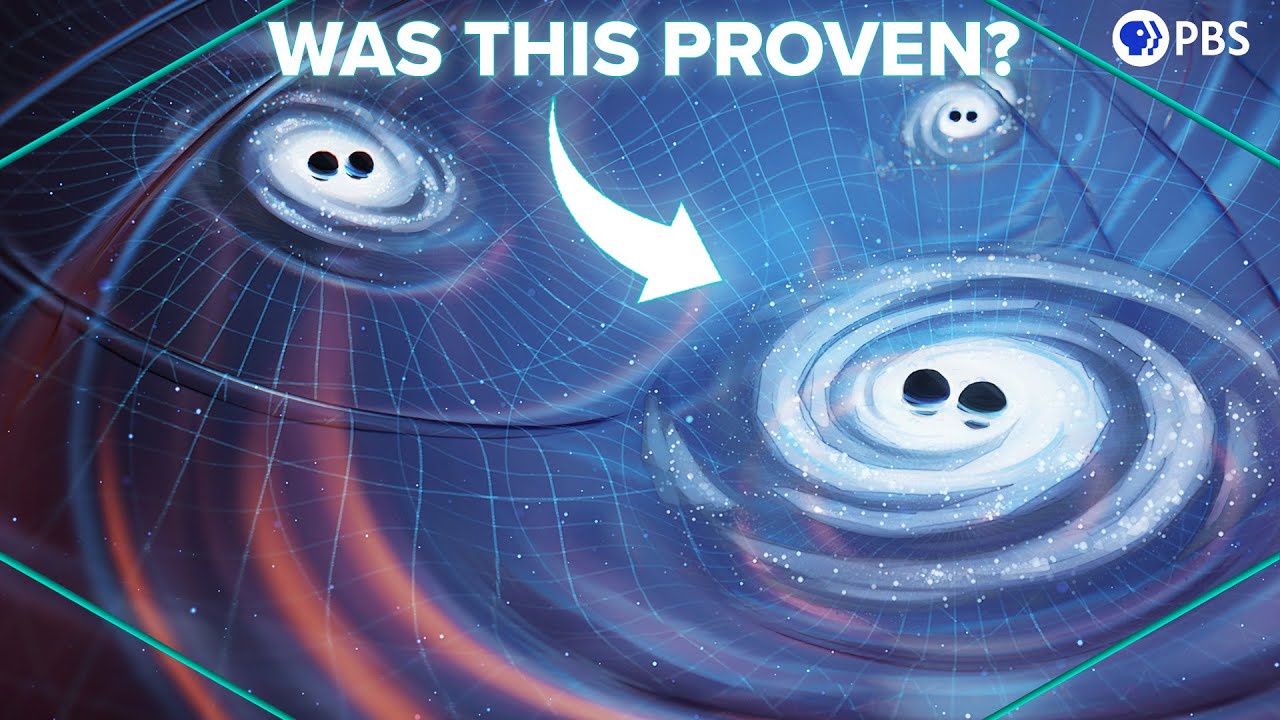
The concept of using pulsar timing arrays to study the universe's early moments is based on the detection of gravitational waves, which are ripples in the fabric of spacetime. While the idea is intriguing, it is essential to approach this research with a balanced perspective, recognizing both the potential benefits and the challenges involved. The detection of gravitational waves from the universe's earliest moments would require highly sensitive instruments and sophisticated data analysis techniques. As with any scientific endeavor, it is crucial to separate speculation from verifiable evidence and to consider the limitations and uncertainties associated with this line of research. By doing so, scientists can ensure that their findings are grounded in empirical evidence and contribute meaningfully to our understanding of the universe.
Optimistic View
The use of pulsar timing arrays to study the universe's early moments is a game-changer for cosmology. By detecting gravitational waves from the universe's infancy, scientists may uncover new evidence for theories such as inflation or alternative models of the universe's origins. This research has the potential to revolutionize our understanding of the cosmos, providing a new window into the universe's most fundamental nature. As technology advances and more sensitive detectors are developed, the possibilities for discovery are vast and exciting. The potential for breakthroughs in our understanding of the universe's beginnings is immense, and the prospect of uncovering new secrets of the cosmos is a thrilling one.
Critical View
Despite the enthusiasm surrounding the use of pulsar timing arrays to study the universe's early moments, there are significant challenges and uncertainties associated with this research. The detection of gravitational waves from the universe's infancy is an extremely difficult task, requiring instruments with unprecedented sensitivity and precision. Furthermore, the interpretation of these signals is fraught with complexity, and the risk of misinterpretation or false positives is high. Additionally, the universe's early moments are shrouded in mystery, and our current understanding of this period is based on incomplete and indirect evidence. As such, it is essential to approach this research with caution and to recognize the potential pitfalls and limitations involved, lest we overstate the significance of our findings or mislead the scientific community.
Source
Originally reported by hindustantimes.com