
Summary
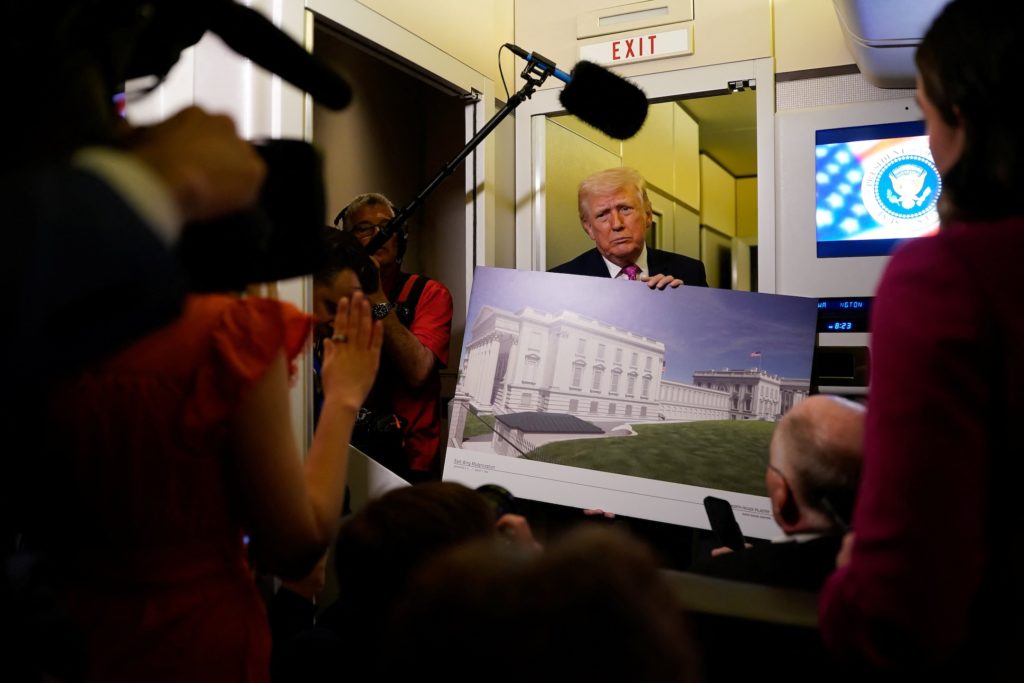
A **federal judge** has ordered the **Trump administration** to stop construction of its $400 million **White House** ballroom renovation. The project, which has been a subject of controversy due to its high cost and perceived lack of necessity, has been put on hold pending further review. This decision comes as a result of concerns over the **Trump administration**'s handling of the renovation, including allegations of improper use of taxpayer funds. The **White House** has defended the project, citing the need for modernization and improved functionality. However, critics argue that the project is an unnecessary expense, especially given the current economic climate. For more information on the **Trump administration**'s policies and controversies, see [[trump-administration|Trump Administration]]. To learn more about the **White House** and its history, visit [[white-house|White House]].
Key Takeaways
- A federal judge has ordered the Trump administration to stop construction of its $400 million White House ballroom renovation
- The project has been a subject of controversy due to its high cost and perceived lack of necessity
- The judge's decision has significant implications for the Trump administration and the White House
- The case may be appealed, and the final outcome is uncertain
- The decision highlights the importance of transparency and accountability in government
Balanced Perspective
The judge's decision is a **routine application of the law**, as it is the court's duty to ensure that government agencies are acting within their authority. The **Trump administration** has the right to appeal the decision, and the case will likely be decided on its merits. This decision does not necessarily reflect on the **Trump administration**'s policies or the **White House**'s renovation plans, but rather on the legal process. For information on the **legal process** and how it applies to government agencies, see [[legal-process|Legal Process]]. To understand the **Trump administration**'s policies, visit [[trump-administration-policies|Trump Administration Policies]].
Optimistic View
The judge's decision is a **victory for transparency and accountability**, as it ensures that the **Trump administration** is held to the same standards as any other government agency. This move also highlights the importance of the **judiciary** in checking the power of the executive branch, and demonstrates that the system of checks and balances is still functioning. For more on the importance of **transparency and accountability** in government, see [[transparency-and-accountability|Transparency and Accountability]]. To learn about the **system of checks and balances**, visit [[checks-and-balances|Checks and Balances]].
Critical View
The judge's decision is a **setback for the Trump administration**, as it delays a project that was intended to improve the functionality and aesthetics of the **White House**. The decision may also have **broader implications** for the **executive branch**, as it could set a precedent for judicial interference in executive decision-making. For more on the potential **implications** of this decision, see [[executive-branch-implications|Executive Branch Implications]]. To learn about the **White House**'s renovation plans, visit [[white-house-renovation|White House Renovation]].
Source
Originally reported by PBS