
Summary
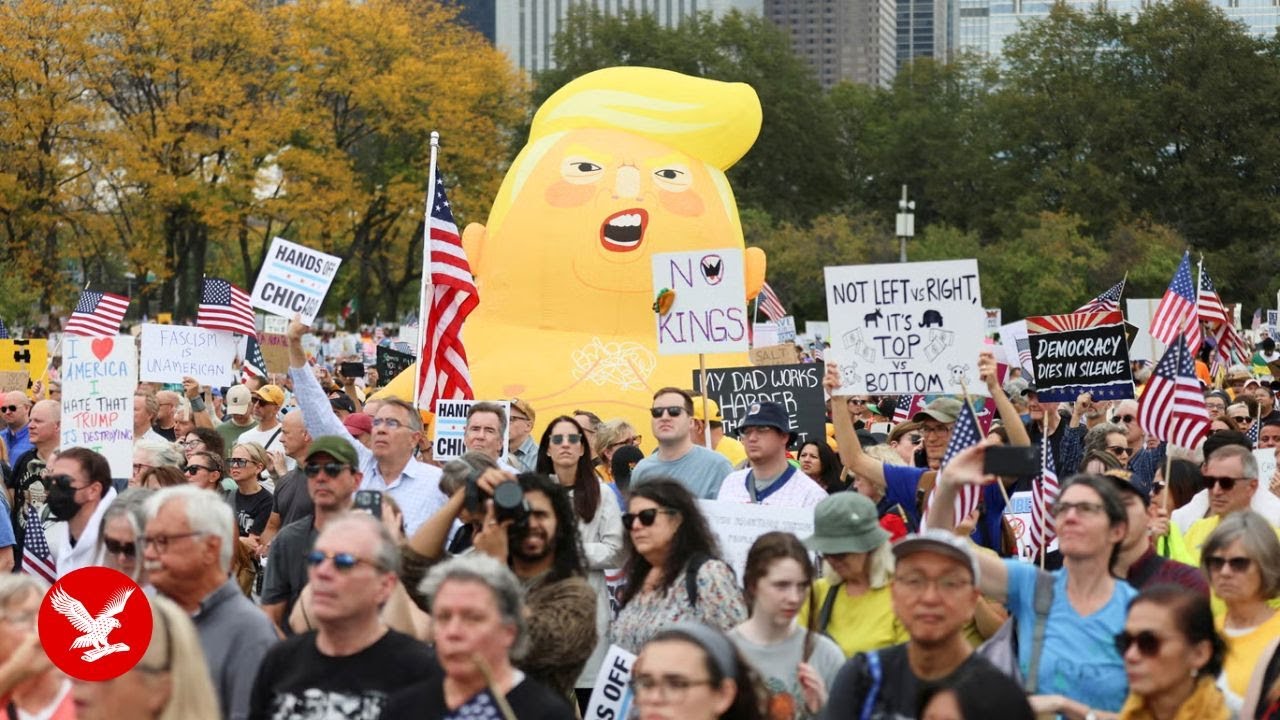
On October 18, 2025, millions of people participated in **'No Kings' protests** across the US, including in cities like **New York**, **Washington DC**, **Chicago**, **Miami**, and **Los Angeles**. The protests, which drew nearly **seven million people**, were largely peaceful, with demonstrators holding signs that read **'Democracy not Monarchy'** and **'The Constitution is not optional'**. The protests were organized in response to President Trump's expansion of presidential power, including the use of executive orders to dismantle parts of the federal government and deploy National Guard troops to US cities. The president has also been accused of targeting his perceived enemies, with critics warning that his actions are **unconstitutional** and a threat to **American democracy**. For more information on the protests and their significance, see [[protests-in-the-united-states|Protests in the United States]] and [[donald-trump|Donald Trump]].
Key Takeaways
- Millions of people participated in 'No Kings' protests across the US on October 18, 2025
- The protests were largely peaceful, with no protest-related arrests made in New York City
- President Trump has expanded the scope of presidential power, using executive orders to dismantle parts of the federal government and deploy National Guard troops to US cities
- The protests have sparked a national conversation about the role of the president and the limits of executive power
- The protests highlight the deep divisions in American society and the intense polarization of the current political climate
Balanced Perspective
The **'No Kings' protests** are a reflection of the deep divisions in American society and the intense polarization of the current political climate. While some see the protests as a necessary response to President Trump's perceived authoritarianism, others view them as an example of **partisan politics** and a lack of respect for the office of the president. The protests have also raised questions about the role of **social media** in organizing and mobilizing protests, with some arguing that it has helped to amplify marginalized voices and others arguing that it has contributed to the spread of **misinformation**. For more information on the impact of social media on politics, see [[social-media-and-politics|Social Media and Politics]].
Optimistic View
The **'No Kings' protests** demonstrate the power of grassroots activism and the ability of ordinary citizens to come together to demand change. The fact that the protests were largely peaceful and drew millions of people suggests that there is a deep well of discontent with President Trump's policies and a desire for a more **democratic** and **accountable** government. As seen in the protests, **social movements** like [[black-lives-matter|Black Lives Matter]] and [[women-s-march|Women's March]] have shown that collective action can lead to significant social and political change. The protests also highlight the importance of **civic engagement** and **voter turnout**, with many protesters calling for increased participation in the democratic process.
Critical View
The **'No Kings' protests** are a symptom of a larger problem in American society, namely the erosion of **civil discourse** and the increasing polarization of the political landscape. The fact that the protests were organized in response to President Trump's policies suggests that there is a deep-seated distrust of the government and a lack of faith in the **democratic process**. The protests have also highlighted the potential for **violence** and **unrest**, with some protesters clashing with police and counter-protesters. For more information on the importance of civil discourse and the challenges facing American democracy, see [[civil-discourse|Civil Discourse]] and [[american-democracy|American Democracy]].
Source
Originally reported by BBC