
Summary
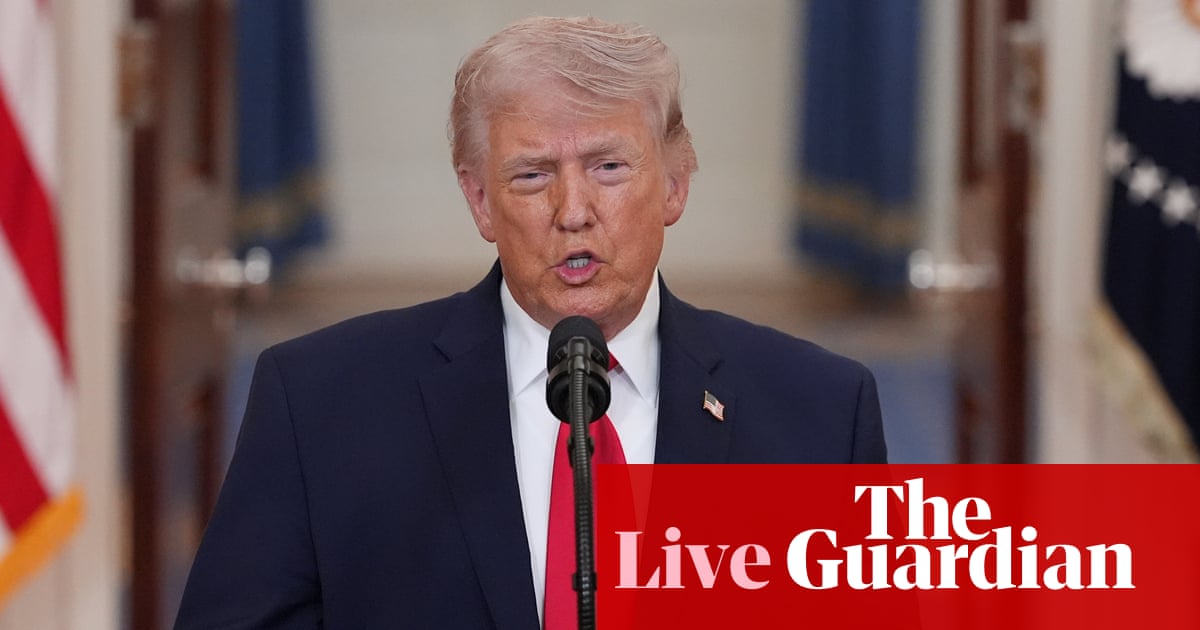
**Donald Trump** claims the U.S. is 'close to finishing the job' in Iran during a prime-time address, framing the conflict as a race against time to prevent nuclear proliferation. The speech comes as **poll numbers** for the former president plummet and the **global energy crisis** intensifies, with **Hormuz Strait** tensions threatening oil flows. **Israel** launched coordinated strikes on Iran, reportedly killing **Hezbollah's** top commander, while **U.S. military** operations in the region have escalated. [[iran-nuclear-deal|Iran's nuclear program]] remains a flashpoint, with **Trump's** rhetoric suggesting a shift toward direct confrontation. The address also highlights **energy security** as a strategic priority, linking Iran's regional influence to global oil markets. [[iran-war|Iran War]] dynamics are further complicated by **Israel's** military actions and **U.S.** diplomatic posturing. [[global-energy-crisis|Global Energy Crisis]] implications could reshape **Middle East geopolitics** and **international trade** routes.
Key Takeaways
- Trump's prime-time address frames Iran as an existential threat to U.S. interests
- Israel's strikes on Iran and Hezbollah signal a shift in regional military dynamics
- The global energy crisis is intertwined with Middle East geopolitical tensions
- Uncertainty surrounds the timeline and outcomes of U.S. military operations in Iran
- Diplomatic solutions remain critical to preventing further escalation
Balanced Perspective
**Trump's** claims about Iran's nuclear progress lack independent verification, with **intelligence agencies** withholding specific details. **Israel's** attacks on **Hezbollah** and Iran are part of a broader **Middle East conflict** cycle, with **U.S.** military involvement complicating **diplomatic efforts**. The **global energy crisis** is primarily driven by **geopolitical tensions** and **supply chain disruptions**, not solely **Iran**. **Poll numbers** for **Trump** are influenced by **economic factors** and **media coverage**, not just **war rhetoric**.
Optimistic View
**Trump's** aggressive stance could accelerate Iran's containment, securing long-term **energy dominance** and **regional stability**. A swift resolution might prevent further **nuclear proliferation** and stabilize **Hormuz Strait** shipping lanes. **Israel's** military strikes could weaken **Hezbollah** and **Iran's** regional influence, creating a safer environment for **U.S.** allies. **Trump's** focus on 'finishing the job' might rally **conservative base** support and restore **national prestige**.
Critical View
**Trump's** escalation risks **military escalation**, potentially drawing **Russia** or **China** into the conflict. **Israel's** strikes could provoke **Iranian retaliation**, destabilizing the **Middle East** and **global markets**. The **energy crisis** might worsen if **Hormuz Strait** shipping is disrupted, causing **oil price spikes** and **economic turmoil**. **Trump's** focus on 'finishing the job' could undermine **diplomatic solutions** and entrench **regional hostilities**.
Source
Originally reported by The Guardian