
Summary
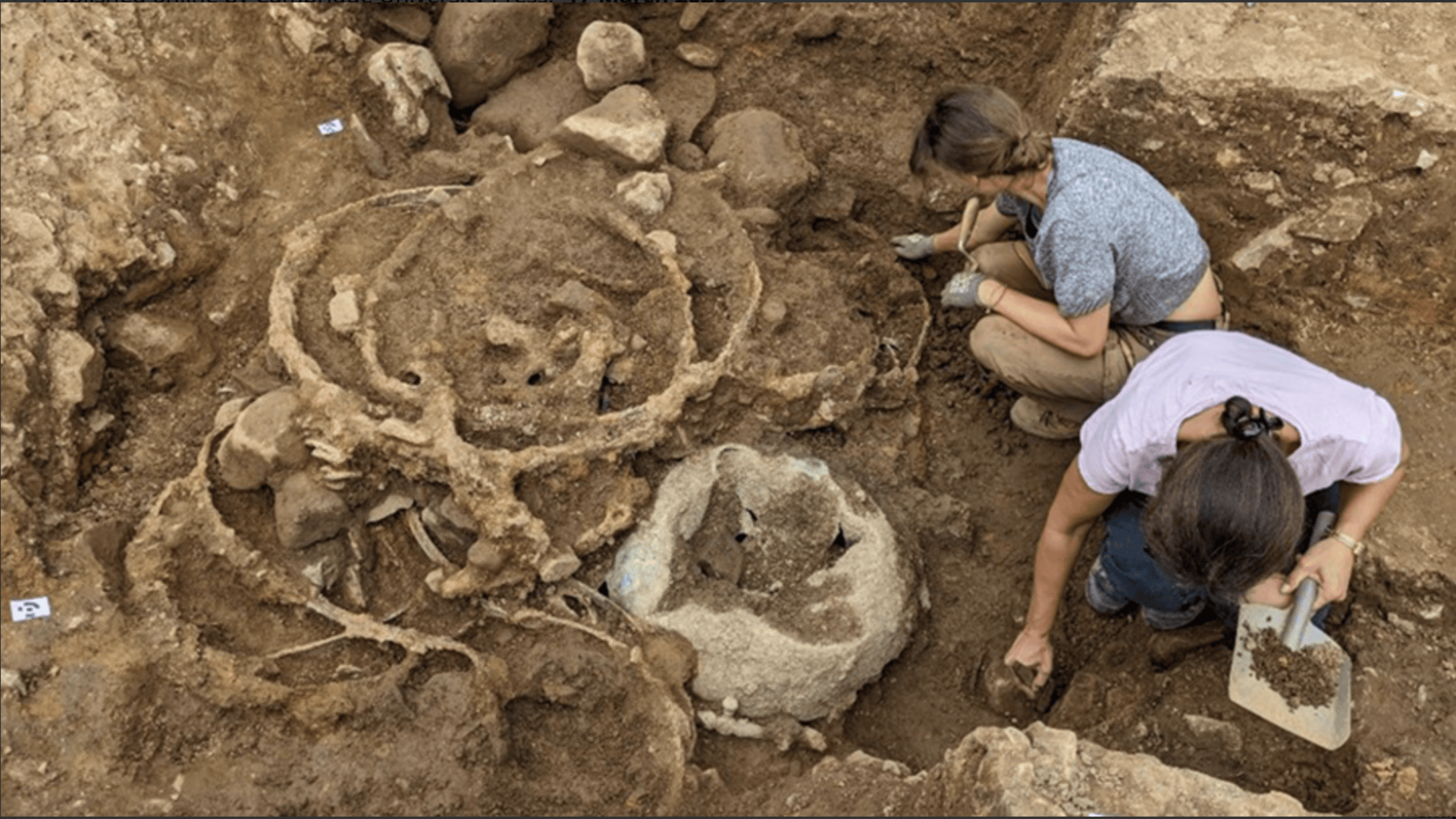
Archaeologists have unearthed two **Iron Age hoards** in North Yorkshire, including the largest ever found in British history, containing over 950 fragments of metalwork. The discovery, which includes **four-wheeled wagons**, challenges previous understanding of vehicles in ancient Britain. The finds, dated between **100 BCE and AD 70**, were discovered near a Late Iron Age "royal site" at **Stanwick**, associated with the **Brigantes tribe**. The hoards provide insight into **expressions of wealth, status, and elite mortuary practices** in Iron Age Britain. For more on the historical context, see [[iron-age-britain|Iron Age Britain]] and [[brigantes-tribe|Brigantes Tribe]]. The discovery also highlights the importance of **archaeological conservation**, as seen in [[archaeological-conservation|Archaeological Conservation]]
Key Takeaways
- The discovery of the Iron Age hoards is a significant find that sheds new light on ancient Britain
- The finds include four-wheeled wagons, horse-drawn vehicles, and horse harnesses
- The discovery highlights the importance of preserving our cultural heritage and the need for further investment in archaeology
- The find is a remarkable example of the technological advancements of ancient societies and the importance of cultural exchange
- The discovery raises questions about the cultural exchange between ancient Britain and other European societies
Balanced Perspective
The discovery of the **Iron Age hoards** in North Yorkshire provides valuable insights into the lives of ancient Britons. The finds, which include **horse-drawn vehicles and horse harnesses**, suggest a complex society with a high level of craftsmanship and technological expertise. However, it's essential to consider the context of the discovery and the potential biases of the archaeologists involved. For a more in-depth look at the archaeological process, see [[archaeological-methods|Archaeological Methods]]. The discovery also raises questions about the **cultural exchange** between ancient Britain and other European societies, as discussed in [[cultural-exchange-in-ancient-europe|Cultural Exchange in Ancient Europe]]
Optimistic View
The discovery of these **Iron Age hoards** is a game-changer for our understanding of ancient Britain. The presence of **four-wheeled wagons** suggests a higher level of technological advancement than previously thought, and the sheer scale of the finds is a testament to the wealth and power of the **Brigantes tribe**. As noted by [[museum-of-london-archaeology|Museum of London Archaeology]], this find has significant implications for our understanding of **pre-Roman Britain**. This find is a reminder of the importance of **preserving our cultural heritage**, as emphasized by [[unesco|UNESCO]]
Critical View
The discovery of the **Iron Age hoards** may be exciting, but it's essential to consider the potential risks of **looting and vandalism**. The fact that the hoards were discovered in a **farmland area** raises concerns about the preservation of archaeological sites and the potential for future discoveries to be lost or damaged. Furthermore, the emphasis on the **technological advancements** of the **Brigantes tribe** may overshadow the importance of understanding the social and cultural context of the finds. For more on the challenges of archaeological preservation, see [[archaeological-preservation-challenges|Archaeological Preservation Challenges]]
Source
Originally reported by interestingengineering.com