
Summary
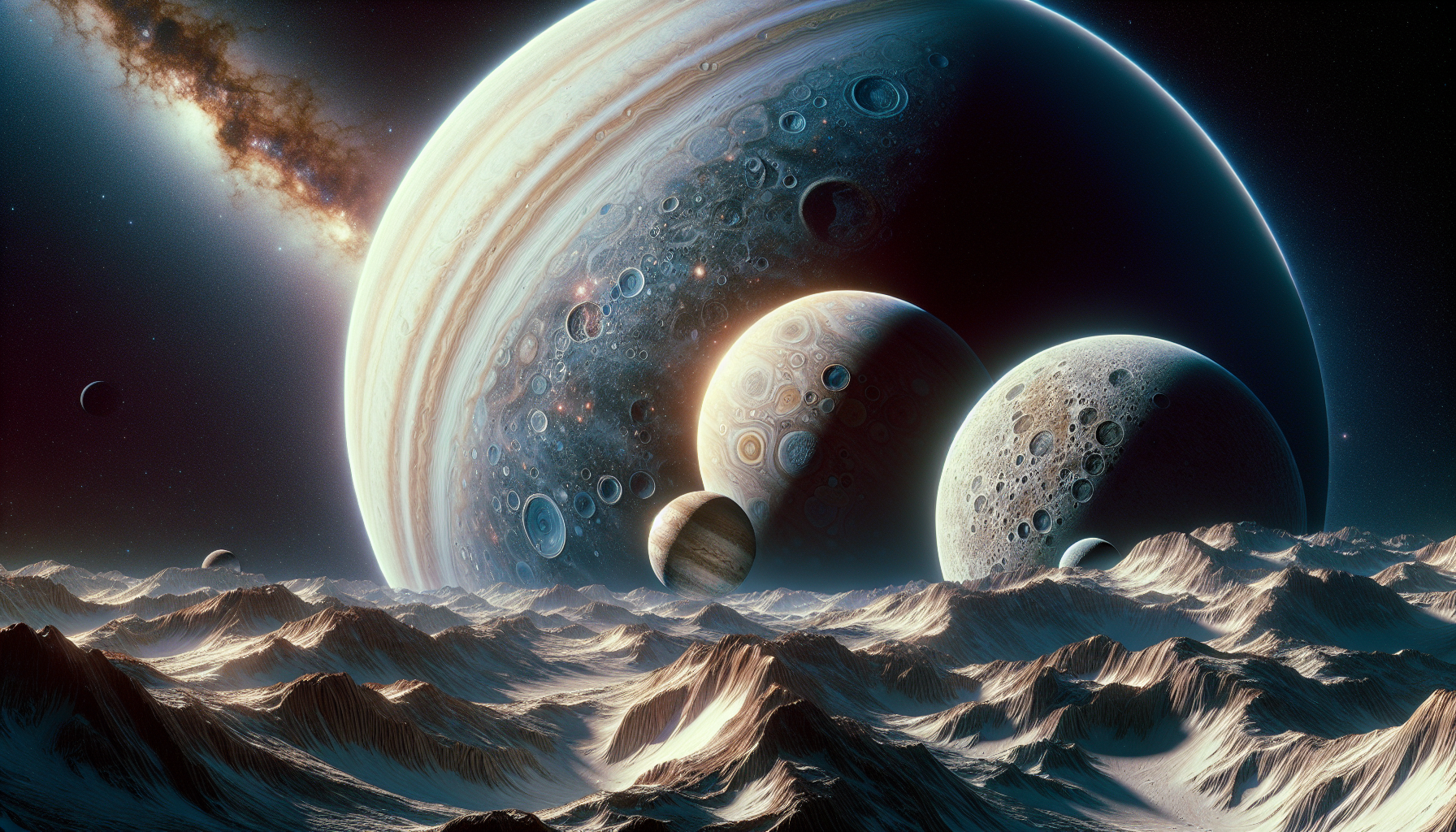
Recent modeling studies indicate that Jupiter's Galilean moons may have formed with complex organic molecules, potentially setting the stage for life. These findings suggest that both the solar nebula and Jupiter's circumplanetary disk contributed to the chemical makeup of these moons billions of years ago. This research opens new avenues for understanding the origins of life in our solar system.
Key Takeaways
- Jupiter's Galilean moons may contain complex organic molecules essential for life.
- The study suggests these molecules originated from both the solar nebula and Jupiter's circumplanetary disk.
- This research could broaden the scope of astrobiological studies in our solar system.
- Future missions will be crucial in validating these findings and exploring the moons further.
- The harsh conditions on these moons pose significant challenges for potential life development.
Balanced Perspective
The modeling study presents a hypothesis based on simulations of the early solar system, indicating that Jupiter's moons could have formed with organic compounds. While this is a significant finding, it is important to note that these are still theoretical models and require further empirical evidence. The research adds to our understanding of planetary formation but does not confirm the existence of life on these moons.
Optimistic View
The discovery that Jupiter's moons may have been seeded with organic molecules is incredibly exciting for astrobiology. This suggests that the ingredients for life could exist in more places than previously thought, expanding our search for extraterrestrial life. If future missions to these moons, such as Europa Clipper or JUICE, confirm the presence of these complex molecules, it could revolutionize our understanding of life's potential beyond Earth.
Critical View
While the idea that Jupiter's moons may harbor the building blocks of life is intriguing, there are substantial challenges ahead. The harsh environments on these moons, including extreme radiation and cold temperatures, could hinder the development of life as we know it. Furthermore, the complexity of confirming the presence of organic molecules in future missions may lead to disappointment if expectations are not met.
Source
Originally reported by sciencedaily.com