
Summary
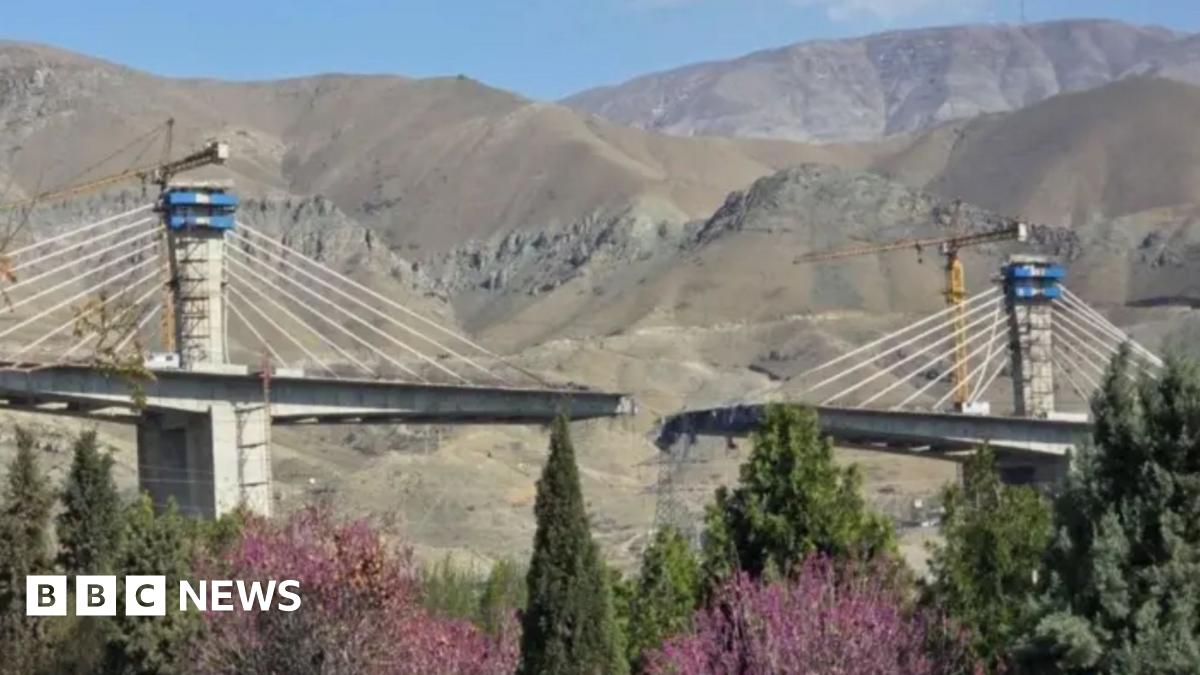
A **US-Israeli strike** on a bridge in **Karaj, Iran** has killed **8 people** and injured several others, according to local officials. The strike, which was shared by **US President Donald Trump** on social media, has escalated tensions between the US, Israel, and Iran. The incident has also led to a rise in **oil prices**, with the **Strait of Hormuz** becoming a key point of contention. The UK has condemned Iran's **'recklessness'**, while **Iran** has warned of **'broader' and 'crushing' retaliation**. The situation is being closely monitored by **Pakistan**, which has emerged as an unlikely mediator in the conflict. For more information on the Strait of Hormuz, see [[strait-of-hormuz|Strait of Hormuz]].
Key Takeaways
- The US-Israeli strike on the bridge in Karaj, Iran has escalated tensions in the region
- The conflict has the potential to disrupt global oil supplies and lead to a regional war
- The international community should urge restraint and encourage diplomacy to resolve the conflict peacefully
- The US, Israel, and Iran should engage in direct talks to address their differences and find a mutually acceptable solution
- The UK and Pakistan can play a mediating role to facilitate a peaceful resolution
Balanced Perspective
The situation in the Middle East is complex, with multiple players involved and different interests at stake. The US-Israeli strike on the bridge in Iran has escalated tensions, but it is unclear what the **long-term consequences** will be. The conflict has the potential to **disrupt global oil supplies**, which could have far-reaching consequences for the global economy. The **UK** has condemned Iran's actions, while **Pakistan** is trying to mediate a peaceful resolution. To learn more about the global implications of the conflict, see [[global-implications|Global Implications of the Conflict]].
Optimistic View
The US-Israeli strike on the bridge in Iran could be a turning point in the conflict, as it may force Iran to **reconsider its aggression**. The strike has also highlighted the importance of the **Strait of Hormuz**, which is a critical waterway for global oil trade. With **Pakistan** emerging as a mediator, there is a possibility of a **peaceful resolution** to the conflict. However, this would require **Iran** to **make concessions**, which may be difficult given its current stance. For more information on the role of Pakistan in the conflict, see [[pakistan-in-the-conflict|Pakistan's Role in the Conflict]].
Critical View
The US-Israeli strike on the bridge in Iran is a **dangerous escalation** of the conflict, which could lead to **further retaliation** and **more violence**. The strike has already led to a rise in **oil prices**, which could have **devastating consequences** for the global economy. The conflict has the potential to **draw in other countries**, including **Saudi Arabia** and **Turkey**, which could lead to a **regional war**. The situation is **highly volatile**, and it is unclear how it will unfold. For more information on the potential consequences of a regional war, see [[regional-war|Regional War in the Middle East]].
Source
Originally reported by BBC