
Summary
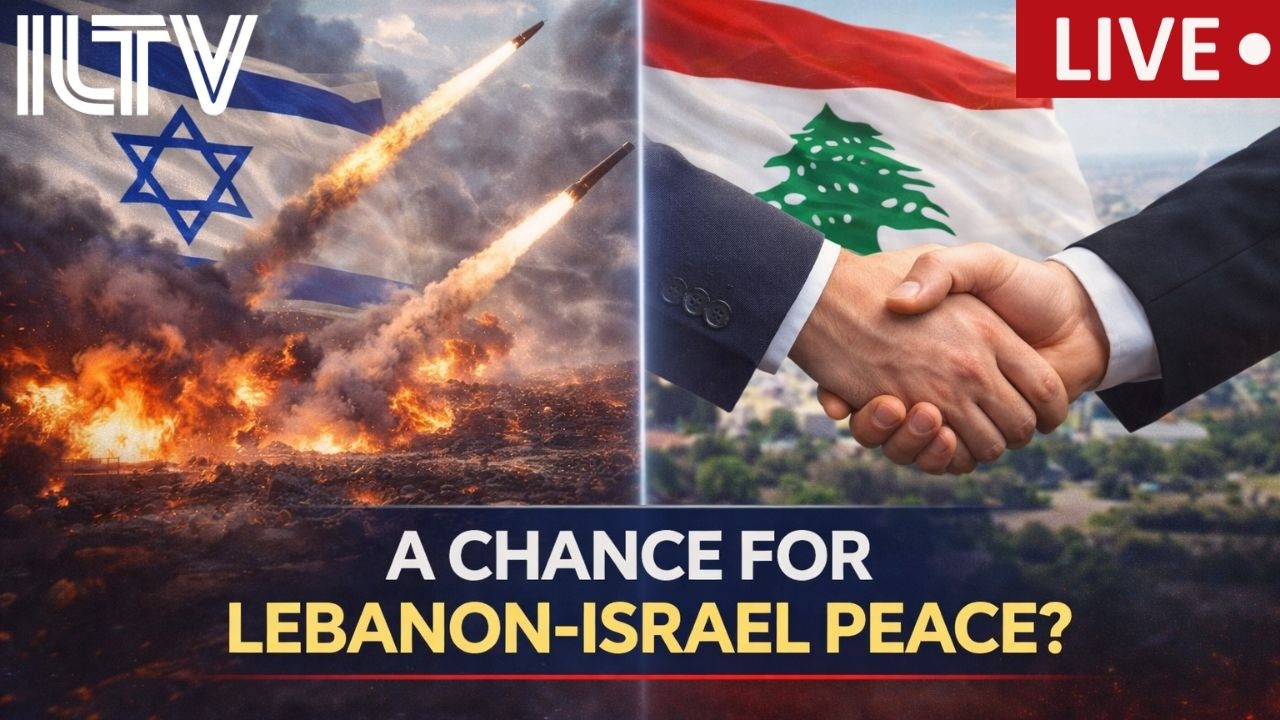
A **10-day ceasefire** has been agreed upon by **Israel** and **Lebanon**, as announced by **Donald Trump**. This development comes amidst escalating tensions in the region, particularly with regards to the **Iran war**. The ceasefire is set to begin tonight, aiming to temporarily halt the violence. The situation remains volatile, with the **Pope** criticizing leaders who engage in wars. The conflict has significant implications for the **Middle East** and global stability, with concerns over **oil prices** and the **Strait of Hormuz blockade**. For more context, see [[middle-east|Middle East]] and [[iran|Iran]]. The international community is watching closely, with **European leaders** urging a peaceful resolution. The role of **US foreign policy** under **Trump** is also under scrutiny, as seen in [[us-foreign-policy|US Foreign Policy]].
Key Takeaways
- A 10-day ceasefire has been agreed upon by Israel and Lebanon.
- The ceasefire is a temporary measure that may not address underlying issues.
- The situation remains volatile, with potential for renewed conflict.
- External factors, such as US policy and Iranian influence, can impact the ceasefire's durability.
- A lasting peace requires addressing complex historical, political, and social issues.
Balanced Perspective
The ceasefire agreement between **Israel** and **Lebanon** is a temporary measure that may not address the underlying issues driving the conflict. While it provides a brief respite from violence, the situation remains fragile, and the potential for renewed conflict is high. **External factors**, such as **US policy** under **Trump** and **Iranian influence**, can significantly impact the durability of the ceasefire. The **international community** must continue to engage in diplomatic efforts to support a lasting peace, considering the complex web of relationships in the region, including those between **Israel**, **Palestine**, and **Iran**, as discussed in [[israeli-palestinian-conflict|Israeli-Palestinian Conflict]] and [[iran-israel-relations|Iran-Israel Relations]].
Optimistic View
The **10-day ceasefire** is a positive step towards reducing violence and creating an opportunity for diplomatic efforts to take hold. **International pressure** and **diplomatic engagement** can help solidify the ceasefire and pave the way for a more lasting peace. The involvement of **neutral third-party brokers**, like the **Pope** or the **UN**, can facilitate dialogue between the parties. This development could also lead to a decrease in **oil prices**, which have been volatile due to the conflict, affecting the global economy, as seen in [[global-economy|Global Economy]]. For more on the economic implications, see [[oil-prices|Oil Prices]].
Critical View
The **10-day ceasefire** may not hold, given the deep-seated tensions and historical conflicts between **Israel** and **Lebanon**. The announcement by **Donald Trump** may be more of a political gesture than a genuine breakthrough, and the lack of a clear, long-term peace plan raises concerns about the future. The conflict has the potential to draw in other regional actors, such as **Iran** and **Syria**, leading to a broader and more devastating war. The **global community** must be prepared for the possibility of renewed violence and work towards a comprehensive solution that addresses the root causes of the conflict, including the role of **Hezbollah** and other **militant groups**, as seen in [[hezbollah|Hezbollah]] and [[militant-groups|Militant Groups]].
Source
Originally reported by Sky News