
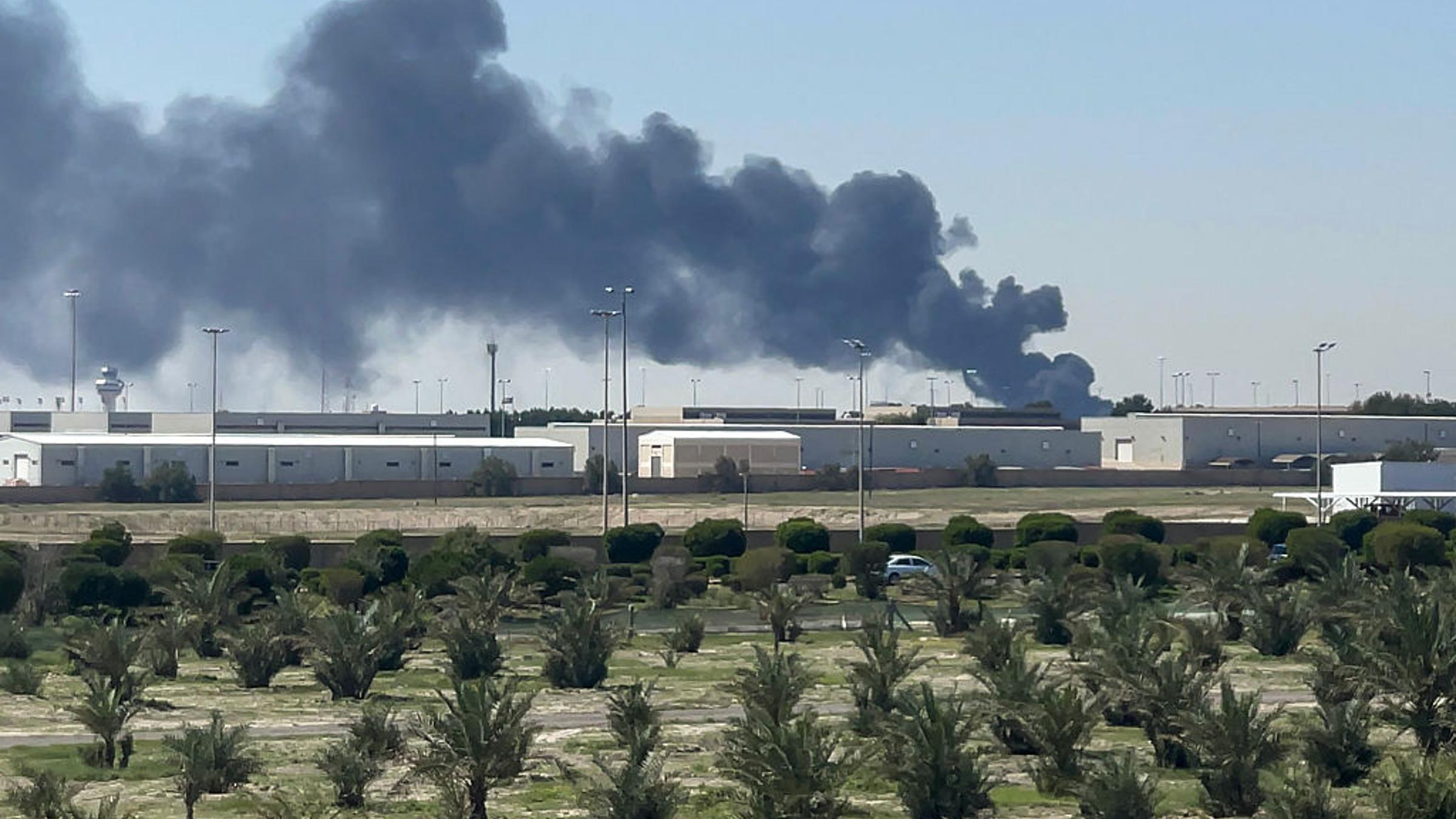
Summary
The **Islamic Revolutionary Guard Corps (IRGC)** has released a list of 18 potential targets for retaliation, including **Apple**, **Google**, and **Meta**, if the U.S. continues to attack and kill Iranian leaders. The IRGC claims that these companies are involved in enabling the assassinations of dozens of Iranian leaders since the U.S. and **Israel** launched a war against Iran on February 28. The companies on the list have operations in or commercial ties to **Israel**, although most have denied allegations that their technology is used by Israel for military applications. The IRGC's threat comes as **U.S. President Donald Trump** has issued mixed messages on the future of the conflict, suggesting he would end the war in two to three weeks amid soaring oil and gas prices. For more context, see [[iran-us-relations|Iran-U.S. relations]] and [[israel-iran-conflict|Israel-Iran conflict]]. The situation is closely tied to the [[middle-east-geopolitics|Middle East geopolitics]] and the [[global-energy-market|global energy market]].
Key Takeaways
- The IRGC has released a list of 18 potential targets for retaliation, including Apple, Google, and Meta
- The U.S. and Israel have killed several high-ranking Iranian leaders, including Supreme Leader Ali Khamenei and Revolutionary Guards commander-in-chief Mohammad Pakpour
- The situation is complex and unpredictable, and it is difficult to determine the likelihood of the IRGC carrying out its threat
- The conflict has global implications, and a long and bloody conflict could have devastating consequences for the global economy
- The international community should pressure both sides to negotiate a ceasefire
Balanced Perspective
The situation is **complex** and **unpredictable**, and it is difficult to determine the likelihood of the IRGC carrying out its threat. The U.S. and its allies have a **strong military presence** in the region, but the IRGC has also shown its ability to launch **effective attacks**. The fact that the companies on the list have operations in or commercial ties to **Israel** adds an additional layer of complexity to the situation, as seen in the [[israel-palestine-conflict|Israel-Palestine conflict]]. The **global economy** is also a factor, with the conflict affecting **oil prices** and **trade**.
Optimistic View
The IRGC's threat may be a **bluff**, and the U.S. and its allies may be able to negotiate a peaceful resolution to the conflict. The fact that **Trump** has suggested he would end the war in two to three weeks is a positive sign, and the involvement of **Iranian leaders** in talks with the U.S. could lead to a breakthrough. Additionally, the **international community** may be able to put pressure on both sides to negotiate a ceasefire, as seen in the [[un-security-council|UN Security Council]]'s recent statements. The situation is complex, but there are opportunities for **diplomacy** and **cooperation**.
Critical View
The IRGC's threat is **credible**, and the U.S. and its allies should take it **seriously**. The fact that the IRGC has already launched **drone strikes** against targets in the region suggests that it has the capability and willingness to carry out its threat. The companies on the list should take immediate action to **protect their employees** and **infrastructure**, and the U.S. and its allies should be prepared for a **long and bloody conflict**. The situation is closely tied to the [[global-terrorism|global terrorism]] landscape and the [[cybersecurity|cybersecurity]] threats posed by nation-state actors.
Source
Originally reported by Time Magazine